

The question arises: Is UN meeting the same fate as the League of Nations?
 KRC TIMES Desk
Dr. Sudershan Kumar
The United Nation (UN) established in 1945 in the aftermath of second world war, was hailed as a monumental hope for humanity. Its Charter envisioned an era free of war, anchored with dialogue, diplomacy and collective security. As a successor to the ill fated League of Nations (1920 – 1946), the UN was designed with stronger mechanism, broader membership and more realistic power dynamic particularly through Security Council.
However, over the decades, especially in twenty first century, many scholars and conclaves have constantly raised alarm over the dwindling credibility of the UN and it is gradually treading the same dismal path as its predecessor League of Nations. From its failure to prevent genocides and to remain a toothless spectator during major confrontations like those in Syria, Ukraine, Gaza, Yemen, and Israel- Iran, the UN has often appeared impotent in addressing global concerns.
Even member countries with their geopolitical interest in certain areas are not able to unite on penalizing nations with State policy of using terrorism as modus operandi in fulfilling their missions. The question arises: Is UN meeting the same fate as the League of Nations?
If it happens, then what would be its impact on world peace? To answer this, it is utmost important to analyze the key parameters such as structure, decision making, global power politics and UN’s effectiveness in maintaining world peace.
First and foremost is legacy structure leading to stagnation. Before we actually talk about the structure parallels and power imbalance, it is utmost important to understand, why the League of Nations formed on 10th January 1920 after the end of world war I failed in its mission in maintaining peace around the globe.
The League of Nations failed partially with inability to enforce decision, lack of military power and absence of countries like USA. The UN despite of its stronger mandate inherited similar structure and weakness.
i) Veto Power: The security council’s permanent five members (P-5) China, France, Russia. UK and United State of America hold the power to block any substantial resolution regardless of majority opinion.
ii) Inequitable representation: Africa, Latin America and other developing regions remain under represented in decision making structure.
iii) Bureaucratic Red Tape: like League of Nations, the UN is plagued with administrative apathy and slow response mechanism particularly in humanitarian crisis.
iv) Sovereignty vs Intervention: The UN Charter’s respect for national sovereignty has often clashed with the necessity of humanitarian intervention. Just as League of Nations hesitated during Italy’s invasion on Ethiopia or Japan’s incursion into Manchuria, the UN also watched helplessly during Syria’s civil war, Russia – Ukraine war and Covid-19pandemic, which engulfed the whole world and shattered the economy of many nations.
Besides, in Africa, the conflict in Sudan, Congo, and the Sahel have raged with minimal intervention, despite of alarming deaths tolls and displacement figures. Even in the wake of rising tensions in the Indo Pacific and Cyber Warfare threats, the UN response has been limited to symbolic statements and toothless resolutions.
Further the credibility of the UN as a peace keeping force stands severely diminished. Its peace keeping mission often under funded and constrained by unclear mandate having failed civilian to protect in the war zone. Secondly quite significantly is the failure of the UN in condemning terrorism and its action against the terror breeding nations.
The UN established to uphold international peace and security, has largely failed effectively in condemning and acting against terrorism and the nations that sponsor or breed it. Despite of numerous global resolutions, the UN record on counter terrorism remains inconsistent and marred by political paralysis primarily due to veto power held by five permanent members of the security council.
This has led to inaction in clear cases where nations harbored terrorists or used terrorism as a tool of state policy. The most glaring example has been the failure in UN’s inability to define terrorism universally. The lack of consensus has allowed state to selectively act on terrorism based on political convergence.
Consequently countries like Pakistan, which have long been accused of providing safe haven and providing logistic support to terrorist groups operating in the neighbouring region continue to escape international sanctions or strong action due to geopolitical alignment and support of powerful allies in the security council.
In several high profile cases including the blocking of designation of known terror master minds due to bilateral interest, the credibility of UN as a neutral arbitrator of global peace has come under serious question. This has emboldened non state actors and their state sponsors allowing terrorism across the region especially in South Asia, the Middle East, and parts of South Africa.
The UN failure to take strong consistent and apolitical action against terrorism and its sponsors has undermined its own charter and weakened global security. Fourth, the rise of unilateralism has also affected the functioning of UN. Much like the League of Nations, nations pursued unilateral or block based policies e.g. (Axis Power). Today’s world also sees rising unilateralism.
Frequent NATO interventions bypassing UN approval. Besides super power imposing sanctions or military interventions without international consensus weakening of multilateral agreement such as climate accords and arm control treaties etc.
In addition the other factors responsible for UN’s decline are politicization of human rights, erosion of global trust, technological and hybrid threats. These developments have altogether put global peace at risk. Therefore, it is time for nations around the globe to introspect and work for global peace, prosperity and welfare of common man.
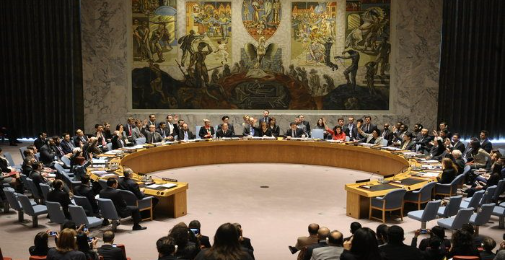
To avoid UN to meet the fate of League of Nations urgent and bold reforms are absolutely essential. Needless to mention here that the first and one of the most pressing reforms concerns the UN Security Council is its structure, dominated by the five members (P5) with veto powers reflects the post world war II geopolitical reality, not today’s multi polar world. It needs to be realigned.
The veto power often paralysis the council allowing powerful nations to block action even in the face of grave humanitarian crisis. Emerging powers from Asia, Africa and Latin America feel marginalized leading to growing distrust in global governance.
This imbalance fosters resentment and pushing countries to form alternate alliances and blocks there by weakening the collective action and global unity. Therefore, reforming the security council is the need of the hour.
It is utmost important to expand the permanent membership of the security council, to include emerging power like India, Brazil, Japan and African representation and limiting the scope of Veto is critical for restoring credibility and legitimacy. Second, financial independence and neutrality is the key.
It is also a fact that the UN heavily depends on contributions from powerful nations, who use financial leverage to influence its policies. A more balance and transparent funding model is required to be adopted.
This will enhance the organization’s impartiality and effectiveness. Third, there is an urgent need for accountability and enforcement mechanisms. UN’s repeated failure to prevent conflicts is often ignored without consequence.
A stronger mechanism for implementing decisions are penalizing defiant states regardless of their power status must be developed. The last, and the most important is building global trust. This is possible through democratizing decision making process in all UN organizations by increasing civil society participation and promoting transparency in appointments and resolutions.
The author is of the opinion that without such transformative reforms the world may see a return to power politics and military blocks reminiscent of the cold war era. Nations may lose faith in multilateralism, choosing instead to rely on Unilateralism or regional solution to conflicts.
This fragmentation of international diplomacy increases the risk of armed conflict, arm races and nuclear proliferation. In essence, failure to reforms the UN can erode the fragile frame work of peace and security. To prevent this the world leaders must rise above the national interest and act in the spirit of global solidarity.
Reforms are not just a matter of institutional restructuring, it is a necessity for sustaining peace in deeply divided and increasingly dangerous world. In the absence of major reforms the UN risks becoming a ceremonial body just like the League of Nations crippled by bureaucracy and manipulated by powerful interests. To truly preserve the cause of peace and humanity, the UN must evolve into a dynamic, fair and accountable institution that reflects contemporary global realities and moral imperatives.
Promotional | Subscribe KRC TIMES e-copy