

The future of global energy consumption is disproportionately tied to emerging and developing economies
 KRC TIMES Desk
Sitakanta Mishra
The India-Russia nuclear energy partnership represents a significant case study in global energy cooperation, offering a replicable template for developing economies. In the context of unprecedented energy demand driven by demographic shifts in the Global South and the exponential growth of artificial intelligence (AI), this collaboration provides a model for achieving energy security, promoting technological transfer, and advancing climate objectives.
The future of global energy consumption is disproportionately tied to emerging and developing economies. According to the International Energy Agency (IEA), these nations account for over 80 per cent of the increase in global energy demand. Specifically, India and China are forecast to drive 60 per cent of the global electricity consumption increase between 2025 and 2026.
This surge is not merely a consequence of population growth but is fundamentally linked to rapid industrialisation, urbanisation, and rising living standards. India’s per capita electricity consumption, which reached 1,395 kWh in 2023-24, demonstrates a clear upward trajectory as millions of citizens join the middle class and integrate into the digital economy.
This baseline growth is compounded by the burgeoning energy requirements of emerging technologies, most notably AI. Data centres, the physical infrastructure of the digital age and the core of AI operations, are projected to more than double their electricity demand by 2030, reaching approximately 945 TWh — an amount comparable to the current electricity consumption of Japan.
While projections vary, some estimates suggest that by 2027, servers dedicated to AI could alone consume between 85 and 134 TWh of electricity annually.
This presents a critical challenge for developing nations: to meet this colossal, non-negotiable power demand while simultaneously decarbonising their energy mix to meet global climate commitments. In this environment of soaring demand and climate pressure, nuclear energy emerges as a strategic, high-capacity solution.
Nuclear power offers a high capacity factor (often exceeding 90 per cent), providing consistent, baseload power 24/7. This stability is critical for industrial processes and, most importantly, for powering energy-intensive data centres that cannot tolerate interruptions.
From a cost perspective, the Levelised Cost of Electricity (LCOE) for advanced nuclear power was estimated at approximately $110/MWh in 2023, according to the US Energy Information Administration (EIA).
This is higher than the LCOE for utility-scale solar PV, which was estimated at around $55/MWh in the same year.
However, LCOE models often fail to account for the “value” of dispatchable power — the ability to generate electricity on demand — which is a key attribute of nuclear energy. The reliability and stability provided by nuclear plants justify a higher LCOE, particularly for nations seeking energy independence and robust industrial growth.
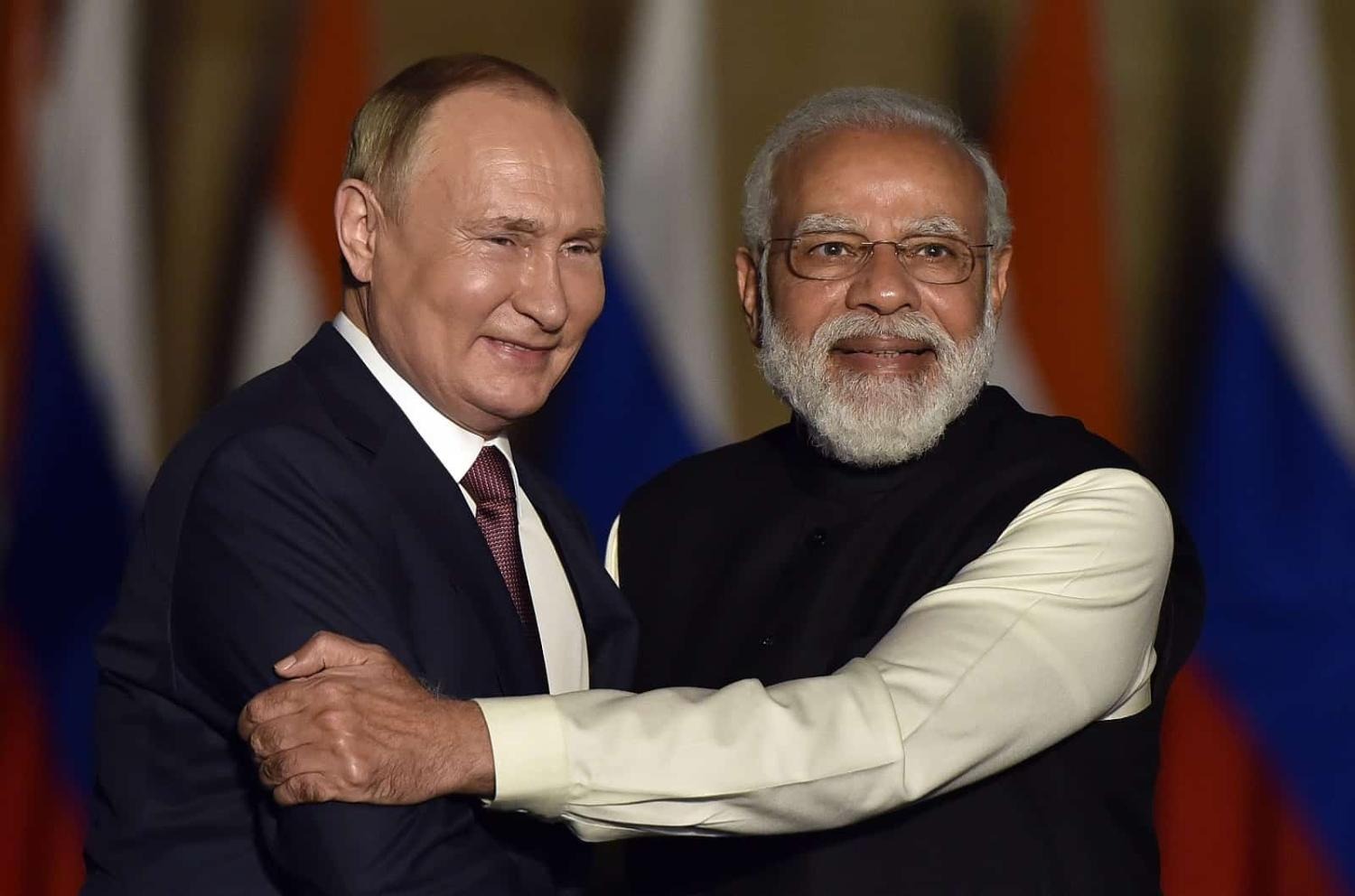
For developing economies, nuclear power is about providing the foundational energy security required for sustained economic and technological development. The India-Russia nuclear partnership, centred on the Kudankulam Nuclear Power Plant (KNPP), serves as a robust blueprint for this model. Unlike traditional arrangements where a foreign vendor simply sells a reactor to a client nation, this partnership is defined by a deep, long-term commitment to technology transfer and capacity building.
The formal collaboration began with an intergovernmental agreement in 1988 for the construction of two 1,000 MWe reactors. This foundational agreement was later formalised with a 1998 intergovernmental agreement and a subsequent 2010 framework agreement on additional nuclear power plant units at Kudankulam and new sites.
This sustained, multi-decade timeline of agreements underscores a commitment that transcends short-term political fluctuations. The KNPP project in Tamil Nadu, India, is the most tangible outcome of this partnership. The project utilises Russian-designed VVER-1000 pressurised water reactors.Crucially, the collaboration extended beyond the physical construction.
Russian state-owned company Rosatom worked directly with India’s Nuclear Power Corporation of India Limited (NPCIL). This joint endeavour facilitated significant technology transfer, allowing Indian engineers and scientists to gain first-hand exposure to advanced light water reactor technology.
Promotional | North East Integration Rally
This process was not about simply operating a foreign-built plant, but about developing the indigenous expertise required to design, construct, and operate a complex nuclear programme independently.
The partnership also included Russian support in strengthening India’s nuclear safety and regulatory frameworks, ensuring compliance with international standards set by the International Atomic Energy Agency (IAEA). The Russian side benefited from knowledge of construction in a tropical monsoon climate. This co-development model differentiates the India-Russia partnership from a one-way vendor-client transaction.

The success and structure of this partnership have already been applied elsewhere. The Rooppur Nuclear Power Plant in Bangladesh is a direct example, featuring two VVER-1200 reactors with a total capacity of 2,400 MWe. A significant portion of the project is funded by a Russian loan, with India providing technical and operational support.
This trilateral arrangement, with Russia as the primary technology provider and India as a trusted partner, validates the model as a blueprint for other nations in the Global South seeking nuclear energy programmes. India, having absorbed knowledge from this partnership, is leveraging its enhanced capabilities to pursue ambitious energy goals.
The Department of Atomic Energy (DAE) aims to nearly treble installed nuclear capacity from 8,180 MW to 22,480 MW by 2031-2032. The co-development approach equips India with strategic autonomy, enabling it to meet surging domestic energy needs and participate in the global nuclear energy market.
The author is Dean, School of Liberal Studies, Pandit Deendayal Energy University, Gujarat