


The imposition of a 50 percent tariff on Indian exports by Washington in 2025 has jolted the foundations of the economic compact that underpinned the U.S.-India relationship
 KRC TIMES Desk
R. Suryamurthy
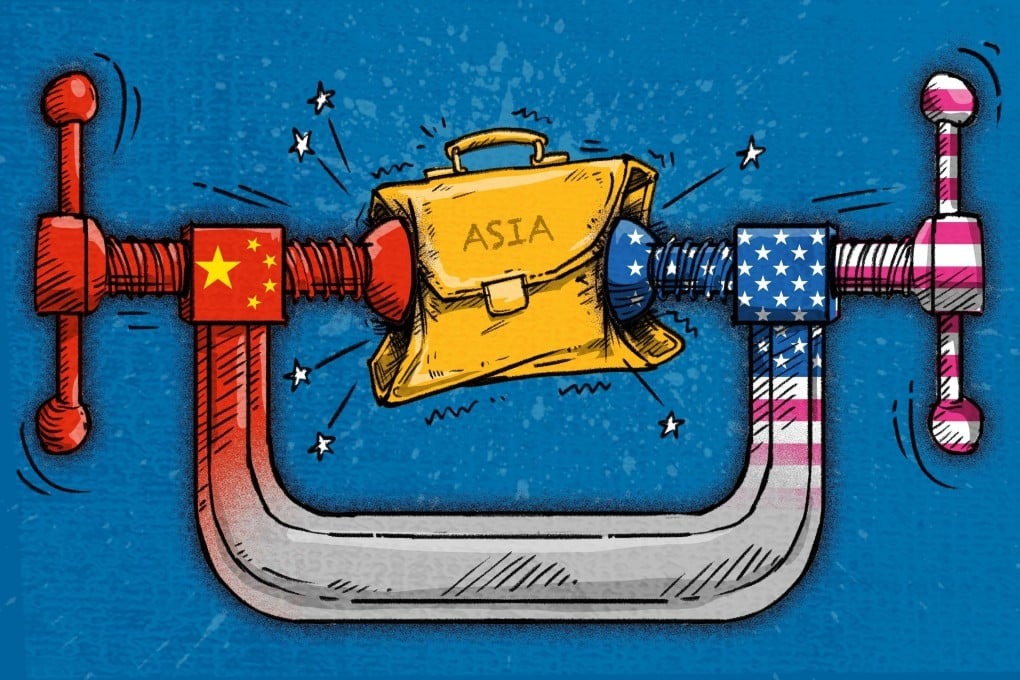
India today finds itself confronting a dilemma as old as statecraft itself: when forced to choose between two unpalatable options, which poison does one swallow? In 2025, that question has sharpened into a binary that policymakers in New Delhi cannot evade.
On one side stands Washington, long cultivated as a strategic partner but now wielding tariffs as a blunt weapon. On the other side looms Beijing, India’s largest trading partner and most intractable geopolitical adversary, suddenly presenting itself as a pragmatic collaborator against American economic coercion.
This is the classic “devil and the deep sea” predicament—except the waters are far more treacherous than ever.
The imposition of a 50 percent tariff on Indian exports by Washington in 2025 has jolted the foundations of the economic compact that underpinned the U.S.-India relationship. The justification offered—that India’s purchase of discounted Russian oil undermines sanctions regimes—has not softened the blow. For New Delhi, the tariff is not merely commercial punishment; it is a breach of trust.
For decades, the United States has courted India as a counterweight to China’s rise, celebrating shared democratic values and promising deep economic integration. Yet the reality of punitive tariffs, harsher than those applied to many U.S. adversaries, suggests that India’s “special” place in Washington’s worldview is conditional at best.
Worse still, the tariff shock has been accompanied by a 90-day truce with Beijing, granting China breathing room while India is squeezed. The symbolism is stark: an ally is punished, a rival indulged.
This inversion has fuelled the sense in New Delhi that strategic partnership with the United States remains transactional. The language of “shared values” collapses when one partner is treated as expendable. For India, the humiliation lies not only in the tariff but in the contrast—it was singled out while Beijing was spared.
Into this breach steps China, fully aware of India’s vulnerabilities. In 2023-24, bilateral trade reached $136.2 billion, with a staggering $101 billion deficit in Beijing’s favour. India imports the lifeblood of its economy—over two-thirds of pharmaceutical ingredients, a majority of solar equipment, and more than a third of electronics—from its northern neighbour. This asymmetry is no accident; it reflects both India’s dependence and China’s leverage.
Yet at the very moment Washington turned the screws, Beijing softened its posture. Restrictions on urea exports were lifted, ensuring steady fertilizer supplies. Border trade routes that had been frozen for years reopened. Direct flights, suspended since the pandemic and the border clash, are set to resume.
Even visas for pilgrims and tourists have been reinstated. Perhaps most significantly, partial troop withdrawals along disputed Himalayan stretches have reduced tensions and created political space for dialogue.
The choreography is deliberate. Beijing wishes to present itself not as an enemy but as an indispensable partner—one that can offer practical relief when Washington cannot. The implicit message is unmissable: when the United States treats you like a liability, China can treat you like an asset.
For India, the immediate utility of this thaw is undeniable. The tariff shock has come at a time when global demand is sluggish and exports already strained. A smoother flow of Chinese inputs—batteries, chemicals, machinery—offers relief for India’s manufacturing ambitions, especially in sectors backed by government incentives such as electronics and renewable energy.
But here lies the trap. Every step closer to Beijing deepens structural dependency. This is not simply about a trade deficit measured in billions; it is about strategic vulnerability. India’s pharmaceutical industry, touted as a global powerhouse, would falter without Chinese inputs. Its renewable energy push, marketed as a route to energy independence, relies on Chinese solar cells. Even its consumer electronics boom is tethered to supply chains controlled across the border.
In any future crisis—whether a border flare-up in Ladakh or a naval standoff in the Indian Ocean—Beijing would hold the ability to choke India’s economy overnight by turning off the tap. This is dependency masquerading as pragmatism.
And the political trust deficit is as wide as ever: Beijing continues to arm Pakistan, probe Indian cyberspace, and stall any resolution of the border dispute. To mistake tactical gestures for a strategic transformation is to risk national security.
If Beijing’s smile is calculated, Washington’s blindness is self-inflicted. By resorting to tariffs as a blunt instrument, the U.S. administration has ignored both the symbolic weight of such actions and the long-term costs of coercion. Fixated on short-term trade concessions—whether in agriculture, dairy, or market access—Washington has underestimated how deeply punitive measures cut into strategic trust.
The irony is cruel. By cornering India, Washington risks producing precisely the outcome it most fears: New Delhi edging closer to Beijing. On social media and in policy circles, the irony is not lost—tariffs meant to discipline India may instead accelerate its alignment with BRICS, the SCO, and other platforms that dilute American influence.
Washington’s repeated assurances of India’s “centrality” in the Indo-Pacific ring hollow when its policies push New Delhi into Beijing’s arms. For India, the lesson is sobering: even the strongest partnerships can be sacrificed at the altar of domestic politics and transactional gains.
Complicating this binary is a third actor—Russia. The tariff dispute itself is rooted in India’s oil purchases from Moscow. Energy security, discounted crude, and decades of defense cooperation tie New Delhi to Moscow in ways neither Washington nor Beijing can easily replicate.
Sensing opportunity, Moscow has already begun hinting at reviving the trilateral format involving Russia, India, and China. Such a framework, dormant for years, could suddenly acquire relevance as India looks for breathing space between great power pressures. Yet such moves would only deepen the triangle of entanglements: Washington’s coercion, Beijing’s opportunism, and Moscow’s manipulations—each complicating India’s already narrow strategic corridor.
What can be the Indi’s best choice? Pragmatism dictates seizing short-term economic relief, even at the cost of dependency. Trade deficits could widen, but the hope would be that economic interdependence tempers political hostility. The risk is obvious: every past thaw with China has eventually collapsed into renewed hostility, leaving India more vulnerable than before.
Then the other option is New Delhi could swallow the humiliation from USA, quietly scale back Russian oil purchases, and bet on tariffs being temporary. This would preserve the long-term partnership, but at the cost of credibility. Strategic autonomy would look more like strategic submission.
The most attractive option is to manoeuvre between poles—leveraging BRICS, the SCO, and the G20 to blunt U.S. pressure while keeping China close enough for cooperation but distant enough to resist domination. This requires delicate balancing and constant recalibration. The challenge is whether such fine balancing can survive the scale of India’s economic dependency.
Perhaps the harshest truth is that India’s predicament is not solely imposed from outside. It is also the product of domestic failure. Decades of underinvestment in manufacturing, inconsistent industrial policy, and slow progress on self-reliance have left critical sectors hostage to Chinese inputs.
Unless initiatives such as the Production Linked Incentive schemes, semiconductor missions, and pharmaceutical diversification deliver results, New Delhi’s claims of strategic autonomy will remain rhetorical. Without industrial resilience, India will remain exposed to external shocks—whether tariffs from Washington or supply chain coercion from Beijing.
If India is nudged into China’s orbit, it will not be because of American bullying alone. It will also be because of its own inability to build the economic foundations of independence.
At its core, India’s choice between Washington and Beijing may be a false one. Both paths carry peril: the devil of American coercion and the deep sea of Chinese dependency. The challenge is not to choose one over the other but to avoid drowning in either.
Promotional | North East Integration Rally