


What Is the Reality?
 KRC TIMES Desk
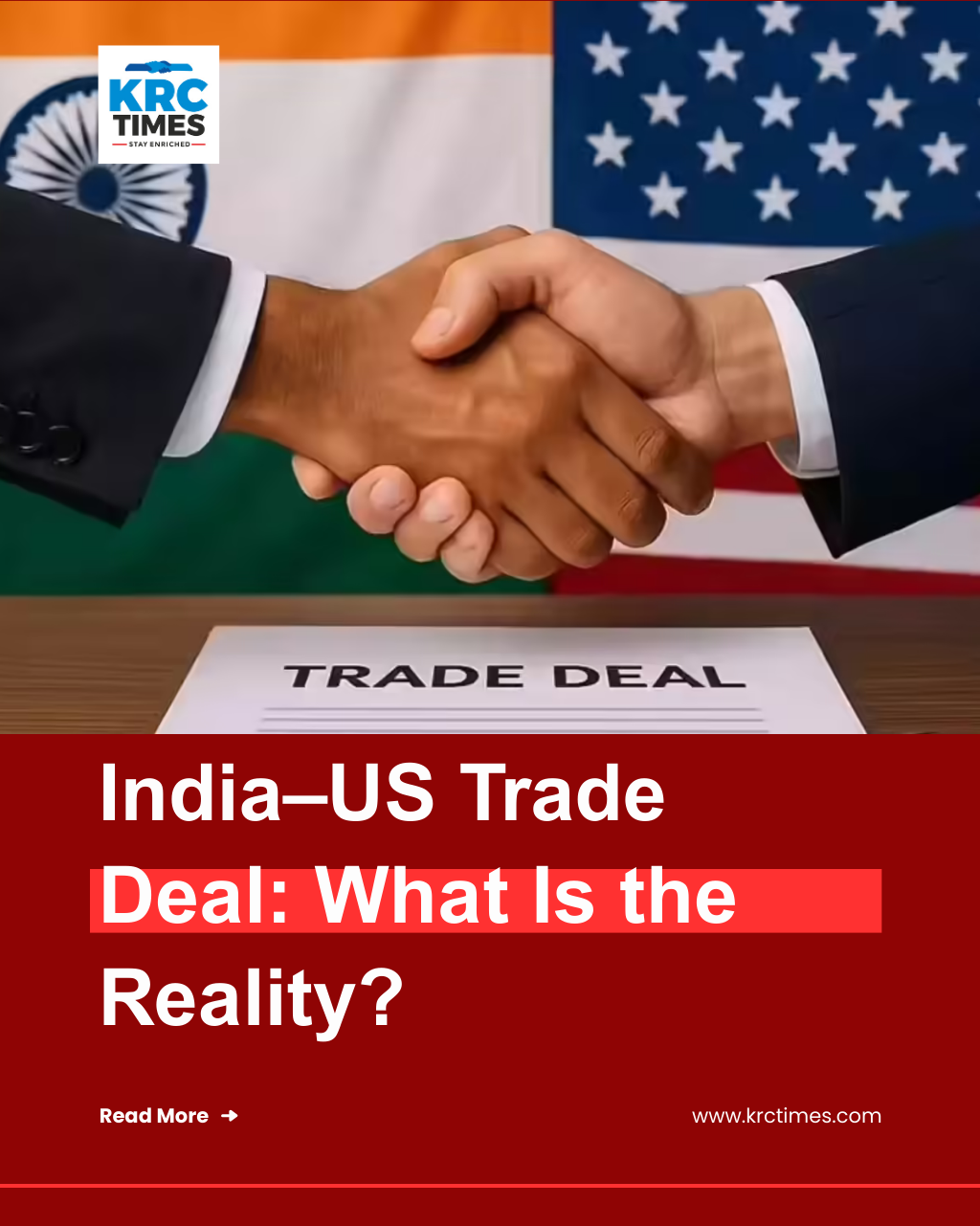
The interim India–US trade arrangement has triggered the usual political noise. Critics, especially in the Opposition, claim the deal sells out Indian farmers, dairy producers and small businesses. But when you strip away the rhetoric and actually look at what the agreement does, a very different picture emerges.
This is not a rushed or one-sided deal. It is a carefully thought-out, limited framework that opens doors where India is strong and draws firm lines where livelihoods need protection. Far from hurting domestic interests, it strengthens India’s position in sectors that create the most jobs.
The biggest gains are in labour-intensive industries. India’s textiles and apparel sector alone employs more than 45 million people. Over the past several months, higher US tariffs and policy uncertainty made Indian exports less competitive. With tariffs now being eased and rules clarified, Indian suppliers are back in the game.
In price-sensitive sectors like garments and home textiles, even small tariff cuts make a big difference. Lower costs mean US buyers place larger, longer-term orders. Factories run closer to full capacity, and employment rises across the entire chain—from cotton farmers and yarn spinners to dyers, tailors and exporters. For small and medium exporters, just knowing the rules won’t suddenly change is a major relief.

Leather and footwear tell a similar story. These industries support lakhs of workers across Tamil Nadu, Uttar Pradesh, West Bengal and Maharashtra. With clearer and more predictable tariffs, US sourcing that had slowed down is picking up again.
Indian manufacturers can finally think about scaling up, instead of simply surviving on squeezed margins.
India’s growing strength in auto components and precision engineering also stands to benefit. The US is already a major market for Indian auto parts.
Tariff relief and closer alignment on standards help Indian firms secure longer contracts and deeper ties with US manufacturers. This kind of integration is exactly what India needs to move up the industrial value chain.
The US is also the single most important market for India’s gems and jewellery exports. Any reduction in duties has an immediate ripple effect—from diamond cutting units in Gujarat to jewellery manufacturers across the country.

Lower tariffs improve margins for Indian exporters and reduce costs for US retailers, reinforcing India’s global leadership in diamond processing and jewellery making.Pharmaceuticals are another clear winner.
India supplies a large share of the generic medicines used in the US. The trade framework strengthens predictable access for Indian drugmakers, which is crucial in a market as large and regulated as American healthcare. Even small gains in market share here translate into billions of dollars in additional exports.
Much of the criticism focuses on fears that Indian farmers and dairy producers are being “exposed” to US competition. That fear doesn’t hold up to facts. Sensitive products like rice, wheat, dairy, poultry and meat have been kept completely outside tariff concessions. India’s core food security and rural livelihood protections remain intact.
Where items like soybean oil are mentioned, these are products India has been importing for decades. The deal does not create new vulnerabilities—it simply streamlines existing trade flows. There is no opening of subsistence agriculture to foreign dumping.At its heart, trade is about margins, scale and certainty.
This framework delivers all three. Lower tariffs improve competitiveness in the world’s largest consumer market. Predictable rules give exporters the confidence to invest, expand capacity and commit to delivery schedules. And by focusing liberalisation where India has clear advantages, growth translates into jobs—not displacement.

This is targeted expansion, not blanket liberalisation. India and the US have set an ambitious goal of taking bilateral trade to $500 billion in the coming years. That target is achievable if India captures even modest additional market share in textiles, pharmaceuticals, auto components, gems and electronics.
The bottom line is simple. The India–US trade deal protects farmers while empowering industry. It opens markets, improves margins and restores predictability for Indian traders—from small exporters to large manufacturers. With the US market opening wider, the real limit on Indian enterprise is no longer policy. It is ambition.
This is also significant in the context of the current global environment, where uncertainty increasingly defines relations between countries. At a time when India’s main Opposition party has consistently argued that a trade agreement between India and the United States was unlikely, the conclusion of this deal clearly reflects the Modi government’s skillful, pragmatic and results-driven foreign policy.

