


Religious and Cultural Changes during the period of Maharaja Garib Niwaz
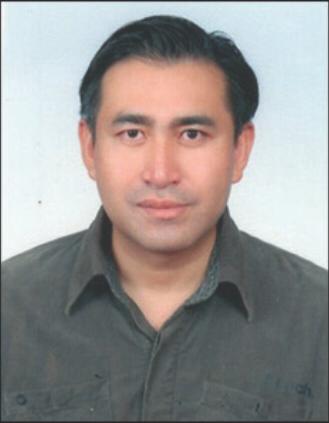 Maheshsana Rajkumar
The events surrounding 16th and 17th century India, Burma and Assam gives the right analysis to understand the religious and cultural development in 18th century Manipur and the reasons behind Garib Niwaz’s conversion to Ramanandi Vaishnavism from a wider lens. Garib Niwaz was well aware of the changing international relations in the region.
The great sovereign monarch Maharaja Garib Niwaz (Pamheiba), reigned Manipur from 1709-48, and changed the course of history in kingdoms of Manipur and Burma (now Myanmar) and brought revolutionin aspects of socio-cultural-religio-politico and economic.The Manipuri nationalism faded away with the advent of British rule.
In Garib Niwaz’s reign Manipur had attained zenith of her power, and Manipur was an Asiatic power in Southeast Asia.His glorious reign of 40 years coincided with the declining days of Toungoo dynasty of Burma. He was the contemporary of the last three kings of the Toungoo dynasty, Sanay Min (r. 1698-1714), Taninganway (r. 1714-1733) and Mahadhamma Yaza Dipati(r. 1733-1752).

The British could access the records of Manipur kingdom after the Anglo-Manipuri treaty of 1762.Sir Jervoise Athelstane Baines arrived in India in 1870to collect statistical population data, which was the first such exercise by the Raj administration. In 1881, he was deputy superintendent of the census in the Presidency and he was appointed Census Commissioner for the national census of 1891.
The well documented account of Garib Niwaz is mentioned in his census report. The much is also known of Garib Niwaz from the accounts of several books, journals and articles written by Manipuri, Western and Burmese scholars and the Burmese sources in particular has been very invaluable to describe the religious and cultural changes in Manipurhaving effect on Burma, and his military expeditions that threatened the then Restored Toungoo dynasty or Nyaungyan period (1597-1752), with King Mahadhamma Yaza Dipati at the helm.
The Burmese chronicle “Hmannan” records Mahadhamma Yaza Dipati had sent letters to Chinese Qing emperor and sought help of Qing army to crush Manipur.
The greatest threat perceived to Manipur kingdom then was the religious warfare of the Theravada Buddhism in the 16th century unleashed by the Toungoo emperor Bayinnaung. The years of domination of Theravada Buddhism would have resulted in Manipur becoming an outlying obscured district of Burma.
According to renowned archaeologist Okram Kumar Singh, the ancient manuscript of Meitei, originally written in Meitei Mayek, entitled ‘Khamlang Pawari Ahuiron’ and later transcribed in the Bengali script by Mayanglambam Gourchandra (1977) described an account of the religious practice prevalent in the Meitei society during the Protohistory,and which werelater found to be Buddhism doctrines.
The mandalas found in Manipur in recent years gave a strong evidence of the prevalence of Buddhism in ancient Manipur. There is no doubt presence of Tantric or Esoteric Buddhism or a further evolution of Mahayana religion, sometimes called Vajrayana (the Vehicle of the Thunderbolt), developed about 500–600 C.E. in India.

An offshoot of Mahayana Buddhism, the origins of Tantric Buddhism can be traced to ancient Hindu and Vedic practices as well, including esoteric ritual texts designed to achieve physical, mental, and spiritual breakthroughs.
The growth of Sanamahi and Pakhangba faiths can be interpreted withthe cultured group of people that settled in ancient Manipur who probably conceived the elements of a localized Brahmanical faith mixed with Bon religion and Buddhism which in turn mixed with Tantric cults.
Sanamahi faith was at its peak in the reign of King Khagemba. In Manipur to-day there is religious syncretism or dual worship of traditional Meitei gods with Hindu gods.
The chronic problem facing Manipur had been the Burmese expansionism which was initiated for the first time by the greatest Burmese emperor Bayinnaung(r. 1550-81) against Manipur. The conquest of Chengmai by Bayinnaung served as general signal for all the Shan chiefs on the Burma-China border to submit, and even some chieftains within Yunnan itself had swored allegiance to Toungoo emperor Bayinnaung.
By then, Bayinnaung’s prestige was so high that not only did China not protest,but then King Chalamba of Manipur around February 1560 surrendered and sent tributes to the Burmeseking.
Manipur came under Bayinnaung’s rule from 1560-81. After the death of Bayinnaung in 1581, King Mungyambahad consolidated the three districts of Manipur along the Upper Chindwin river basin. However, during the reign of Bayinnaung almost all the Shans of Upper Burma were Burmanized and converted into Theravada Buddhism including parts of Manipur namely the three districts of Kale, Khampat and Samjok.
Bayinnaung had inculcated Burmanization over the people of those smaller kingdoms through proselytisation into Theravada Buddhism and military campaigns. Toungoo Empire was the largest empire in Southeast Asian history and it’s highly probable in twenty one yearrule of Bayinnaung in Manipur he must have strictly imposed Theravada Buddhism on the Manipuris.
On the other hand, the then India witnessed the rise of Islam in the 16th and 17th centuries. The Mughal emperors unified practically the whole of North India and much of the Deccan,and built up an empire such as had not been seen since the days of the Guptas.

The Mughal Empire had waged several wars with the Ahom Kingdom with the intention to expand their empire covering present North East along with the entire South-East Asia.
Unfortunately, the mighty Mughals were defeated seventeen times by the Ahoms and safeguarded the North East from coming under Mughal rule. The most famous battle fought between Mughal and Ahom was the naval battle of Saraighat in 1672 under the command of Ahom General Lachit Borphukan.
The Manipur king Pamheiba was given the epithet of Garib Niwaz, and in this context Sushil Chandra Dutta in his book, ‘The North-East and the Mughals (1661-1714 A.D.)’, writes,
“Manipur had, however, connections mostly in the war path, with Cachar and Tripura in the 15th and 16th century. Manipur had, however, more intimate connections with China and Burma with which it had common borders. She had practically no political contact with the Mughals as it had no direct boundary with Bengal. The historical records also clearly suggest that Manipur had extensive trade relations with Bengal through Cachar.”
Sushil Chandra further wrote the epithet of Gharib Niwaz was given to Pamheiba by the Mughal emperor of Delhi.It may also happen that the Mughal administrators in Bengal had some understanding with the ruler of Manipur and managed to see that King Gharib Niwaz did not join the confederacy of Ahomking Rudra Singh (r. 1696-1714), who was successful to bring Hindu confederacy of the important neighbouring monarchies namely Cooch Behar, Jayantia, Cachar and Tripura.
It is also not at all impossibility that the Mughal emperor of Delhi or his subahdar in Bengal honoured the Raja of Manipur with such a title as a political deal.

Muslim traders and artisans from Mughal Bengal began to immigrate into Manipur long before the time of Gharib Niwaz. Even during the reign of Khagemba, the Muslim prisoners of war and low caste Hindus were given settlement in Manipur.
Probably, the Muslim settlers encouraged the Mullas and Gazis in order to make spiritual and social relief through itinerary camp and on the other hand, the Hindus were aspiring to get spiritual relief through the preachers of Chaitanya Vaishnavism from Mughal Bengal.
Garib Niwaz after ascension to Manipur throne knew without doubt the weakness of the Burmese kings who remained always unable to abandon the Vedic traditions in Burma. Manipur was an ancient land route and gateway to Southeast Asia from mainland India before Common Era (BCE).
It’s an undeniable fact for millennia till date the Southeast Asian countries including borderland Manipur is under Indosphere heavily influenced by Indian civilization. The region is characterized by the influence of Hinduism, Theravada Buddhism, Sanskrit roots (Vedic traditions) which flourished side by side.
Garib Niwaz came to understand that the instrumental force to challenge Theravada Buddhism of Burmese was nothing but Brahmanic Vaishnavism or Vaishnav Shaktaism. Therefore, he followed the religious policy of his father Charairongba. Ultimately, he decided to take up conversion into Vaishnavism.
The religious and cultural changes were brought into Manipur after Garib Niwaz’s conversion to Ramanandi Vaishnavism initiated by the religious preceptor Shanti Das. Renowned historian Gangmumei Kamei taking the reference of Sanamahi Laikan mentioned that after the departure of Guru Gopal Das, the new preceptor appeared to be Shanta Das Mahanta Bairagi from Nara Singh Tilla of Sylhet in Bengal.
Myths were later on created by the new missionary that he was summoned by God Sanamahi of the Meitei religion to spread the teachings of Lord Ramachandra in the land of the Meiteis. The fact was that he was one of the Brahmin missionaries of the Ramanandi (Ramandi) cult in eastern India who had to seek new pasture of missionary activities in the barren land of the Meiteis as they were harassed by Aurangazeb in their ownhomeland.

Moni Gatha in her article “The Curious case of Rama in West Bengal” writes, prior to Gaurio Vaishnavism of Sri Chaityna (1486-1533) it was the Ramayat form of Vaishnavism that prevailed in Bengal.
What actually happened in Bengal was that Ramayat Vaishnavism got mixed with Gaurio Vaishnavism, and the latter took control. In simple words, Krishna took precedence over Rama, because of the immense popularity of Sri Chaityna and Gopal was preferred over Sitanath, but the latter never entirely disappeared in that sense.
Ramanada was a 14th century Vaishnava devotional poet saint, who lived in the Gangetic basin of northern India. The Hindu tradition recognizes him as the founder of the Ramanandi Sampradaya, the largest monastic Hindu renunciant community in modern times.An early social reformer, Ramanada accepted disciples without discriminating anyone by gender, caste, class or religion.
Lord Rama, the ideal king, the ideal of Dharma worship was free from any sort of discriminations to the followers based on gender, caste, class or religion and this made it easier for Garib Niwaz to bring almost all the ethnicities living in Manipur to embrace Ramanandi Vaishnavism.
The “Ramji Prabhu Temple” is located at Wangkhei Ningthem Pukhri Mapal, under Imphal East district. The temple consists of three different idols- Rama, Lakshman and Hanuman. Besides these there are also idols of Garib Niwaz and Santi Das Gosai with his hand cuffed, which actually relates the temple to the “Ramandi cult”. The Hanuman idols in “Ramji Prabhu Temple”, also has great significance in the depiction of “Ramandi Cult” in Manipur.

According to J. Roy the temple of Hanumanji was made of brick and construction of Ningthem Pukhari at Wangkhei Leikai, the size of the tank reflects to some extent the greatness of the king.
According to Gangmumei Kamei Garib Niwaz carved out an image of Hanuman in relic on a bigslab of stone. The stone with the image forms the northern wall of a Hanuman temple built by him at Mahabali in Imphal.
The temple was inaugurated in the month of Hiyangei, 1729. The image of Hanuman and the Hanuman temple are still in a very good condition. The temple is quite near Krishna Temple said to be built by Pitambar Charai Rongba in 1704.
Manipuri scholar Hawaibam Ranbir Singh in his book, “The Vedic Tradition, Shrimad-Bhagavad-Gita and Vaishnavism” writes,
“Gareeb Niwaz was a political genius of a high order, a great general, and a great administrator, with a burning zeal for national consolidation and for building a powerful state with extended territories. That explains why earlier he was zealously propagating Vaishnavism as he inherited it from his father. That also explains why, when faced with a choice, he made a decisive option for Rama, the ideal king, the ideal of Dharma.
He was in a hurry to see that the whole process was completed in his life time, and that explains his drive and a degree of ruthlessness in enforcing the new faith. In Gareeb Niwaz the groping desire of the Manipur kings of that period for using Vaishnavism as an ideological weapon for Meitei ‘national’ consolidation found its clearest and most articulate consciousness and its most resolute determination.”
Manipuri research scholar Naorem Naokhamba Singh in his article titled, “Religious Syncretism among the Meiteis of Manipur, India” writes,
“On the advice of preceptor Shanti Das, Garib Niwaz introduced the Hindu Gotra system and identified traditional seven yeks/salais (Clans) of Meitei into respective Gotras as follows;

Yek/Salai (Clan) – Hindu Gotras, Ningthouja/Mangang-Shandilya, Luwang-Kashyap, Khuman-Madhugalya, Angom-Kaushika, Moirang-Aitereya, Khaba-Nganba-Gautam, Sarang Leisangthem-Bhardwaj.
During the reign of king Garib Niwaz a number Manipuri traditional festivals were modified or identified with concurrent Hindu festivals. The annual boat race festivals then traditionally known as Heigru Hidongba was renamed as Jala Yatra. The festival of Waira Tenkap was redesigned as Kirtan of Lord Ram.
The traditional festival of Kongba Leithong Phatpa was reidentified with Vishnu Sankranti. The festival of Ahong Khongching was modified as Dol Yatra. The ancient festival of offering feast to the ancestors known as Tara Chanou Katpa becomes known as Priti Lok Iratpa. The worship of Nungoibi was substituted by Dusserah. Festival of testing newly harvested rice was known as Chanou Huichintu in the month of October was replaced by Govardhan Puja.
The introduction of Hinduism marked the synthesis of the old and new elements and consequently it led to the evolution of a syncretised form of Hinduism which is still practiced here in Manipur, and that the harmonization which has been going on in India since ancient times forming a single culture was also seen at work in Manipur and it can be seen from the syncretisation of old and new faiths or tenets.

Unlike in other regions, after conversion to Hinduism all the converted Meiteis, including members of the king’s own family and other royal dynasty were declared to belong to the Kshatriya caste. It is one of the unique feature of Manipuri Hinduism where only two caste viz.
Kshatriya and Brahmin coexists; descendents of immigrant Brahmins belonging to the Brahmin caste and the rest Meitei population belonging to the Kshatriya caste, in particular, Surya Vamsa of Shri Ramachandraji of the Ramayana”.
J. Roy recorded among the literary activities it is mentioned that Bijoy Panchali was rewritten by Dwija Sita Ram Sarma, a chronicler in the court of Gharib Niwaz. He also stated that the temple of Ramji and the customs of putting special white turban by the Manipuris on ceremonial occasions indicate even to-day the influence of Ramanandi cult.
Renowned scholar Michael W. Charney gives a detailed account on religious and cultural changes and burning of old scripturesin the reign of Garib Niwaz as follows:
The impact on Manipur of these changes can be overestimated, but the effect they had on the Lower Chindwin may have been dramatic in more tangible ways. According to some oral traditions, however, when the books were piled up to be burned, some books proved to be immune to the fire and flew off to different parts of kingdom, a certain indication, along with the continued existence of reportedly burned manuscripts of the time today, that many texts were not really destroyed but hidden.
More than anything else, these activities likely decentralized the distribution of Manipuri literature. Even without this event, Manipur was already a significant route for the introduction of Sanskrit works into Burma, as Sanskrit scholars have pointed out. Although the Simhala niti spread to Burma by sea from Southern India, for example, other Sanskrit-based niti-texts came through northern India, probably brought by Manipuri Brahmins.
The decades old vilification campaign against Maharaja Garib Niwaz, the greatest king in the history of Manipur by the certain section of revivalists on the burning of Puyas must come to an end in the light of retrieval offactual documents. The puyas whether it was burnt or notat the behest of Garib Niwaz has now become a debatable issue.

It is widely believed that the Cheitharol Kumbaba with Maharaja Churachand Singh’s permission was edited by L. Ibungohal Singh and Pandit N. Khelchandra Singh and published by the Manipuri Sahitya Parishad in 1967.
The Cheitharol Kumbaba, the official royal chronicle of Manipur kings, did not mention the burning event in its earliest published versions. Later editions by the Manipuri Sahitya Parishad included notes or emendations mentioning the libricide, which some scholars suggest were based on the later accounts rather than original records.
An author and researcher Wangam Somorjit and who currently serves asDirector of Advanced Research Consortium Library and Archives, and who have recently launched the Korbek Archive Project,and based on his research work out rightly refuted that the Meitei script was destroyed and discontinued in 18th century by Garib Niwaz. According to Somorjit the stone inscriptions commissioned by Garib Niwaz at the peak of his power were engraved in Meitei script.
The Anglo-Manipuri Treaty of 18th April 1833 was written in Meitei script. Most of the official documents, including treaties and kharitas (royal letters), were written in the Meitei script. A letter in Meitei script was sent to the Viceroy of India by Maharaja Chandrakirti in May 1868.

In the Administrative Report of the Manipur Political Agency for 1893-94, Shillong, 1894, Political Agent A. Porteous wrote that the Bengali script had not entirely ousted the Meitei script.
Garib Niwaz himself commissioned the court scholar Angom Gopi to write a larger volume of Numit Kappa in Meitei Mayek in 1750 CE. Meitei Mayek had always been an official script used in the court of Manipur, alongside Bengali, English, and Burmese. The court chronicle Cheitharol Kumbaba has always been recorded in Meitei Mayek in an unbroken historical chain to this day.
Even the kings of Manipur wrote letters to the Viceroy of India in Meitei Mayek. The Meitei script continued to be the official script of the Manipur court and the widespread use of the Bengali script was promoted only after the arrival of the printing press in 1910s and the establishment of English schools in Manipur.
Wangam Somorjit on the recent finding of 18th century Garib Niwaz’s personal illuminated manuscript collection decorated with gold leaf with luminous effect has brought to the public attention the mentioned of his name ‘Garib Nawaz’ signed on the said manuscript.
Michael Charney on Shanti Das’ hinduizing mission plan of Burmese kingdom has categorically stated that the reshaping of Manipuri culture and religion under Gharib Newaz was pervasive and saw Manipuri gods eradicated, Manipuri festivals equated with Hindu festivals, fictive lineages for important families drawn back to figures in the Mahabharata, the imposition of Hindu dietary restrictions including punishment for eating beef, and the division of Manipuri society into castes.

This rapid transformation of Manipuri society was intended to be extended over Burma in the same way. The guru behind all of this, Shanti Das, left the Manipuri court for the Burmese royal court in August 1733. According to the Manipuri sources, Shanti Das returned to Manipur in November/December 1733, because he had been denied entry into the Burmese royal court.
Gharib Newaz accompanied by Shanti Das gathered an army and, headed by the flag of Hanuman, took it against the royal capital of Burma, only to find his passage blocked by the Irrawaddy River, which the Manipuri cavalry were unable to cross.
Shanti Das is also said to have encouraged the Manipuri attack by instructing the Manipuris that by drinking and washing themselves with water from the Irrawaddy River, they would completely cleanse themselves of misfortune and danger.
The guru set out again in 1743 officially to negotiate the provision of Manipuri princess Satyamala to the Toungoo king. However, the Manipur court chronicle implies he had set out to conquer Ava again. Further, according to Lower Chindwin authors writing in the late 1820s, Shanti Das wanted to establish Hinduism (‘our way of thinking’) in the mind of ‘the king who lives in Ava’.
There is thus little doubt that Shanti Das had major plans for the Burmese court, especially since his large entourage consisted of five hundred of his disciples, including Brahmin priests. The Hindu teacher, however, fell ill and died about a month later in 1744.

If there had been any real chance of a conversion of Burma to Hinduism this was doused by the end of the 1750s. After the Burmese royal capital fell to the Mons in 1751, we hear little about the Lower Chindwin or Manipuri–Burmese interaction until the Burmese kingdom was fully restored in 1756.
TheIndianBrahminshad greatly influenced the royal courts of Burma and were successful to change the minds of the kings of Burma. Almost all the ritual practices of Burmese royal courts were followed in accordance with Brahmani calcult.G.E.Harvey, in his book, “History of Burma”, has stated that in Coronation and Palace the ritual was Brahmanical not Buddhist and it was in use all over the Hindu world.
However, the expansion of Indian culture continued the making of its way into the region of Southeast Asia through the organisations of royalty Hindusim and Buddhism and the Sanskrit dialect.
The book, “The Situation in Myanmar 1714-52”, authored by Burmese scholar Dr. Yi Yi, Senior Researcher, Department of History, Ministry of Culture, Myanmar, recorded Shanti Das died in 1744 at Sagaing Thante due to Cholera.
The body of Shanti Das was dumped in Irrawaddy River in quick succession after performing Jal Samadhi. Afterwards Samjai Khurai-Latpa and five hundred disciples of Shanti Das returned to Manipur. According to R.K.Jhalajit Singh,Shantidas, the religious guru of the king died on Tuesday 27 Hiyangei (September/ October)1744 in Burma.

Renowned author Victor B. Leiberman in his book, “Burmese Administrative Cycle: Anarchy and Conquest, C. 1580-1760”, 1984, writes on Garib Nawaz in context to Burma as follows:
“The brahmanically sanctioned changes that Gharib Newaz introduced in political organizations, in personal devotion, in diet and dress inspired the Manipuris with a vast energy and missionary dynamism. Gharib Newaz’s raids against Burma were concentrated in the latter part of his reign after he had inaugurated his reforms, and these raids at once took on a religious justification.
Leiberman referred to the Meitei Rajas as tribal leaders and its mentioned in his book in the reign of Garib Niwaz the gradual introduction of Hinduism in Manipur was done through Brahmans employed by the tribal leaders i.e. rajas of Manipur.
Gharib Newaz bears comparison with rulers of the Koch kingdom and the Ahom kingdom in Assam, and rajas in the western state of Cachar, whose political and military success were intimately linked with the progressive Hinduization of their respective realms.
In fact, Manipur’s conversion may be seen as the latest episode in a centuries-old process of Hinduization in northeast India, which happened to reach Burma’s frontiers at a particularly inopportune time from Ava’s standpoint, with its debilitated government, Upper Burma proved an irresistible attraction for Gharib Newaz’ combination of religion zeal and military ambition.

The religious zeal of both Garib Nawaz and Shanti Das brought 1, 80,000 peoples of different ethnicities except Brahmins into the Kshatriya fold, and was a grand step towards unification and conception of one strong and united Manipur kingdom.
The nation building task of Garib Nawaz was inspired by the religious zeal and themilitary ambition had indeed strengthened the then Manipur royal army and made it more powerful to defend her territories fromany foreign invasions.
The conversion of Manipur Kingdom to Ramanandi cult is well elaborated inSir Athelstane Baines’ book,“Ethnography (Castes and Tribes)”, 1912. Sir Athelstane Baines writes,
“On the adoption of Brahmanism by a large portion of the Mongoloid population of Manipur, the chief and his military retainers passed into the rank of Ksatriya, and to the number of about 1, 80,000, appear under that title in the last census returns.”
Sir Athelstane Baines further wrote in 1720, the then Chief, called by the Muslim title of Gharib Navaz, was persuaded by some Brahmans at his court that he and his subjects were Ksatriya of the Lunar race. The monarch thereupon embraced their creed and was invested with the sacred thread, and with him a large number of his people.
Since then, not only have most of the Meithei become Ksatriya, but the rank has been conferred by the Chief upon a plentiful supply of recruits from the surrounding Kuki and Naga tribes. The result is that at the Census only 33 of the inhabitants of the State returned the tribal name, whilst the 33,000 Manipuri found on the record are Bengali enumerated in Kacar and its vicinity.

Sir Athelstane Baines records the population of Manipur is divided into four tribes, the Khumal, the Luyang, the Ningthauja or Meithei, and the Mayarang, of which the Meithei (69,400) seems to have absorbed the others, and is used as a general title by the inhabitants.
The exogamous sub divisions of the tribes, however, are still in existence, and seem to consist of the descendants of an individual, by whose trade or nickname the section is called. Caste Meithei in his census report was included in the category of group of Hill tribe in locality of Manipur.
J. Roy recorded after Pamheiba ascension to the Manipur throne and assumed the title of Gharib Niwaz. All Naga chiefs were invited at the coronation ceremony (held in Mera month). The ministers and officials of Manipur received the Naga chiefs, made friendship and intimacy with them.
The Raja entertained the Naga chiefs with good feasts and wine. This event most likely marked the beginning of celebration of Mera Haochongba festival in the month of Mera (October) in the reign of Garib Nawaz.
Michael W. Charney in his write up titled, “Demographic Growth, Agricultural Expansion, and Livestock in the Lower Chindwin in the Eighteenth and Nineteenth Centuries”on the religious reforms brought by Garib Nawazin Manipur with emphasis on diet in particular had greatly influenced the Burmese kingdom. In this regard Michael Charney writes,

“Although specific details remain unclear, the Hindu prohibition of beef consumption being emphasized in mid-eighteenth century Manipur appears to have influenced Buddhist monks further down the river. Manipuri influence was especially influential among such Lower Chindwin monks as Shin Nyana, who worked extensively with a range of Sanskrit and Bengali secular and religious texts that they frequently translated into Burmese.
The intersection of Hindu and Buddhist prohibitions on certain kinds of meats worked together to influence a drive among Lower Chindwin monks to establish animal sanctuaries throughout the region.”
Garib Nawaz following the order of Hindu religious customs excavated the burial grounds for the predecessor kings, his forefathers and burnt the remains on the bank of Ningthee River.
Ningthee River (Chindwin River) was considered a sacred river of the Manipuri people. The last rite of King Garib Nawaz (Pamheiba) was performed at Tomphang Hiden at the bank of Ningthee River. The ashti of the king was immersed in Ningthee River.
The name “Manipur” is derived from Sanskrit name and it is noteworthy to pay some attention to important changes like how the name Manipur was coined in Garib Nawaz’s reign. According to Jacques P. Leider it is only in the eighteenth century that Manipur became Hinduized by Brahmins coming from Bengal.
The Burmese call the country “Kassay” and the author of the Lokabyuha-kyam states that the name “Manipura” was only adopted when a faction of the Manipuri court openly favored the changes promoted by the immigrant Bengal Brahmins in 1742.

Michael W. Charney emphasized the contributions of Manipuri Brahmins who played a significant role in shaping the perspectives of and cooperating in the literary activities of Chindwin-based Buddhist scholars and lay people in a powerful literary culture which existed from mid 17th century to 19th century known as “Chindwin Literary Culture” in Burma-Manipur Frontier.
Gharib Newaz selectedtheChindwin River areas of Burma-Manipur Frontier and patronized the intellectual exchange amongSouth Asian and Southeast Asian scholars. In fact, Chindwin River basin was the common borderland respected by both Manipur and Burma from the time of inception of their monarchies. Particularly, this borderland had been the lifeline to generate economy forManipur.
The Burmese and Manipuri courts both attempted to mark out the division of their territory in the area using both the rivers (Chindwin and Irrawaddy), which were held sacred by the Manipuris at least, and temples which would seem to indicate a religious border.
During Gharib Newaz’s reign,the newly built Kow mawdaw Pagaoda at Sagaing with Irrawaddy River was established as the dividing marker between the two realms. Between these two poles, the royal courts, the Chindwin appears as a transborder region culturally not completely dominated by one or the other, certainly by neither of the royal courts. The Chindwinare are mainedethnically diverse,townsand other places known by different names by Burmese, Manipuris, and other groups, such as the Shan and Kadu.
The missionary dynamism of Gharib Newaz influenced Chindwin Buddhist monastics and the young prince who later became King Bodawpaya of Burma thus may provide an example of the orientation between literary culture and religious culture moving across communities, although other factors, such as longstanding disputes regarding the value of physically distancing oneself for meditative purposes from the everyday world and other doctrinal disputes over interpretation of the Vinaya would also have been at work in the latter case. Nevertheless, Manipuri Hindu zeal may have provided a model for Buddhist monastics in the Chindwin to follow.

In 1782, keeping this in view, King Bodawpaya brought the Konbaung Burma’s “Suddhama Reformation” a reformation which gave emphasis on Burmese intellectual life, monastic organisation and practice, patronizing the characteristic peculiarities of the Chindwin Literary Culture resulting in the promotion of intellectual exchange between Manipuri and Burmese societies.
The Tai book in new Shan script “Shan History in Ancient Times” authored by Hsur Lahn Hsao (Merng Paeng), 2005, in pages 60-64 in the list mentioned the names of the Tai dynasty kings from 2512 BCE onwards.In point no. 19 of the said bookGarib Nawaz name iswritten with a spelling erroras Guyaed Nawaz (1672-1734 AD).
The kingdom of Manipur was one of the semi-independent states of the Mong Mao Long and Mogaung kingdoms. The political entity of Tai kingdom of “Mong Mao Long” in ancient time functioned in the most dynamic manner. The centre of power shifted frequently between the smaller states or chieftainships. Sometimes they were unified under one strong leader, sometimes they were not. The Shan scholar Sai Kam Mong observes:
“Sometimes one of these smaller states strove to be the leading kingdom and sometimes all were unified into one single kingdom. The capital of the kingdom shifted from place to place, but most of them were located near the Nam Mao River (the “Shweli” on most maps today).
Sao Saimong Mangrai a renowned Shan scholar in his book titled, “The Shan States and the British Annexation”, 1965, mentioned enthronement of Mongpo Sawbwa (king) by Garib Nawaz.

J. George Scott’s book, “Gazetteer of Upper Burma and the Shan States”, Part 1. Vol.1, 1900, records in the region of Mong Kawng or Mogaung, comprising ninety- nine Mongs, among which the following were most important, – Mong Long (Assam) followed by Kahse (Manipur), part of Arakan, the Yaw country, Kale, Hsawng Hsup (Sumjok), Mong Kong Mong Yawng etc.
The Tai kingdoms of northwest Burma and Cachar kingdom were vassal states of Manipur. The close affinity Manipur shared with the Tai kingdoms of northwest Myanmar in Garib Nawaz’s reign indicated Manipur was part of the Tai/Shan confederacy.
After in-depthanalysis of the Tai accounts aboveit is well established beyond doubt that Maharaja Garib Nawaz was indeedan emperor and not just the ruler of Manipur in his prime but also the ruler of Mogaung kingdom in northern Burma.D.G.E. Hall referred to Manipur as trans-Chindwin mountain kingdom of Manipur, and Garib Nawaz was the ruler of Manipur.
Garib Nawaz had tirelessly worked hard in the interest of the nation with the religious and cultural reforms against all the odds as the ruler of Manipurthough the reforms wereopposed by some section of the people. It’s an undeniable fact that the religious and cultural dynamismbrought almost all the ethnicities of Manipur into Kshatriya fold that actually inspired and transformed Manipur into a very powerful kingdom.
Garib Nawaz was able to build a largeroyal army which enabled him to consolidate and strengthened his positionin order to thwart any attempts of the enemiesfrom attacking Manipur and to safeguardher motherland from the religious warfare of the Theravada Buddhism.

It is high time the great emperor Garib Nawaz (Pamheiba) should be cherished and remembered not only bythe Manipuris butshould alsofind a respectable place inthe Indian history books in the making of the history of Southeast Asia.
The Two-Day National Seminar on Maharaja Garib Niwaz: Builder of Manipuri Civilisation collaborated by Manipur Seva Samiti, organised by College Development Council, Manipur University and sponsored byIndian Council of Historical Research, New Delhi should take up proactive role to highlightthe greatness ofEmperorGarib Nawaz of Manipur,and make his nameremain inthe consciousness of every Indian mind.
The peopleof Manipur should not forget the history in 18th centuryafter Manipur came under Ramanandi fold as stated earlierattained zenith of her powerand an Asiatic power inSoutheast Asia in the reign of Garib Nawaz.
Theidols of Rama, Lakshman and Hanuman were worshippedand the Ramji Prabhu Temple was built by Garib Nawaz in Imphal.It’s very unfortunate that Ramji Prabhu Templeto-day is lying in a dilapidated condition and needs world-class upgradation unlike Shree Shree Govindaji Temple which has been renovated several times and its one of the prime attractions of Manipur.

It is not late for theManipur state government tohonourthe great emperor Garib Nawaz andname placesin his memory, andestablish museums and historical sites, and fund historical preservationwhich will provide a tangible link to know the great emperor for both locals and visitors and to ensure his legacy isn’t lost to time.
(The writer is an independent researcher and the author of “Vedic Imprint in Southeast Asia: with special reference to Manipur” and on the Two-Day National Seminar on Maharaja Garibniwaz: Builder of Manipuri Civilisation, he presented the seminar paper on the sub theme: Religious and Cultural Changes during the period of Garib Niwaz on 13, December, 2025 held at Manipur University)
TO BE CONTD…..

