THE NORTH-EASTERN STATES, INDIA’S DOOR TO PROSPERITY
 North East Integration Rally
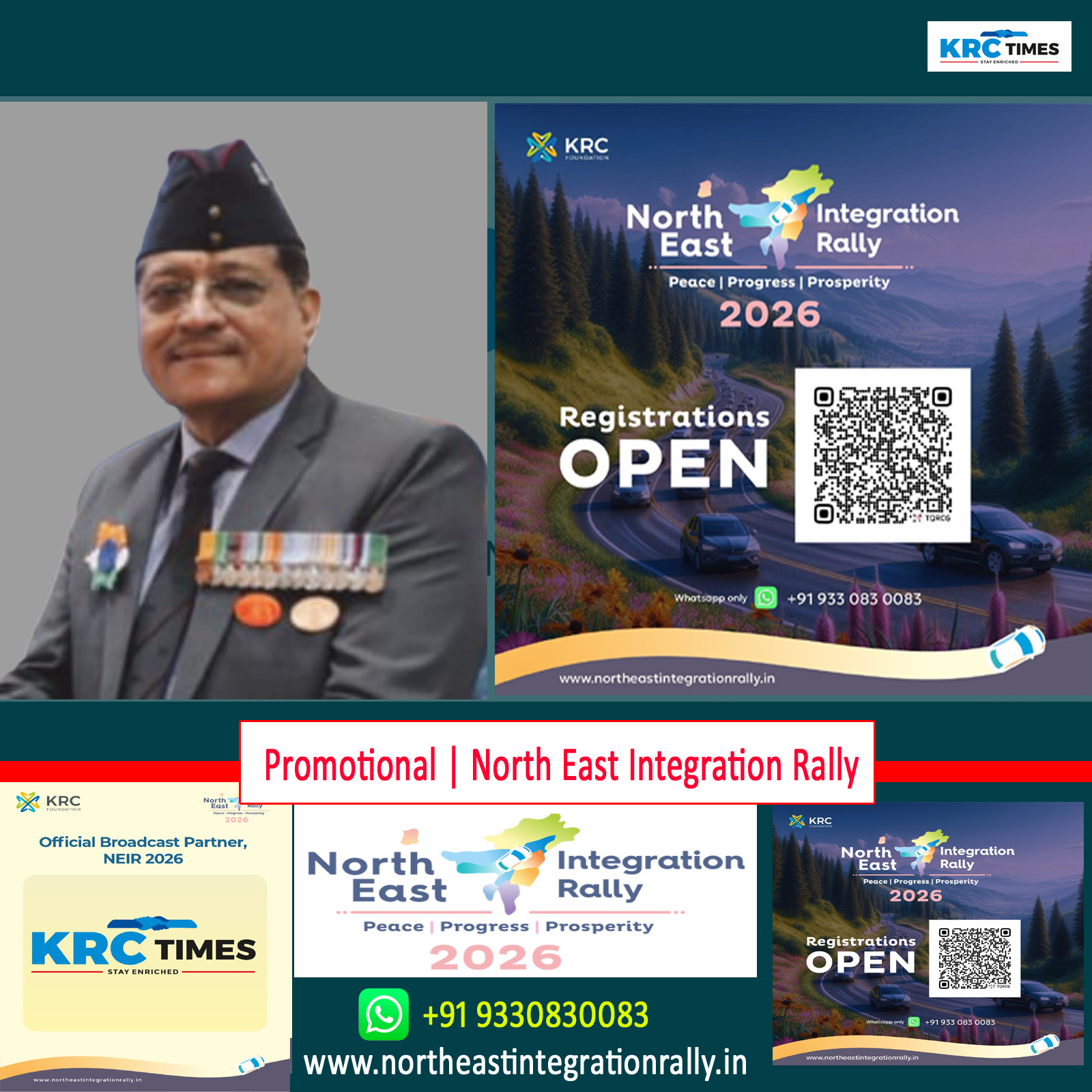
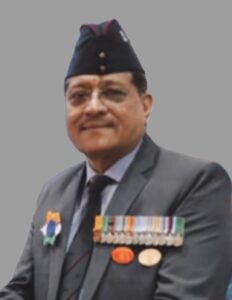
Col (Dr.) AKS Machhral, M-in-D, VSM (Retd)
1. From Ancient Roots to a Vision for Tomorrow.
The North-Eastern region of India is a world unto itself rich in heritage, unique in geography, and unmatched in potential. Encompassing eight states Assam, Arunachal Pradesh, Nagaland, Manipur, Mizoram, Tripura, Meghalaya, and Sikkim, the area forms a natural land bridge between India and the dynamic economies of Southeast Asia.
This is not merely India’s border. This is India’s opening to the world.
2. Ancient Origins and Civilizational Links.
Long before the formation of modern states, the North-East was home to ancient kingdoms and vibrant tribal republics:-
Assam’s Kamarupa Kingdom, mentioned in epics and the Puranas, stood as a major power for centuries. Manipur’s Meitei civilization, with its sophisticated script and martial traditions, formed one of the oldest living cultures in Asia.
Ahom rule in Assam (1228–1826) created a formidable state that defeated multiple Mughal invasions. Arunachal’s tribal polities maintained independent systems rooted in indigenous Donyi-Polo faith.
Tripura’s Manikya dynasty, one of the longest surviving royal families, connected Bengal with Southeast Asia.

The North-East was never isolated. It was a crossroads of:-
- Sanskritic influence.
- Indigenous traditions.
- Buddhist routes.
- Taoist and Southeast Asian cultural flows.
- The region was a thriving confluence, not a frontier.
3. Colonial Disruption and the “Buffer Zone” Approach
- The British, realising the region’s strategic location, imposed artificial barriers:-
- Dividing tribes across borders.
- Restricting movement through Inner Line Regulations.
- Detaching the region administratively from mainland India.
- Exploiting resources without building infrastructure.

For the first time, the North-East became a “remote region” in the colonial imagination far from the truth of its deep civilizational belonging.
4. Post-Independence Challenges.
- After 1947, a combination of factors slowed the region’s integration:-
- Difficult terrain.
- Limited roads and railways.
- Cross-border insurgency.
- Misunderstanding between Delhi and local communities.
- Ethnic tensions and lack of economic opportunity.
Yet, despite these obstacles, the region held firmly to the Union of India, often defended by its own brave sons and daughters.
5. The North-East as India’s Strategic Shield.
- The region shares 5,812 km of international borders with the following:-
- China, Myanmar, Bangladesh, Bhutan, and Nepal.
- This makes it:
- India’s eastern military shield.
- A critical gateway for defence logistics.
- Home to key airbases and mountain formations.
- Central to counter insurgency and border management.
- Vital for Indo-Pacific strategies.
Arunachal Pradesh and Sikkim are especially crucial in India’s strategic posture against China, while Assam serves as the logistical heart.

6. Natural Wealth and Economic Potential
The North-East is blessed with extraordinary resources:
● Water and Hydropower:
One of the richest hydropower basins in Asia
(e.g., Siang, Subansiri, Lohit, Dibang)
● Oil, Gas, Coal:
Assam is India’s oldest and still one of the largest petroleum-producing regions.
● Agriculture and Horticulture, World-famous varieties:
- Assam Tea.
- Muga Silk.
- Naga Chilli.
- Sikkim Apples.
- Manipur’s Black Rice.
● Tourism:
Unmatched landscapes: Tawang, Cherrapunji, Loktak Lake, Kaziranga, Majuli, Dzukou Valley.
● Bamboo and Forest Wealth:
North-East holds 66% of India’s total bamboo reserves.
● Cultural Economy:
Handicrafts, dance, textiles, indigenous art, martial traditions.

The potential is vast, waiting to be harnessed.
7. Connectivity: The Game Changer
Over the last two decades, connectivity has become the North-East’s greatest transformation tool:
- Bogibeel Bridge.
- Dhola-Sadiya Bridge.
- Broad-gauge railway expansion.
- New national highways and tunnels.
- Airports in major state capitals.
- India – Myanmar – Thailand Trilateral Highway.
- Kaladan Multimodal Project.
- Act East Policy enabling trade with ASEAN
The North-East is no longer a cul-de-sac.
It is emerging as India’s economic corridor to Asia.

8. The Cultural Strength: Unity in Diversity.
- The North-East demonstrates how India’s diversity strengthens national unity:
- 200 plus tribes
- 180 plus languages
- Indigenous faiths coexisting with Hinduism, Buddhism, Christianity.
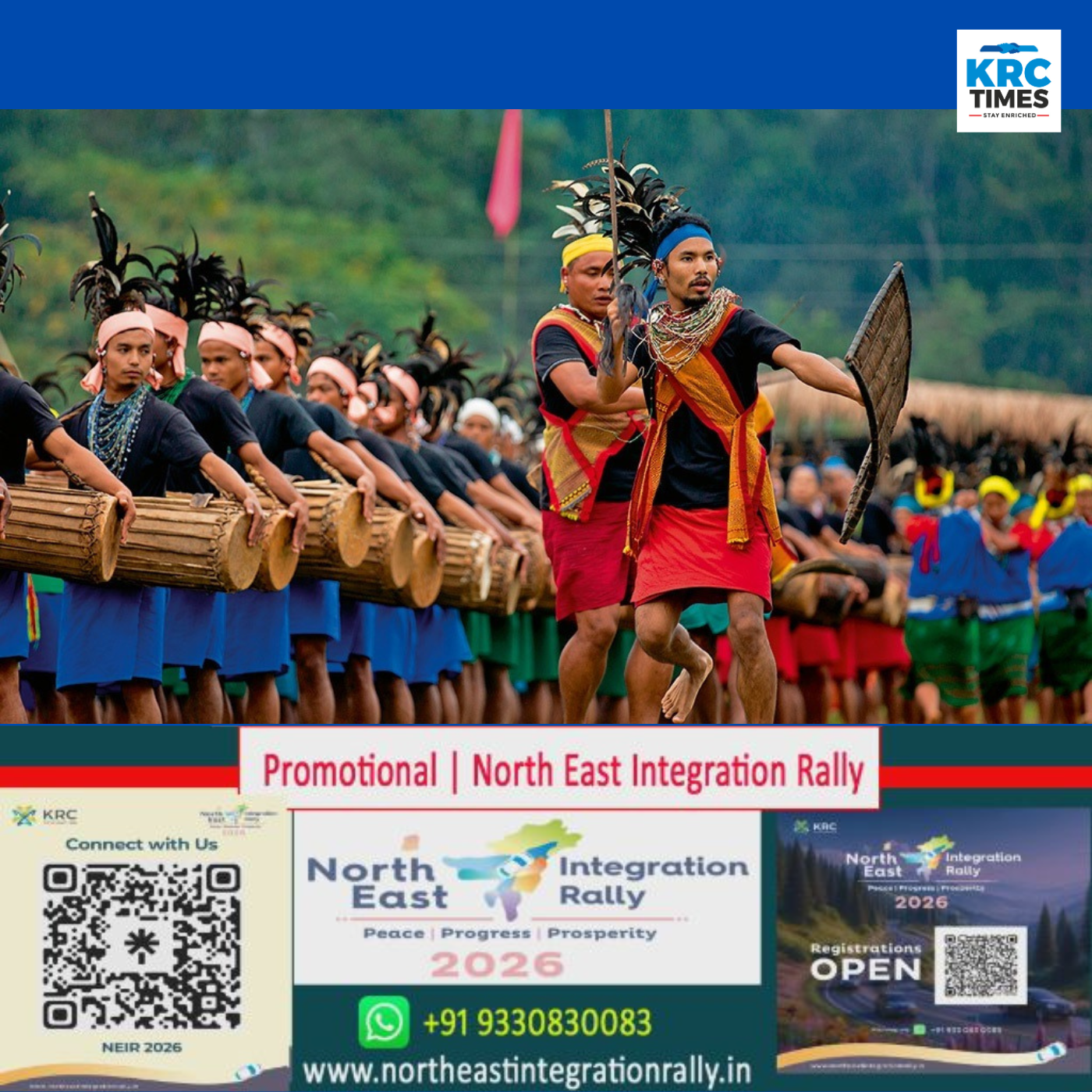
- Rich festivals – Igam, Bihu, Sekrenyi, Ningol Chakouba, Chapchar Kut.
- Deep respect for nature and community.
- Strong martial ethos in Assam Rifles, Army, CAPFs.
- This cultural richness is one of India’s greatest soft powers.
9. The North-East Today:
- Challenges and Hope.
- Challenges persist.
- Migration pressure.
- Insurgency remnants.
- Unemployment.
- Infrastructure gaps.
- Drug trafficking.
- Border tensions.
- Ecological vulnerability.
- But hope is stronger:
- Rising startups.
- New universities.
- Digital connectivity.
- Tourism boom.
- Greater political stability.
- Youth-led innovation.
- Increase in women’s participation.
- Deepening integration with the rest of India.
- The North-East is standing at a turning point.
- Closing Reflection, A Call to Action.
India’s future prosperity will be shaped not in isolation, but in connection, internal and external. And the North-East is the hinge upon which this connection swings.

If nurtured with sensitivity, respect, and long-term vision: The North-East can become India’s economic engine:
It can serve as the cultural lighthouse of Indian diversity. It can anchor the Act East policy, linking India to global markets.
It can stand as the strategic shield of the nation. But this requires:
Sustained investment, Genuine emotional integration, Empowerment of local communities, Environmentally sensitive development,
And a national commitment that the North-East is not a distant frontier but an intimate part of the Indian soul.
The North-East is not the end of India. It is the beginning of a new India.
- A stronger India.
- A prosperous India.
- A united India.
Author’s Note.
The North-East has always held a special place in my heart, not merely as a soldier who has served on distant frontiers and all the states of North-East, but as an Indian who recognises the region as a living bridge between our ancient civilisation and our emerging global future.
From the snow-fed valleys of Arunachal to the serene lakes of Manipur, from the vibrant festivals of Nagaland to the deep spiritual ethos of Assam, I have witnessed a cultural unity that is profound yet often understated.
In this context, the upcoming North-East Rally being organised under the banner of KRC holds immense significance. The rally, which is being flagged off by His Holiness Jagadguru Shankaracharya Swami Amritanada Devtirath Ji Maharaj of Shri Sharada Sarvagya Peeth, Jammu & Kashmir at Silchar when entering North- East states in Jan 2026, is not merely an event, it is a symbol of awakening.
It represents a renewed commitment to bringing together the diverse cultural heritage of the North-Eastern states, fostering emotional integration, and rekindling the civilizational unity that has always defined Bharat. Such initiatives remind us that connecting hearts is as important as building roads and bridges.
With this article, I attempt to bring together the entire story of the North-East from its ancient origins to the present moment of opportunity so that readers may appreciate its immense value and understand why the North-East must be at the centre of India’s rise in the 21st century.
Note:- Data collected from open sources to compile the article for better perception of readers.