“Meghalaya: A Soldier’s Walk Through Clouds, Culture, and Courage”
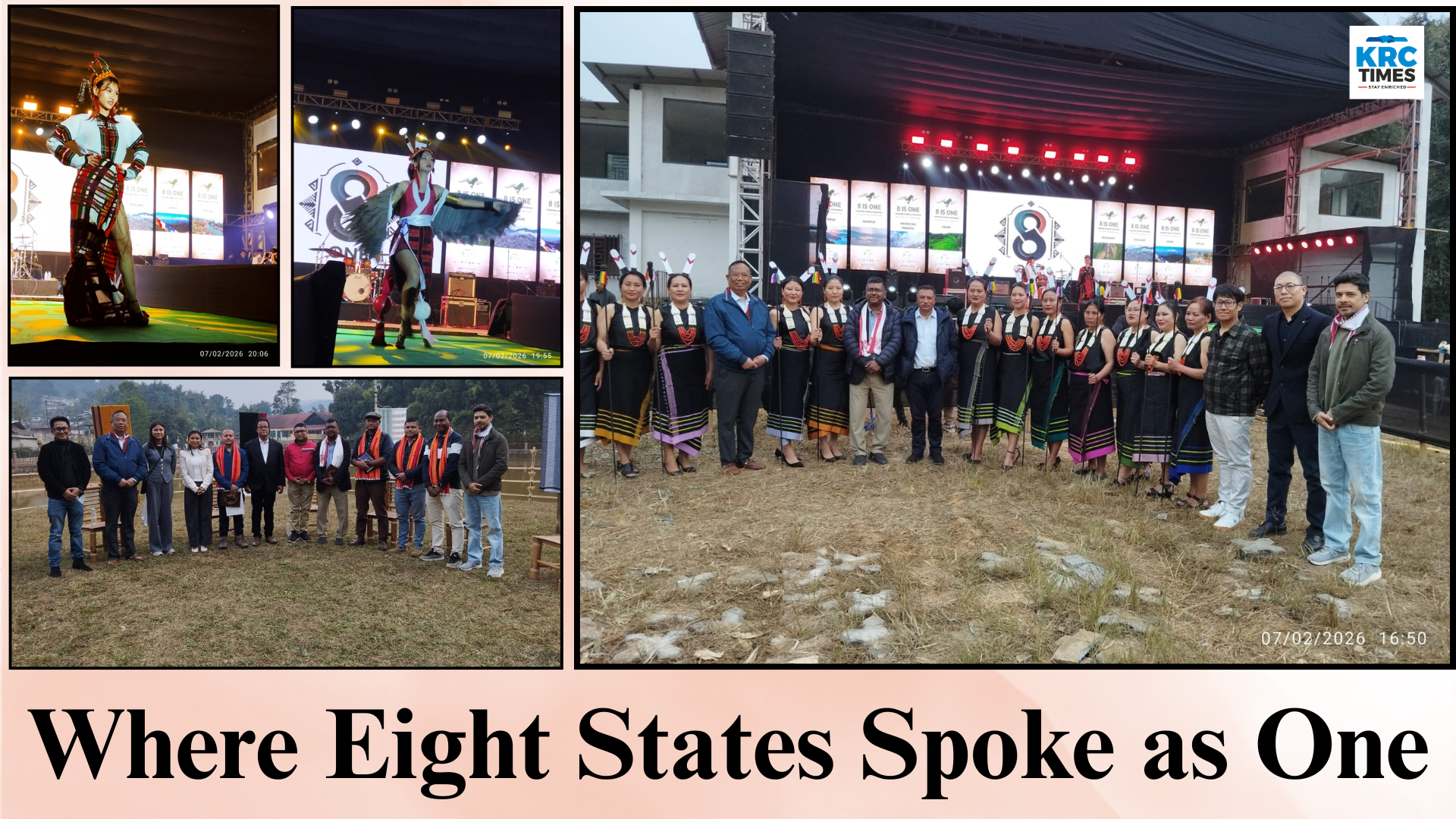
 North East Integration Rally
Col (Dr.) Ashwani Kumar, M-in-D, VSM (Retd).
A soldier learns early that some landscapes must be understood before they can be admired. Meghalaya is one such land. I encountered these hills not as a tourist, but in uniform trained to read terrain, observe weather, and rely on people whose lives are shaped as much by geography as by tradition. Here, clouds are not mere scenery but indicators, rain is not romance but reality, and the ground itself demands discipline.
Over time, as duty turned into familiarity, the land revealed its deeper character, a place where natural beauty, resilient communities, and quiet patriotism coexist in rare harmony. Meghalaya does not announce itself, it teaches, patiently and profoundly, through its people, its culture, and its enduring bond with the nation.
A Plateau That Commands Without Provocation.
From a strategic perspective, Meghalaya occupies a critical position in India’s eastern theatre. The Meghalaya Plateau rises sharply from the plains of Assam and Bangladesh, forming a natural elevated bastion. In military geography, height is not about domination it is about awareness. The southern escarpments provide commanding views and natural observation depth, offering strategic stability without aggressive posture.
For a soldier, this terrain teaches discipline. Movement is deliberate, logistics are demanding, and visibility is often limited by cloud, fog, and relentless rain. Weather here is not a background condition it is an active tactical factor.
Heavy rainfall tests endurance, patience, and planning. The land itself becomes an instructor, allowing no shortcuts and no complacency.
Dense forests, broken ground, and extensive limestone cave systems such as Krem Chympe create a complex, three-dimensional environment. Navigation relies not merely on instruments but on instinct, experience, and most importantly local knowledge. Here, technology assists, but trust sustains.
The People Who Know the Land.
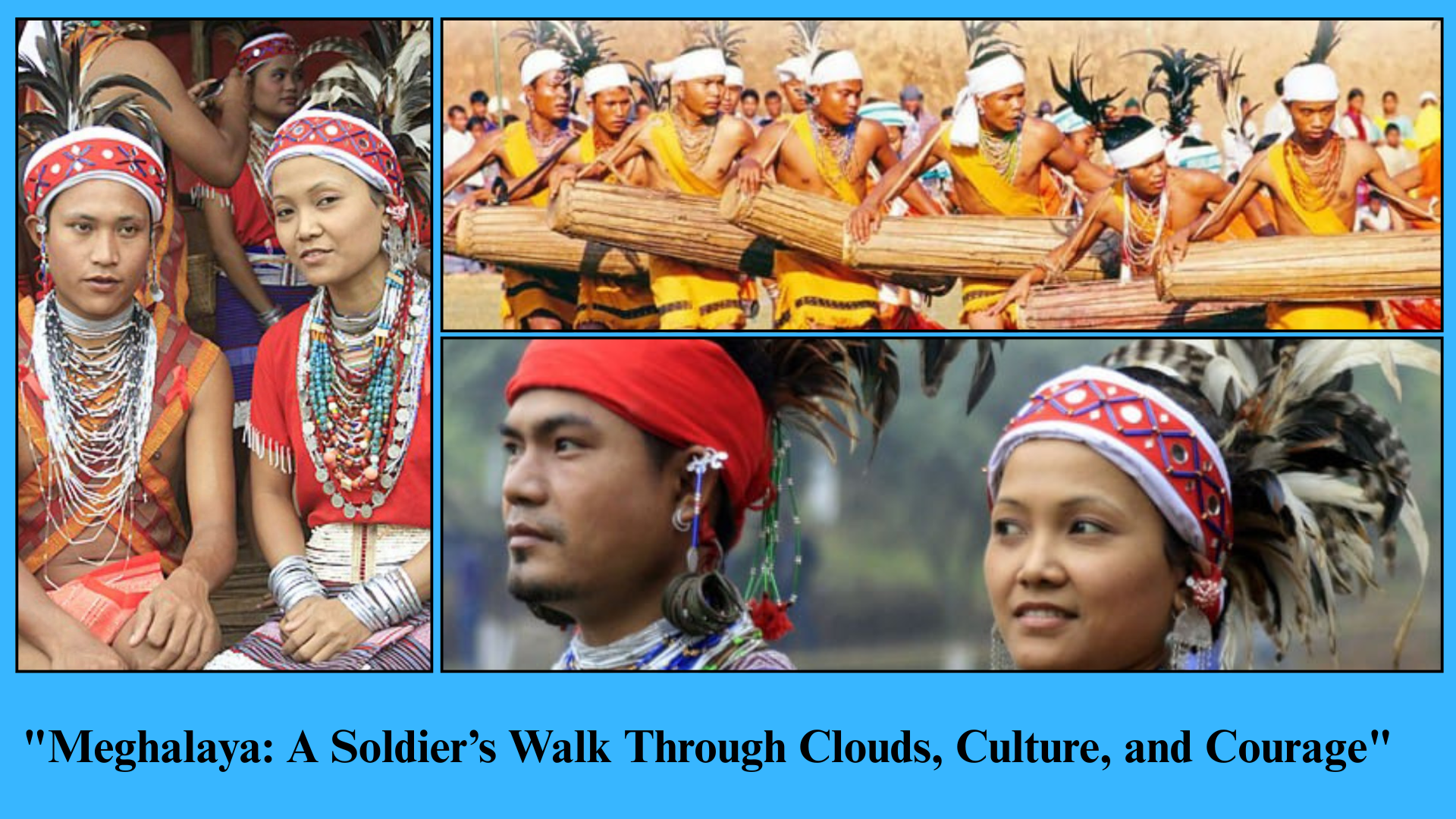
The greatest strength of Meghalaya does not lie in its elevation alone, but in its people the Khasi, Jaintia, and Garo communities whose lives are inseparable from the land they inhabit. Their social systems, particularly the matrilineal tradition, village councils (Dorbar Shnong), and the preservation of sacred groves, represent governance models rooted in consensus, continuity, and environmental balance.
In conversations with villagers elders, guides, farmers, shopkeepers, and youth it becomes evident that patriotism here is not expressed in slogans. It is lived quietly. People understand terrain better than any satellite image and weather better than any forecast. This deep-rooted awareness has long supported stability in the region.
Over decades, the Armed Forces have learned that security in Meghalaya is sustained not through force alone, but through partnership. Nation-building here is cooperative, patient, and enduring.
The Armed Forces and the Hills.
For the Indian Armed Forces, Meghalaya is both responsibility and classroom. Soldiers deployed here learn cultural sensitivity, restraint, and environmental respect. Border management along the Bangladesh frontier is less about confrontation and more about vigilance, coordination, and confidence-building.
Villages often serve as the first layer of awareness.
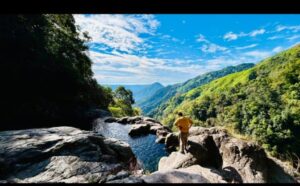
Soldiers, in turn, act as protectors and facilitators supporting disaster response during floods and landslides, aiding infrastructure development in remote areas, conducting medical outreach, and helping improve connectivity. This civil- military harmony remains one of the Northeast’s most understated strategic advantages.
Significantly, many young men and women from Meghalaya now serve in uniform across the Armed Forces and paramilitary units. They carry with them the resilience of the hills, an innate understanding of difficult terrain, and a discipline shaped by community life. Their service is a natural extension of their upbringing.
Water, Height, and the Rhythm of Life.
Meghalaya’s scenic grandeur is not ornamental it is structural to life itself. Waterfalls such as Nohkalikai, Wei Sawdong, Dainthlen, and Krang Suri are not seasonal spectacles alone; they are lifelines that sustain agriculture, settlements, and culture. Rivers carve paths through deep gorges, defining movement and habitation.
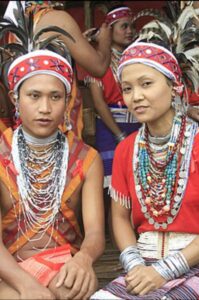
Sunrise points like Nongjrong offer sweeping views of cloud seas stretching to the horizon. For a soldier accustomed to observation posts, these heights provide not only visual dominance but perspective reminding one how small individual concerns appear against the scale of nature.
The land encourages humility.
Living Heritage, Not Preserved Relics. Perhaps nowhere is Meghalaya’s philosophy better expressed than in the Living Root Bridges of Nongriat. These structures are not built they are grown, shaped patiently over generations without harming nature. For anyone trained in logistics and engineering, they represent long-term thinking rarely seen in modern planning.
Cultural festivals such as Nongkrem, Wangala, and Behdeinkhlam blend faith, agriculture, and community into collective resilience. Music traditional rhythms alongside contemporary rock and blues flows naturally through the hills, making Meghalaya a cultural highland where tradition and modernity coexist without friction. This is a society that evolves without abandoning its roots.
Tourism: Opportunity with Responsibility.
As Meghalaya becomes increasingly visible on the national and global tourism map, the challenge lies in balance. The future of tourism here cannot be extractive. It must be community-led, environmentally conscious, and culturally respectful.
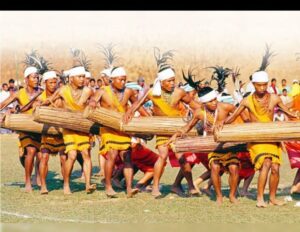
Destinations such as Dawki’s crystal-clear waters, Mawlynnong’s clean villages, Laitlum Canyons, Nongjrong’s heights, and the West Khasi Hills offer experiences that encourage reflection rather than consumption. Homestays, guided treks, cave exploration, cultural immersion, and spiritual retreats provide sustainable avenues for economic growth.
For a nation increasingly urban and hurried, Meghalaya offers something rare stillness, balance, and perspective.
A Soldier’s Reflection and the Larger National Narrative.
From a soldier’s point of view, Meghalaya offers a lasting lesson, strength does not always announce itself. Sometimes it stands quietly rooted deep in hills, forests, and communities holding the line with dignity and patience.

The reflections in this article arise from personal visits and professional exposure across India’s frontier regions. The intent is not romanticisation, but honest documentation of terrain that trains endurance, of people whose patriotism is lived rather than proclaimed, and of a culture that reinforces national unity through balance and restraint.
In this broader narrative of integration and understanding, initiatives such as the North East India Rally (NEIR) organised under the banner of KRC Times acquire significance. Such efforts help bridge perception gaps between the Northeast and the rest of the country by highlighting shared histories, collective responsibilities, and regional strengths. They reaffirm a simple truth: regions like Meghalaya are not margins of the map, but enduring pillars of the Indian Union.
To conclude, the Quiet pillars of the nation
Meghalaya stands as a reminder that nations are not held together by noise alone. They endure because of lands that teach patience, people who value harmony, and institutions that serve without spectacle.
In its clouds and waterfalls, in its villages and uniforms, Meghalaya continues to build India quietly, faithfully, and with remarkable grace.
Promotional | North East Integration Rally