


Modi-Putin-Xi on one stage
 Sangram Datta
Sangram Datta
India’s National Security Advisor Ajit Doval’s visit to Russia and Prime Minister Narendra Modi’s upcoming visit to China mark a dramatic shift in global geopolitics, especially as tensions rise between India and the United States over oil trade with Russia. As US President Donald Trump threatens higher tariffs on Indian goods, India is signaling it will not bow to pressure and is instead asserting its strategic autonomy.
Modi to Visit China Amid Growing Tensions:
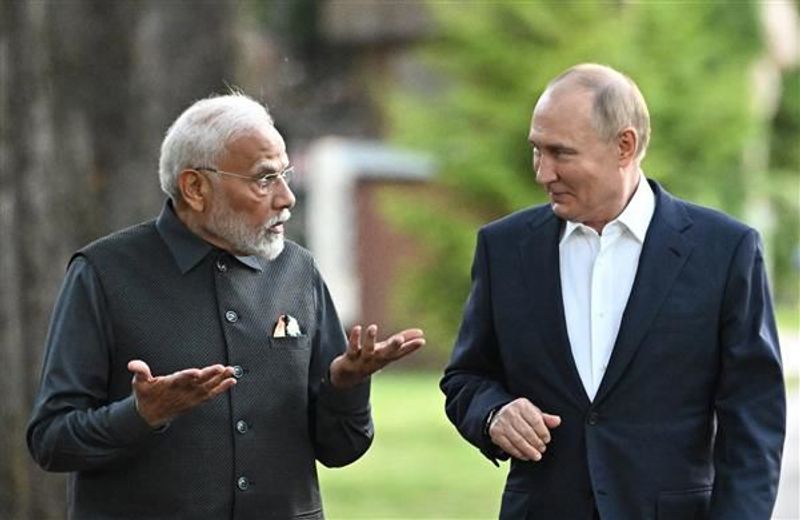
For the first time in seven years, PM Modi is expected to travel to China (Tianjin) to attend the Shanghai Cooperation Organisation (SCO) summit. This is his first visit to China since the 2020 Galwan Valley clashes. Russian President Vladimir Putin and Chinese President Xi Jinping will also attend, creating a rare moment where the leaders of the three most powerful Eurasian nations will share the same platform.
Tariff Threats from the United States:
The visit comes just days after Trump imposed an additional 25% tariff on Indian goods in retaliation for New Delhi’s continued import of discounted Russian oil. Total tariffs on some Indian exports to the US now stand at 50%. Washington has been pushing New Delhi to stop its energy deals with Moscow—but India has not relented, citing national interest and energy security.
Strengthening Ties with Russia:
India continues to import weapons and crude oil from Russia and is now exploring alternative payment systems to bypass the dollar (rupee-ruble trade). Moscow has praised India’s independent foreign policy, and discussions on completing the S-400 air defense system delivery and exploring new platforms like the Su-57 fighter jets are ongoing.
The China Factor:
Recent diplomatic engagements, including Chinese Foreign Minister Wang Yi’s visit to India, hint at a soft thaw in relations. Border discussions have resumed, and there is a mutual interest in de-escalating tensions as both nations face Western pressure. Modi’s presence in China could further open the door for recalibration of the India-China relationship.
Towards a New Strategic Bloc:
The convergence of Modi, Putin, and Xi could mark the early signs of a shifting world order. All three nations have expressed concern over unilateralism and Western dominance in global institutions. With India asserting sovereignty, Russia resisting isolation, and China pushing for a multipolar world, their alignment—however informal—could pose a challenge to US-led global influence.
Modi’s presence alongside Putin and Xi may not mean a formal alliance, but it clearly signals a shift. India is no longer content with being a balancing power—it is becoming a pivot in a multipolar world. As the West attempts to isolate adversaries, these Eurasian powers may be crafting their own version of global order—one where strategic autonomy and national interest trump external pressure.
Know More – Apply Here

