


Sreemangal is widely known not only within the country but also internationally for its communication network and commercial activities
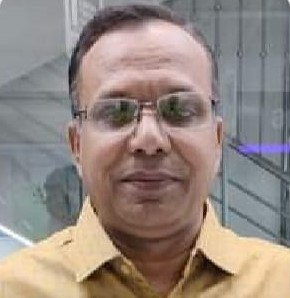 Sangram Datta
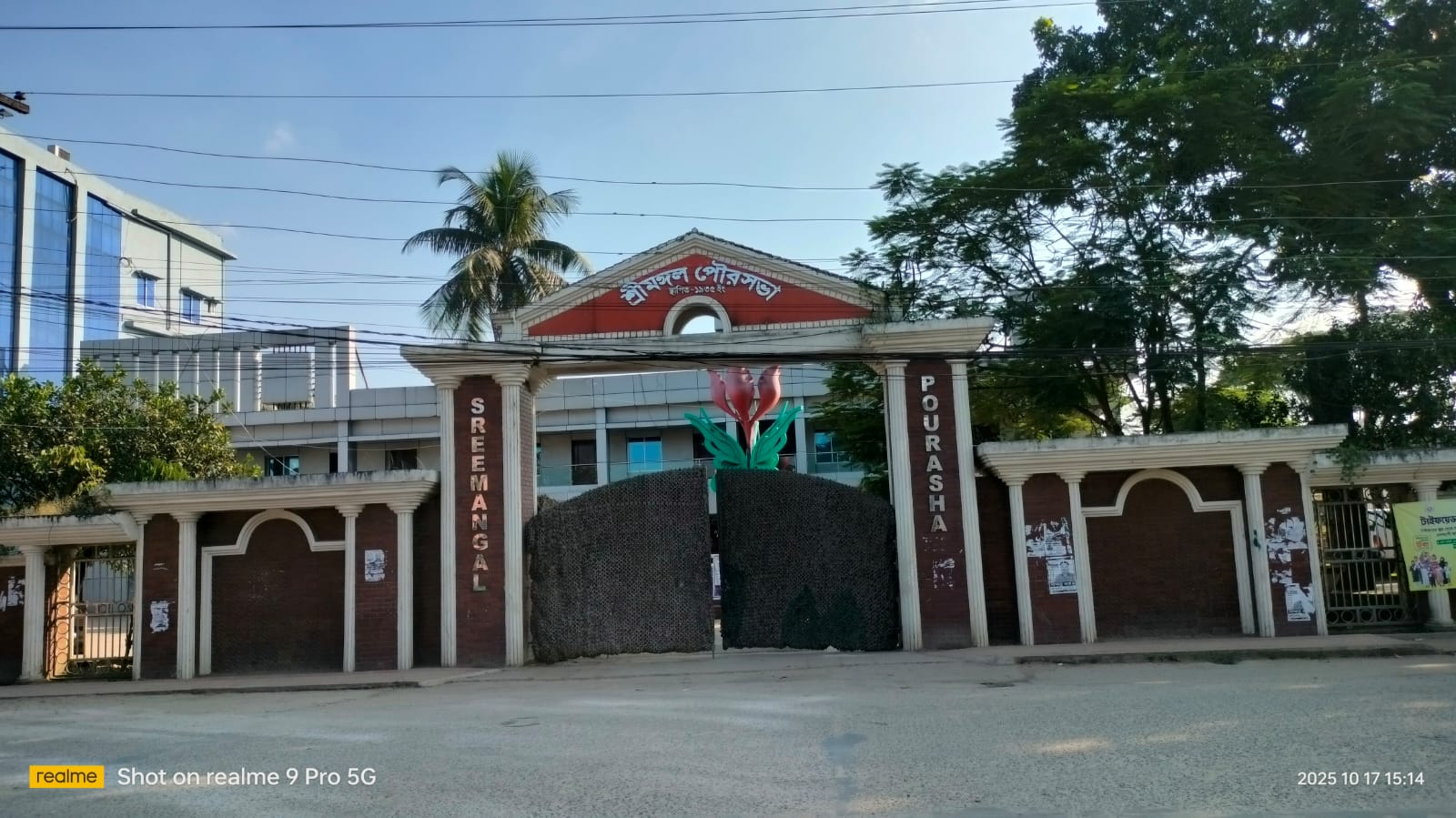
In the political history of Bengal, Sreemangal holds a unique place. This region, surrounded by the greenery of tea gardens, is known not only for its natural beauty but also for its long tradition of struggle, sacrifice, movements, and martyrdom.
From the anti-British movement to the Language Movement, from farmers’ and workers’ rights movements to the Liberation War of Bangladesh — the people of Sreemangal have shown remarkable courage, patriotism, and sacrifice in every chapter of history.
The present Sreemangal Upazila, formerly part of the greater Sylhet district (now Sylhet Division), is located in the famous tea-growing region of Moulvibazar district. Sreemangal is widely known not only within the country but also internationally for its communication network and commercial activities.
It is located about 50 miles southwest of Sylhet city center and 13 miles from Moulvibazar district headquarters, near the border of Tripura state of India. Situated in the eastern part of Bangladesh, this region carries centuries of historical heritage and glory, developing continuously over time. Sreemangal is beautifully located at the foothills of hills, decorated with tea gardens, forest resources, and attractive tourist spots including waterfalls and scenic natural landscapes.
During the Liberation War, Sreemangal was known as a control and communication center in the Sylhet region. Throughout history, Sreemangal has been associated with various rights movements, including the Indian independence movement, tea laborers’ movements, and the 1928 peasant movement where attacks were carried out against British police forces.
In the Balishira hill movement, two farmers sacrificed their lives for the protection of farmers’ rights. In tea labor movements, workers such as Basanta, Banshiganj, and many known and unknown laborers contributed through their struggles and sacrifices, keeping the spirit of resistance alive to this day.
Sreemangal in the Anti-British Movement
From the dawn of the 20th century into the 21st century, the freedom-loving men and women, youth, elderly, children, and adolescents of Sreemangal have continued to play an unforgettable role in historical movements. During the Indian independence struggle, especially following the 1905 Partition of Bengal movement, people were inspired by nationalism and patriotic sacrifice.
A strong public movement emerged across Bengal demanding the boycott of foreign goods, including foreign clothing, and encouraging the use of indigenous products. The movement spread rapidly across remote areas of Bengal.
The freedom-loving leaders and people of Sreemangal began boycotting British cotton textiles and started wearing local handloom and khadi clothing. They built strong public opinion in favor of boycotting foreign products.
Local leaders of this movement included Phani Dutta Panini (Bhojpur), Girija Choudhury (Bhojpur), Jatindra Mohan Datta (Noagaon), Sharada Das Tarafdar (Noagaon), Pramath Deb (Noagaon), Nagen Ghosh (Singbij), Suresh Som (Uttarsur), Yogesh Chatterjee (Sreemangal town), Jiten Pal (Rupashpur), Barada Kanta Sen (Sreemangal town), Mahendra Sharma (Tikiria), Surya Mani Deb (Ramnagar), Bipin Das (Uttarsur), Jatin Deb (Sreemangal town), Master Gour Gobinda Deb (Bharauura), Dijendra Bhattacharjee (Sreemangal town), Manmohan Bhattacharjee (Baulashi), Laku Dutta Chowdhury (Bhunobir), Lila Dutta Chowdhury (Bhunbir), Nikunja Bihari Goswami (Kalapur), Hriday Deb (Bharauura), Amar Dutta (Bhairav Bazar), Jashoda Gobinda Goswami (Kalapur), Indra Hom Chowdhury (Rupashpur), Mohammad Yunus Uddin (Patrikul), Nagendra Dhar (Sreemangal town), and others.
In 1911, the Partition of Bengal was annulled. In the following years, the movement slowed down.
In 1920, the Non-Cooperation Movement created strong revolutionary momentum across the region.
In 1919, at the Lahore Congress session, the Congress adopted a resolution in favor of complete independence. At that time, Parash Lal Shom, a member of the Assam Legislative Assembly from the Sreemangal area and residing in Kolkata, resigned from his membership following Congress directives.
When the British government called for re-election, his younger brother, Advocate Eresh Lal Shom, became a candidate. Local political activists mainly Congress protested and symbolically supported an independent candidate named Chirtan Horizon, a local cobbler from Moulvibazar, who was elected.
In 1922, during the nationwide Non-Cooperation and Khilafat movements, mass meetings, arrests, and repression increased. Prominent anti-British leaders spread across the country to strengthen the movement.
During this time, Deshbandhu Chittaranjan Das, Srimati Basanti Devi, and Maulana Mohammad Ali arrived at Sreemangal railway station to join the Khilafat movement in Moulvibazar. Students of Sreemangal welcomed them with floral garlands. The conference was held on 15 March 1921.
In 1928, Jatin Das, a revolutionary freedom fighter, died after a 63-day hunger strike in Lahore Central Jail. A mourning meeting was held at the Marwari Kali Bari (now Barowari Kali Bari) on Doctor Post Office Road in Sreemangal. The event was organized by Yogesh Chatterjee and Satish Shom.
In 1929, Dr. Surya Mani Deb and Jitendra Nath Pal Chowdhury of the Jugantar revolutionary group were arrested for political activities.
In 1930, the Sreemangal Thana Congress Committee was formed with Nalini Gupta as president and Suresh Som as secretary.
In 1932, under the Anushilan revolutionary group, Sitesh Som was appointed president and Yogesh Chatterjee was appointed secretary of the Sreemangal branch.
During the Salt Movement, Sitesh Shom participated and was injured in a police lathi charge in Noakhali.
The British police wearing red turbans destroyed the Sreemangal Congress office. During this time, young revolutionary leader Surya Mani Deb along with Mukund Chakraborty (Tikiria), Mahendra Sharma (Tikiria), Manmohan Bhattacharjee (Baulashi), famous politician Laku Dutta Chowdhury (Bhunobir), his sister revolutionary leader Lila Dutta (Bhunobir), Rohini Das (Baulashi), Sharada De (Nischintapur), and Sitesh Shom (Uttarsur) were arrested. Jitendra Pal Chowdhury and another student were beaten by British police. At this time, Khird Bihari Deb Chowdhury of Sreemangal town joined the Indian National Congress and led the anti-British movement.
In 1938, revolutionary Congress leader Netaji Subhas Chandra Bose visited Sreemangal and delivered a mass speech at New Bazar. He was served refreshments at the Sreemangal Dak Bungalow. Additionally, in 1936, 1938, 1945, and 1946, Congress leader Pandit Jawaharlal Nehru visited Sreemangal four times and delivered important speeches regarding the anti-British movement and referendum issues.
In September 1939, after the outbreak of the Second World War, the anti-British movement intensified in Sreemangal. During this time, Mohandas Karamchand Gandhi (Mahatma Gandhi) launched the “Quit India Movement” against British rule. However, the British government attempted to suppress the movement. Some revolutionary leaders, losing faith in the policy of non-violence, spread across different regions and continued the struggle. Many activists joined armed revolutionary activities targeting British officials.
Muhammad Ali Jinnah left Congress and joined the Muslim League. After being under house arrest for a long time, Subhas Chandra Bose secretly left India and went to Japan to organize the Azad Hind Fauj (Indian National Army) to fight for India’s freedom.
During World War II, Azad Hind Fauj launched several attacks and bombings in parts of India. The army advanced up to Imphal in Manipur but could not capture Delhi’s Red Fort due to shortages of food and weapons. After Japan and the Axis powers were defeated, Subhas Chandra Bose disappeared. During this time, supporters of Azad Hind Fauj and some armed youth in Sreemangal joined the movement.
In 1940, after the Lahore Resolution was proposed by Sher-e-Bangla A.K. Fazlul Huq, Muslim League politics expanded across India. The Sreemangal Thana Muslim League Committee was formed with Mohammad Israil as president and Abdus Sobhan Chowdhury as secretary.
In Moulvibazar’s Rajnagar, a women’s revolutionary organization called Shree Sangha was established during the 1930s under the leadership of revolutionary woman leader Lila Nag. Members of this organization carried out anti-British activities in various places and later found safe shelter in Sreemangal. Manmohan Bhattacharjee was one of the leaders of this organization.
In 1945, at the invitation of Muslim League leadership, Assam Chief Minister Sir Syed Muhammad Saadullah delivered a speech at a public meeting in Motiganj Bazar, Sreemangal, chaired by Mohammad Israil.
In 1946, Hussain Shaheed Suhrawardy and Nawabzada Liaquat Ali Khan conducted election campaigns and delivered speeches at a large public meeting at the Eidgah ground on Hobiganj Road, Sreemangal, chaired by Dewan Abdul Basit.
In the 1946 election, Jibon Santal, representing the tea labor community and nominated by the Congress, was elected as a member of the Assam Provincial Assembly from this region.
In 1947, Barrister Jogendra Nath Mandal from Barishal visited various areas of greater Sylhet and urged lower-caste Hindus to vote in favor of Pakistan during the referendum. As a result, most lower-caste Hindu voters supported Pakistan.
In the referendum, 239,619 votes were cast in favor of Pakistan, while 184,041 votes were cast in favor of joining India. The Muslim League secured 55,578 more votes, resulting in Sylhet and Sreemangal becoming part of East Pakistan.
Political History of Sreemangal During the Pakistan Period
Based on the two-nation theory, the Indian subcontinent was divided, resulting in the creation of two independent states — India and Pakistan. Pakistan gained independence on 14 August 1947, while India became independent on 15 August 1947.
The state of Pakistan was founded on a communal basis as the Islamic Republic of Pakistan. In contrast, India maintained its secular character. Although Pakistan’s founder, Quaid-e-Azam Muhammad Ali Jinnah, declared after the creation of Pakistan that the country would not belong only to Muslims and that Hindus, Buddhists, and Christians would enjoy equal rights, this principle was not fully reflected in the constitution. Non-Muslim communities were often treated as second-class citizens.
Even under strong communal politics, justice was not fully ensured for many citizens, including Muslims. The ruling elite of Pakistan, dominated largely by wealthy and influential groups from Punjab, began showing discriminatory attitudes toward Bengali-speaking people of East Pakistan from the very beginning. Due to this linguistic and economic discrimination, politically conscious Bengalis gradually began protesting.
After the creation of Pakistan, Bengali intellectuals and political leaders demanded recognition of Bengali as a state language. The movement united people from all religious communities — Hindu, Muslim, Christian, and Buddhist — under a common political cause.
The roots of the Bengali language movement can be traced back to the early 20th century during British India when debates arose regarding the official language of India. At that time, elite Hindu and Congress leaders supported Hindi, while Muslim League leaders favored Urdu. In protest, Dr. Muhammad Shahidullah delivered a paper at a meeting in Shantiniketan, Kolkata, in 1920, arguing that Bengali should be the common language of the majority of the population. Prominent political leader Prafulla Kumar Sarkar supported this demand.
In 1937, Maulana Akram Khan, editor of the newspaper Azad, wrote editorials supporting the Bengali language.
After the creation of Pakistan, efforts to establish Bengali as a state language intensified. Writers and intellectuals such as Abul Mansur, poet Fakhrul Ahmed, and Dr. Shahidullah wrote in favor of Bengali. Professor Abul Kashem took initiatives in September 1947 to ignite the Language Movement.
Noted lawyer and politician Dhirendranath Dutta of Comilla submitted a proposal at the Pakistan Constituent Assembly meeting in Karachi on 23 February 1948.
He demanded that Bengali be included alongside Urdu and English as a state language, arguing that the majority of Pakistan’s population spoke Bengali. However, the proposal was rejected, and Urdu was declared the state language on 11 March 1948.
When Dhirendranath Dutta returned to Dhaka, he was warmly welcomed by students at the airport, which marked the beginning of a more organized language movement.
In March 1948, Pakistan’s founder Muhammad Ali Jinnah visited Dhaka and declared in a public meeting that Urdu would be the only state language. Students immediately protested by shouting slogans opposing the decision. This protest later led to the formation of the All-Party State Language Action Committee.
In April 1948, the use of Bengali was approved for official activities in the provincial government of East Bengal.
From 1948 to 1951, Language Movement Day was observed annually in East Pakistan under the leadership of the Action Committee. Students of Victoria High School in Sreemangal played a leading role in these observances. Local political leaders and citizens supported student rallies and meetings.
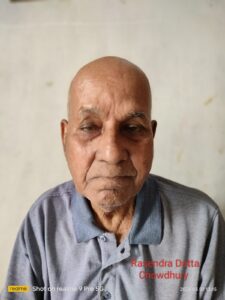
Student leaders such as Rasendra Datta (also known as Rasendra Datta Chowdhury), Biraj Kusum Chowdhury, Jogendra Datta, Shyamal Sengupta, Hitendra Gupta, Achyut Kumar Deb, Akhil Chandra Dhar, Dr. Fazlul Haque, Md. Mosaddar Ali, and Syed Matiur Rahman led demonstrations.
They were supported by leaders such as Md. Israil Mia of the Muslim League, Communist Party leader Surya Mani Deb, businessman Ajit Chowdhury, Khird Bihari Deb Chowdhury and Bimol Jyoti Chowdhury. After Jinnah’s death in 1948, Khawaja Nazimuddin became Governor General but did little to address Bengali language demands.
On 27 November 1949, DUCSU leaders submitted a memorandum to Prime Minister Liaquat Ali Khan demanding recognition of Bengali as a state language. As demands were ignored, students intensified protests. This eventually led to the historic events of 21 February 1952, when police fired on protesting students in Dhaka, killing Rafiq, Jabbar, Salam, Barkat, and many others.
Students across the country launched protests in response, and Sreemangal’s students played an active role. Large demonstrations and poster campaigns were organized throughout Sreemangal with slogans demanding justice and recognition of Bengali as a state language.
Mass rallies were held at the Sreemangal Municipality ground, where Syed Matiur Rahman presided. Leaders including Md. Shahjahan, Rasendra Datta, Akhil Chandra Dhar, Sajjadur Rahman, and Sri Balai Bhattacharjee spoke at the rally demanding punishment for those responsible for the killings.
In 1954, the United Front won the provincial elections in East Bengal, largely based on language movement sentiment. The Muslim League suffered a major defeat. Karamat Ali of Vanugach, Kamalganj, won a large majority in this election.
Jibon Santal was also elected as MLA from a reserved minority constituency in this region. Prominent leaders such as Sher-e-Bangla Fazlul Huq, Huseyn Shaheed Suhrawardy, Sheikh Mujibur Rahman, Professor Muzaffar Ahmed, Neerad Nag, Syed Ashraf, Mohammad Toha, and Dhirendranath Dutta were elected.
In 1956, the Pakistani government was forced to recognize Bengali as a state language due to popular pressure.
In 1957, when Maulana Abdul Hamid Khan Bhashani formed the National Awami Party (NAP), many young political activists from Sreemangal joined the party. NAP emerged as a strong political force against the Muslim League.
In 1963, during the Balishira peasant rights movement in Sreemangal, protestors seized six rifles from police forces. Two people, Salik (19) and Ganu (80), were killed in police firing. The movement eventually forced the government to make concessions. The movement was led by NAP leaders Rasendra Datta, Md. Shahjahan Mia, Member Md. Abdul Rahim of Tikiria, Abdus Khalik, Abdus Haque, and Chan Mia Mahaldar.
Public protests against police repression continued in Sreemangal with rallies and demonstrations.
In 1965, during the presidential election, committees were formed to support Fatema Jinnah. Leaders such as Dr. Md. Abdul Ali and NAP leader Rasendra Dutta served in the election committee.
In 1966, when the Six-Point Movement was launched by Bangabandhu Sheikh Mujibur Rahman, he was arrested multiple times and later imprisoned in the Agartala Conspiracy Case. NAP leaders also supported the Six-Point and Eleven-Point movements.
In 1968, Sreemangal Thana Chhatra League was established under the leadership of M.A. Rahim.
On 13 December 1968, a joint rally of Chhatra League, Chhatra Union, and NAP was held in New Bazar, Sreemangal, demanding the reopening of the Ittefaq newspaper printing press.
To honor the martyrs of the Language Movement and local martyrs Salik and Ganu, Sreemangal’s first Shaheed Minar was established in 1969 near the municipal town committee ground through the efforts of local political and student leaders despite strong opposition from the Muslim League. This Shaheed Minar later became the central Shaheed Minar of Sreemangal.
In January 1969, the All-Party Student Action Committee and Democratic Action Committee (DAC) were formed in Sreemangal, leading mass protests.
After his release from the Agartala Conspiracy Case in 1969, Bangabandhu Sheikh Mujibur Rahman visited Sreemangal and stayed at Dr. Md. Abdul Ali’s residence on Ramakrishna Mission Road. Later, local Awami League committees were formed under the leadership of Mohammad Ilyas and Altafur Rahman Chowdhury.
On 6 April 1970, Pakistani authorities arrested NAP leader Rasendra Datta, Mohammad Shahjahan Mia, Chhatra League leader M.A. Rahim, and S.A. Mujib under martial law act on charge of breaching Pakistan ( That is also known as Joybangla Case) and sent them to Moulvibazar Jail. But Public pressure forced their release.
In the 1970 elections, Mohammad Ilyas and Md. Altafur Rahman Chowdhury were elected to the national and provincial assemblies respectively on the Awami League ticket. When the Pakistani regime delayed power transfer despite Bengali electoral victory, public protests intensified, eventually leading to the Bangladesh Liberation War.
The Great Liberation War of 1971
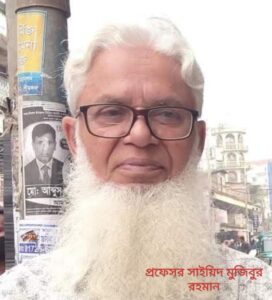
On 1 March 1971, at 1:00 p.m as soon as Pakistan President Yahya Khan’s speech was broadcast over the radio, a protest procession began from the Sreemangal municipality office led by NAP leaders Rasendra Datta, Md. Shahjahan Mia, and Sayed Muijur Rahman. Within moments, the entire town became vibrant with marches led by Awami League, NAP, and their student organizations—many of whom had previously been active in the Six-Point and Eleven-Point movements.
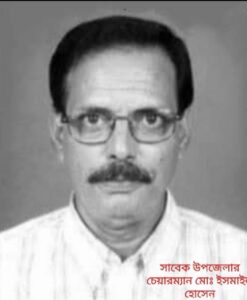
Thousands of students and citizens joined the procession. Among those who led and participated were Khird Bihari Deb Chowdhury, Rajendra Das, Gopal Sen, Dhirendra Datta Panu, Hirendra Datta Chowdhury (Subhash), Dr.Fazlul Haque, Md. Abdur Rahim, Saiyeed Mujibur Rahman, Dilip Kumar Roy, Md. Abdul Latif, Md. Abdul Haque, Hiralal Hazra, Mohammad Fateh Ali, Muhit Bhattacharjee, Radhakanta Tanti, Biresh Deb, Babla Deb Chowdhury, Abdul Qaiyum Tarafdar, Satya Bhowmik, Mamun Chowdhury, Awami League leaders Mohammad Ilyas and Md. Altafur Rahman Chowdhury, Dr. Md. Abdul Ali, Dr. Rama Ranjan Deb, Mohammad Arju Mia, Monir Mia, Ataur Rahman, M.A. Rahim, S.A. Mujib, Mohammad Ismail Hossain, Mohammad Abdul Mannan, and many others.
The air echoed with slogans such as “Joy Bangla,” “Bangladesh, a new nation in the world,” and demands for an end to military rule and implementation of the Six- and Eleven-Point programs. After the procession, a massive public gathering was held at the municipal field where leaders of NAP and Awami League addressed the crowd. From that day forward, daily marches and protest activities spread across markets, tea gardens, and villages.

On 3 March, when Pakistani forces opened fire in Sylhet, killing a protester, anger spread rapidly among the people.
On 7 March, Bangabandhu Sheikh Mujibur Rahman delivered his historic speech, which inspired the non-cooperation movement and intensified resistance across the country.
On 23 March, under the leadership of the local Chhatra League and Chhatra Union, the Pakistani flag was lowered in Sreemangal and replaced with the red-green flag of independent Bangladesh. Leaders included M.A. Rahim, Ekram Hossain Chowdhury, Biraj Sen Tarun, Moin Uddin, and Syed Muijur Rahman.
On 24 March, a Punjabi SDPO from Moulvibazar arrived and re-hoisted the Pakistani flag. The following day, protestors surrounded the police station. In front of the authorities, local leaders lowered the Pakistani flag again and raised the flag of Bangladesh.
On the night of 27 March, the Officer-in-Charge of Sreemangal Police Station, Sirajul Islam, handed over stored firearms to resistance fighters. Barricades were set up on highways, and trees were felled to block the advance of Pakistani troops. Leaders including Saidyed Mujibur Rahman, Rasendra Datta, Mohammad Shahjahan Mia, and student activists organized resistance efforts with workers and farmers.
Elected representatives Mohammad Ilyas and Md. Altafur Rahman Chowdhury went into hiding in the Balishira tea garden area to plan the war effort. Local residents prepared for possible attacks by gathering bricks, stones, and other materials for defense.
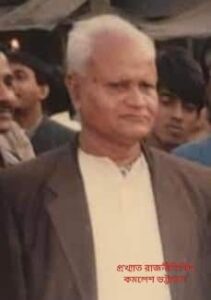
On 28 March, a five-member Action Committee was formed to coordinate resistance efforts, with Farid Ahmed Chowdhury as convener and Dr. Abdul Ali, Muhibur Rahman, Kamalesh Bhattacharjee, and Saiyed Mujibur Rahman as members.
Members of the Ansar force including Captain M.A. Musabbir and Captain Matlab, along with local leaders, collected arms from villages and tea garden managers and formed organized freedom fighter squads. Weapons were distributed to trained volunteers.
On 29 March, Pakistani troops hiding near Bhairab Bazar suddenly opened fire on a procession, killing a man named Harmuz Mia.
On 30 March, Pakistani forces in Moulvibazar sent two fire brigade vehicles toward Sreemangal under the pretext of extinguishing a fire. Suspecting military involvement, local youths stopped one vehicle and questioned its crew, while the other managed to escape.
That night, Pakistani forces withdrew from Moulvibazar toward Sylhet. Meanwhile, students and young activists assembled at Victoria High School field for drills and parades, creating the impression of strong organized resistance.
On 31 March, Constituent Assembly member Manik Chowdhury arrived in Sreemangal and issued directives on behalf of the emerging independent Bangladesh authority to maintain law and order. Retired Colonel Abdur Rab, Dr. Abdul Ali, Mohammad Ismail Hossain, and other local leaders gathered EPR members and volunteers to prepare for the Liberation War. Thus, Sreemangal actively participated in the early resistance that ultimately became part of the nationwide Liberation War of Bangladesh in 1971.
News broadcast by Swadhin Bangla Betar Kendra (Independent Bengal Radio Station) and various international radio stations continually reported the indiscriminate atrocities and mass killings carried out by the Pakistani army, along with the armed resistance of the Bengali people.

During this time, Ansar Commander Manik Chowdhury and Mukit Laskar began training enthusiastic young volunteers at the field of Sreemangal Victoria High School.
On 1 April, Commandant Manik Chowdhury and Major C.R. Dutta jointly arrived in Sreemangal from Habiganj. With a large resistance force, they advanced toward Moulvibazar to confront the Pakistani army. Major C.R. Dutta, along with Mujahid Captain M.A. Musabbir, organized and gathered Mujahid fighters. Among them, Mukit Laskar of Sreemangal and Mohammad Anis, a rickshaw puller, were later killed by Pakistani forces on the Sylhet battlefield.
On 2 April, this force took position at the Moulvibazar Tourist Guest House.
It is to be mentioned here that from 27 March, the Sreemangal Municipal Office functioned as the control room for coordinating the Liberation War in greater Sylhet.
Until 28 April, freedom fighters engaged in fierce resistance and kept the flag of independent Bangladesh flying high in Sreemangal. During this period, the Commander-in-Chief of the Liberation War, General M.A.G. Osmani, and Brigadier Pandey visited Sreemangal twice.
By 6 April, the situation worsened. Pakistani forces strengthened their position at Sylhet Airport, turning the region into a full-scale war zone. From the liberated areas of Teliapara and the Sreemangal control room, local leaders began sending batches of freedom fighters into armed combat. During this time, the courageous Captain Aziz was seriously wounded in battle at Rashidpur in Sylhet, and several freedom fighters were martyred. Pakistani forces established positions by land and air, transforming the entire Sylhet region into an active battlefield.
In the Battle of Shalutikor, freedom fighter Siraj Mia was captured and brutally beaten. Believed to be dead, he survived by remaining motionless and later escaped despite severe injuries.
To prevent the Pakistani army from obtaining food and fuel, all petrol from pumps in Sreemangal was transported to the Barmachhara training camp. Locks of food warehouses were broken, and rice and wheat were taken to Liberation camps. In Moulvibazar, the National Bank vault was reportedly blown open, and funds were seized by leaders supporting the Liberation War. The LSD warehouse in Sreemangal was opened, allowing the public to collect food.
On 28 April at 10 a.m., Major Kazi Nuruzzaman arrived in Sreemangal. By then, the war situation had significantly deteriorated. The environment was tense. Thousands of men, women, and children fled across the border into India to save their lives. Meanwhile, certain anti-independence elements took advantage of the chaos to carry out looting and oppression.

Two Pakistani military aircraft then conducted bombing raids over Sreemangal for nearly half an hour. The factory of Majdihi Tea Garden and the ration shop and residence of Mudabbir Hossain were destroyed. A woman was killed in the bombing, and Mudabbir Hossain and a carpenter were injured. Gouranga Mallik and a rickshaw puller also lost their lives.
On 30 April, Pakistani forces entered Sreemangal for the first time and began widespread killings. Aghor Bhattacharjee, Chief Assistant of Mirzapur Tea Garden, was summoned, tortured, and killed beside the Dhaka–Sylhet highway in Bhunabir Union. Mustafa Alam of Narayancharra Tea Garden and his son-in-law were murdered. Tea labor leader Paban Tanti of Rajghat and Shambhu Singh of Phuskuri Tea Garden were also killed.
In one of the most tragic incidents, 45 tea workers from Bhanugach Tea Garden were lined up near a bridge beside Sreemangal Government College and shot dead. Their names remain preserved in local memory as martyrs of the Liberation War.
From May onward, Pakistani forces carried out extensive looting, arson, sexual violence, and repression throughout Sreemangal. Station Road, Moulvibazar Road, and College Road were set ablaze and reduced to ruins. BBC journalist Mark Tully later reported on the destruction he witnessed.
During the war, Pakistani officers including Captain Tarek Syed and Captain Selim (at the Dak Bungalow), Major Ershad (at the WAPDA Rest House), and Lt. Col. Yamin Bhatt (at the Sindur Khan EPR Camp) operated in tea gardens and rural areas, carrying out severe repression.
Homes of wealthy mainly Hindu families and Awami League leaders involved in the Liberation struggle were looted and burned. Collaborators seized properties of pro-independence citizens. A Peace Committee was formed under the leadership of local Muslim League leader and municipal chairman Dewan Abdur Rashid, who assisted the Pakistani forces.
In the city’s Purvasha residential area, eight youths were shot dead with the assistance of local Razakars ( Collaborators). Similar killings took place in tea gardens, where workers were targeted. Shankar Debnath lost his life while supplying food to freedom fighters.
In October, a group of freedom fighters took shelter at the home of Gangesh Deb Roy in Bhunabir, planning an operation at Bilash Bridge. On their way, freedom fighter Samir Som was captured and later killed in Sreemangal town. Others, including Moinuddin, Shambhu Nayek, and Arjan Poddar, were also captured and shot.
Pakistani forces used the Sreemangal WAPDA Guest House as their headquarters and established an entertainment center there. Based on reports from collaborators, freedom fighters, intellectuals, and political activists were detained, tortured, and interrogated. Many were later executed near the BDR camp at sites that became known as mass killing grounds along the Bhurvuria stream. Numerous remains were discovered in these areas after the war.
After eight months of struggle, on 4 December 1971, Sreemangal was liberated with the assistance of the Indian Army and the Mukti Bahini. Sreemangal fell under Sector 4 of the Liberation War, commanded by Major Chittaranjan Dutta (C.R. Dutta).
Through immense sacrifice, courage, and resilience, Sreemangal secured its place in the proud and painful history of Bangladesh’s Liberation War.
Conclusion
The political history of Sreemangal stands as a shining testament to struggle, sacrifice, and courage. From the anti-British movements to the Language Movement, from the fight to protect the rights of farmers and workers to the autonomy movement and the Great Liberation War, the people of Sreemangal repeatedly proved that they would never bow to injustice.
This history is not merely a memory of the past; it is a source of inspiration for future generations. The sacrifices of every martyr, every committed leader, and every ordinary citizen have enriched our national consciousness. Their contributions and dedication will remain eternally remembered in the history of Bengal.