


It is essential to engage the rural youth in a productive way in tandem by providing them possible opportunities for their growth and development
 KRC TIMES Desk
Dr. Banarsi Lal
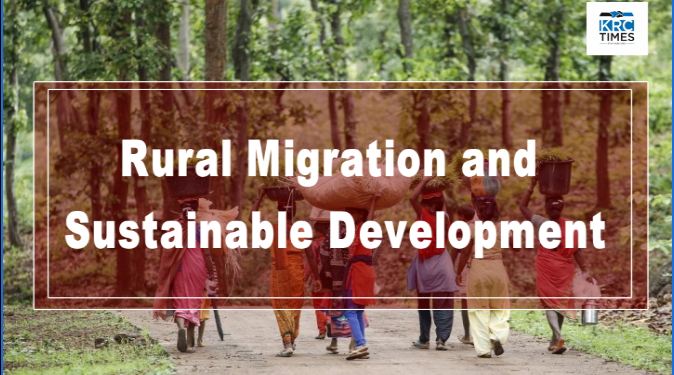
In present era international attention is growing on rural migration, its causes, its effects and the way in which it occurs. Rural-urban migration is one of the most widespread global demographic trends. It has been observed that between 2000 and 2017,the total number of international migrants increased from 173 millions to 258 millions and as many as 25 millions are refugees.
Rural India constitutes about 70 per cent of the Indian population. It is essential to engage the rural youth in a productive way in tandem by providing them possible opportunities for their growth and development. Presently rural youths are losing interest in agriculture and allied sectors.
The interests of the youths in agriculture can be retained by commercializing attractive and make it remunerative. There is need to make agri-based industries in the villages so that income and employment opportunities can be generated for the young generation living in rural areas. Conserving natural environments while feeding the growing human population requires higher productivity per hectare.
Presently India have the youngest workforce in the world and it can become the human resource capital in the world by creating skill among the youths and convert the trained manpower for the growth of the nation economy. In India about 51 per cent of the households survive on income from manual casual labour, 30 per cent from cultivation and 19 per cent from other sources.
About 35. 73 per cent of the rural people are illiterate and about 67 per cent have education below or till primary. Women constitute about 48.5 per cent of the population and play significant role in strengthening the Indian economy. Migration is closely associated with fighting hunger, achieving food security and promoting the sustainable use of natural resources. Basically, it is a rural phenomenon.
According the World Bank, over 75 % of the world’s poor are located in the rural areas .Rural people migrate for many reasons in the urban areas for better jobs and education or following of family members who have migrated. The positive aspects of rural-urban migration are not without negative consequences. Rural communities lose human capital especially rural youths who are attracted towards education and job opportunities in urban areas.
This often results in losses of traditional knowledge and socio-cultural values, including agro biodiversity and ethanobiological knowledge. In addition, the local social structure often changes as males migrate ,leaving communities with children, women and elderly. These changes affect local environment of villages. Changes in land use and local societies cause a slow down of the rural economy and local organisations will be unable to maintain infrastructure.
It is estimated that about two million people are shifting from rural to urban areas annually. From 2001 migration from rural to urban areas has increased from 27.8 to 31 per cent. Rural migrations to the urban areas have direct impact on agricultural production and productivity.
Rural India remains in the focus of the policy makers as 10.1 per cent of its labour force is unemployed as compared to 7. 3 per cent in the urban areas. Agriculture is the dominant employer in the villages followed by construction, manufacturing and community services. Villages are also the source of workforce in the adjoining towns and cities.
In rural areas income from the agriculture is not sufficient especially for the small and marginal farmers who are about 85 per cent of the farm holdings and for the dry land farmers who constitute more than half of the cultivated land. There is need to increase the income and employment opportunities for the rural youths to stop the rural migration.
Rural youths migrate from rural areas to urban areas in search of income and employment as the agriculture in the rural areas does not suffice their basic needs and desires. In urban areas they face the problem of housing, language and skill especially in the beginning. Due to these factors they are under paid and their growth is affected. The benefits of migration are not common. Migration can reduce inequalities, it can create more problems.
Migration has significant but mixed impacts on rural areas and agriculture. For example, significant migration out of overpopulated rural areas can have a significant impacts by shrinking the local labour poor and causing local wages to rise. Meanwhile, migration into regions with a low rural population can fill critical labour shortages in agriculture.
There is need to contemplate on the issue of rural migration. There is need to establish youth hostels in the urban areas which can give shelter to the rural youths especially in the beginning. There is also the need to change the set up of some departments to help the rural youths.
The employment office established at each district should be changed for the career guidelines department. Some states in the country have taken initiative in this direction. From thousands of years farming has been sustaining life on the earth. We observe various success stories of the progressive farmers across the nation.
Some success stories from Reasi district of J&K where organic vegetables growing, poultry farming, floriculture and diversified farming have transformed the lives of the farmers. These farmers have achieved the great success with the adoption of innovative technologies. With the adoption of innovative technologies they have increased their crops production and productivity.
It occurred because of their consistent and arduous efforts. The scientific approach adopted by these farmers has resulted maximum output with the minimum inputs. There is need to make our agriculture more entrepreneurial and profitable.
Value addition in the agricultural crops can create more income and employment for the rural youths. Farmers need to adopt the modern agricultural technologies to make farming more profitable. Protected cultivation is high-tech cultivation which produces 5-12 times higher output than cultivation in open fields.
The demand of mushroom is increasing in the market and mushroom cultivation has become the profitable business. Important species of mushrooms are button, oyster, wood ear, shitake and paddy straw. India produces only 0.13 million tonnes of mushrooms out of which button mushroom contributes about 85 per cent of the total mushroom in the country.
Out of the total agricultural residue, if one per cent is utilized for mushroom cultivation, the country can produce over three million tonnes of mushrooms and 10 million tonnes of organic manure annually.
Production and supply of inputs required in the agriculture is the commercial ventures with lot of scope especially for the rural youths. Farm machinery can also create employment for the rural youths. In addition repair of farm machinery can also provide commercial ventures to the farmers.
Farm machinery on the one hand will benefit the individuals engaged in the different ventures and on the other hand will help to increase our farm incomes. There is need to combine the farm and non-farm income at the household level which will provide resilience against adverse situations.
Tourism contributes around 11 per cent of the world work force and 10.2 per cent of the global gross domestic product. Our nation has a vast and varied agriculture landscape with natural beauty of blooming mustard fields of the northern India to blooming horticultural trees in the hilly areas to the tulip garden in Kashmir.
Our rural areas have immense scope in agri-tourism which can help to create new employment for the rural youths. Tourism industry in India is growing at a rate of 10.1 per cent. Some states are making some strenuous efforts for rural tourism. In Maharashtra, people residing in the rural areas have formed Maharashtra State Agri and Rural Tourism.
There are many agri-tourism centres in the state. In Kerala rural tourism is attracting tourists across the globe. Similarly Rajasthan has also some rural tourism destinations. Our adjoining state Himachal Pradesh is also promoting rural tourism and natural tourism in the hilly areas of the state is attracting the tourists. Gujarat rural areas are also attracting the tourists.
Union Territory of J&K has huge potential in rural tourism and govt. is making efforts to develop rural tourism so as to enhance the income and employment in the rural areas of J&K. Promotion of rural tourism needs conceptual convergence with rural tourism, health tourism, eco-tourism, adventure tourism etc. Rural tourism can flourish only when the rural infrastructure such as road connectivity, communication and health sector is created in the rural areas.
There is need to search the potential areas in the rural areas for the rural tourism and infrastructure required in these areas should be made. There is need to make strenuous efforts to make the lives of rural people comfortable and easy. Development of infrastructure and institutions necessary for a sustainable food system can improve the livelihood sources of the people residing in rural areas.

Know More – Apply Here