

FROM COMFORT TO CRISIS
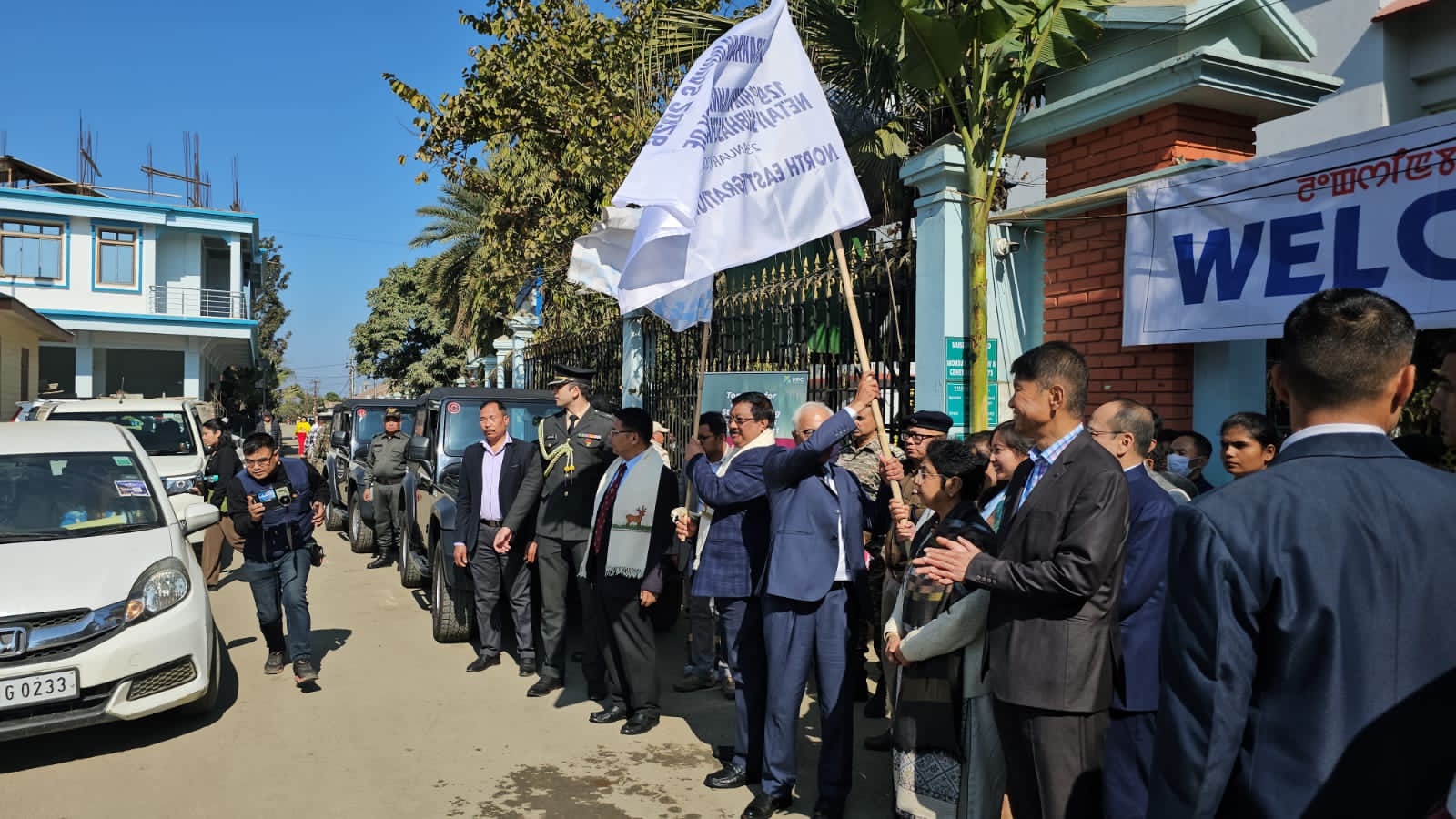
 North East Integration Rally

PARTHANKAR CHOUDHURY
In the past few decades, the Barak Valley, particularly Silchar has undergone a transformation that is both physical and environmental. One of the most visible indicators of this change is the widespread installation of air condi- tioners in homes.
Today, air conditioners are no longer a luxury reserved for the wealthy or specific institutions such as high-end hotels and hospitals, rather they have become a necessity for comfortable living. This marks a stark con- trast from just thirty years ago, when their presence was rare, even in urban households. Back then, the architectural landscape of the valley was vastly different.
Most residential buildings were single storied or, at most, one-and-a-half storied traditional Assam type houses with tin or thatched roofs. Those homes, designed in harmony with the nature, remained surprisingly comfortable during warm weather. The heat during that summer were bearable, and air conditioning was considered luxury.
Today, however, the summer season brings almost oppressive heat, making modern concrete buildings unbearable without artificial cooling. The air that once soothed, now suffocates, and this shift is a direct consequence of a global crisis that is being increasingly felt at all places.
There is no denying the fact that in the last two decades of the 20th century and the first quarter of the 21st century, planet earth has experienced an alarming rise in average temperatures. This global phenomenon has made mankind acquainted with the buzz words like ‘Climate change’, ‘Global warming’, ‘Ice cap melting’, ‘Greenhouse gases’, ‘CFCs’ and the likes.
While these terms are often used in global discussions and reports, their real impact begins at the micro level, right in our towns, villages, and ambient ecosystems. During those days, mere a hundred or so four-wheelers traversed the valley’s roads. Industrial activity was limited mostly to tea garden factory units, and large-scale deforestation then had yet to begin.
Heavy earth-moving machinery like JCBs were not common sights, and nature could still retain its pristine form. The hills and forests looked untouched, and the air remained clean. Wildlife, too, thrived in this relatively undisturbed environment. For a historical perspective, one can refer to W.W. Hunter’s A Statistical Ac- count of Assam (Volume II, published in 1879).

The book provides a detailed record of the fauna once prevalent in undivided Cachar. Hunter lists at least twelve large mammals regularly found in the region, including the ‘Mithun’, two types of wild ‘Bangur’, the wild buffaloes, Sambar deer, Barking deer, Barasingha, Tigers, Leopards, Rhinoceroses, Wild hogs, Black bears, and even the flying foxes. Tragically, many of these species have disappeared.
Today, only two types of deer (sambar and barking deer) are found in the wild here, and even their numbers are alarmingly low. Vultures, which once dotted the skies of the valley and played a crucial role in maintaining ecological balance, have virtually vanished, primarily due to poisoning from veterinary drugs.
The plight of elephants in the region is equally disturbing. In the Katakhal Reserve Forest, just three elephants, (a male, a female, and a juvenile female) are struggling to survive in isolation. Four decades ago, a herd of forty to forty five wild elephants came down from the foothills of the Barail Hills, but no one knows exactly which route they took.
From there, they moved through the tea gardens behind the airport and reached Dewan tea garden in the eastern part of the district. After that, no one knows where this massive herd disappeared! A decade ago, a herd of seven female elephants roamed the Patharia Reserve Forest along the Indo-Bangladesh border. Today, there are only two.

If proactive conservation measures are not taken immediately, local extinction is inevitable for these megaherbivores. Northeast India is home to nine species of primates, and the Barak Valley hosts eight of them all except the golden langur.
But habitat destruction, human encroachment, and lack of conservation efforts are rapidly pushing these primates toward extinction. The Ganges River Dolphin, was the mascot of ‘Namami Barak’, organized by the Government of Assam in 2019. These dolphins were once abundant in the Barak River and its tributaries, is now a rare sight due to habitat deterioration, unregulated fishing practices, and poaching.
This grim pattern continues across oth- er species as well. Bengal monitor lizards, numerous snake species, turtles, and tortoises are all witnessing sharp declines. The region’s avian diversity is also under threat, with many bird species either migrating away permanently or disappearing entirely. Despite the existence of wildlife protection laws, their enforcement remains dismal.
The consequences of this biodiversity loss are severe. Not only does it threaten the survival of individual species, but it also disrupts the delicate ecological balance necessary for human survival. A healthy ecosystem regulates climate, purifies air and water, pollinates crops, and controls disease vectors.

The disappearance of certain species leads to cascading effects that increase our vulnerability to diseases, food shortages, and natural disasters. The World Wide Fund for Nature (WWF) in its Living Planet Report (LPR) 2022 has mentioned that, during the present era, mankind is facing a dual crisis; ‘Climate change’ and ‘Biodiversity loss’, the two sides of the same coin.
The report reveals that global wildlife populations have declined by an average of 69% since 1970, with nearly one million plant and animal species now at risk of extinction. These figures are not merely statistics; they are stark warnings that we are on the brink of irreversible ecological collapse. How- ever, the same report emphasizes that concerted conservation and restoration efforts can turn the tide.
Case specif- ic and habitat specific actions such as creating wildlife corridors, banning harmful pesticides, restoring degraded forests, curbing illegal hunting and the likes can protect species and rejuvenate ecosystems. Community-based conservation has shown promising results in other parts of India and must be imple- mented here as well.
We ought to recognize that environment and biodiversity protection is not just the responsibility of governments, NGOs, or scientists; rather, it is a shared duty. Each of us, through small actions and greater awareness, can contribute to the preservation of biodiversity and the mitigation of climate change. Whether it is planting native trees, reducing plastic usage, advocating for green policies, or simply educating others about these issues, every effort counts.

Therefore, this is not just a plea, but a heartfelt appeal to everyone. Please take responsibility for the environment around you. Be conscious of your carbon footprint. Inspire your family, friends, and neighbors to become stew- ards of the Earth.
Encourage children to connect with nature. Support local and global conservation efforts. Demand stronger commitments for the cause of the environment and involve policy makers to go with the green. Together, we can ensure that the Barak Valley and the planet at large remain a thriv- ing, biodiverse haven for generations to come.
Remember the native American proverb, ‘We do not inherit the Earth from our ancestors; we borrow it from our children’. Let us also not forget, ‘We have only one living planet, only one Earth’.
(Prof. PARTHANKAR CHOUDHURY is the former Head and Dean, Department of Ecology and Environmental Science under E. P. Odum School of Environmental Sciences, Assam University, Silchar)