A revisit of the history through ephemeral artifacts
 KRC TIMES Desk
The story of the Indian National Army (INA) and the Battle of Imphal is a compelling chapter in the history of India’s struggle for independence. It is a saga of courage, ideology, sacrifice, and military ambition, interwoven with the broader events of World War II.
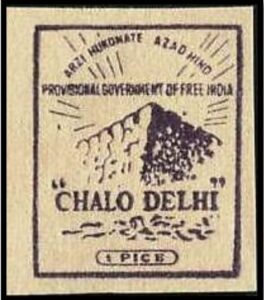
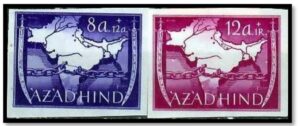
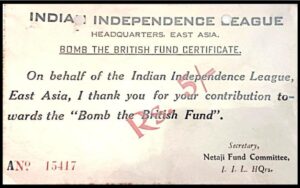
This article explores the formation, objectives, campaigns, and legacy of the INA, and delves into the critical and bloody Battle of Imphal, which was one of the turning points in the Burma Campaign and played a pivotal role in the INA’s destiny. By doing so, it also shows the reader the various ephemeral artifacts that are the remnants of the INA and its campaign in India.
These are much sought after by all collectors , India and abroad, and has been more prominently featuring the alternative history that has had been propagated by the British authors, and their lazy Indian counterparts, who were satisfied enough to just represent the British version only.
Origins and Formation of the Indian National Army
The seeds of the INA were sown in the early years of World War II. With the outbreak of the war in 1939, Britain unilaterally declared India as a belligerent against the Axis powers without consulting Indian leaders.
This decision caused widespread resentment and intensified the Indian independence movement. The opportunity for forming an armed force to fight British colonialism emerged after the fall of Singapore in 1942, when over 40,000 Indian soldiers of the British Indian Army were taken prisoner by the Japanese.
The idea of creating an Indian army to fight for independence was initially promoted by Captain Mohan Singh, an officer in the British Indian Army who was captured during the Malayan campaign.
With Japanese support, Singh recruited Indian POWs and formed the first iteration of the Indian National Army. However, internal disagreements and issues with Japanese oversight led to its disbandment. The INA was revived in 1943 under the charismatic leadership of Subhas Chandra Bose, a former Congress leader who had broken away from Mahatma Gandhi’s non-violent path and believed in armed struggle.
Subhas Chandra Bose and the Revival of INA
Subhas Chandra Bose, popularly known as Netaji, had previously sought Axis support in Europe for India’s independence before arriving in Southeast Asia. Upon reaching Japan-occupied territories, Bose took command of the INA and reorganized it into a more structured and ideologically driven force. The INA was formally declared the military arm of the Provisional Government of Free India (Azad Hind), which Bose announced in October 1943 in Singapore.
Under Bose, the INA attracted support from Indians in Southeast Asia, particularly from the expatriate
communities in Burma, Malaya, and Singapore. Bose’s stirring slogan “Give me blood, and I will give
you freedom” became a rallying cry for his forces.
The INA, at its peak, had about 40,000 soldiers, including a women’s regiment named the Rani of Jhansi Regiment, commanded by Captain Lakshmi Swaminathan (later Lakshmi Sahgal). The INA’s goal was to march into India from Burma and trigger a nationwide uprising against British rule.
Campaign in Burma and Advance Toward India
The INA’s military campaign was closely tied to the Japanese strategy in Southeast Asia. In early 1944, as part of Japan’s U-Go offensive, INA units advanced with the Japanese Fifteenth Army under General Renya Mutaguchi through the dense jungles and mountainous terrain of Burma, aiming to invade British India through the northeastern frontier.
The campaign involved a push towards the Indian cities of Imphal and Kohima, both vital for British control of Northeast India. The hope was that the Indian population, inspired by the INA’s entry, would rise against the British. The INA and Japanese forces crossed the Chindwin River and entered Indian territory in March 1944.
The Battle of Imphal: Strategic Importance and Carnage
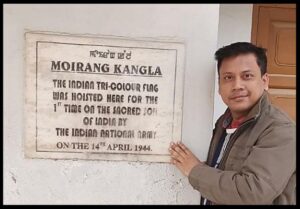
The Battle of Imphal, fought from March to July 1944, was one of the fiercest and most significant battles of the Burma Campaign. It pitted the Japanese and INA against the British-led Indian and Allied forces under General William Slim of the British Fourteenth Army.
Imphal was a logistical hub for the Allied forces. The Japanese strategy involved cutting off Imphal from the rest of India by encircling it through attacks from multiple directions, particularly from Tiddim and Ukhrul. Simultaneously, the Battle of Kohima was launched to isolate Allied troops and revent
reinforcements.
The fighting in and around Imphal was brutal, conducted in extremely harsh terrain and monsoon weather. Both sides suffered from logistical nightmares, with Japanese and INA troops facing severe supply shortages, starvation, disease, and exhaustion. Despite early successes, the Japanese-INA offensive began to falter due to overextension, lack of supplies, and strong Allied resistance bolstered by aerial
superiority.
By July 1944, the Allies had broken the siege of Imphal and forced a Japanese-INA retreat back into Burma. The battles of Imphal and Kohima together marked the turning point in the Burma Campaign, leading to the eventual Allied reconquest of Burma.
Interesting Facts about the Battle of Imphal
- First Organised Armed Struggle against Colonisation since 1857: The INA-Japanese advance
in 1944 marked the first time India launched an organised Armed struggle against foreign
colonisation since the First War of Independence of 1857. - Use of Air Drops: The Allies made extensive use of air drops to supply the besieged troops in
Imphal, showcasing the increasing importance of air power in modern warfare. - Role of Local Populations: Local communities in Manipur and Nagaland were significantly
affected. Many served as porters or were displaced, and their suffering is an often-overlooked
aspect of the battle. Unlike what is documented by British authors, locals faced immense
humiliation and collateral damage due to the indiscriminate bombing by the Allies. - War Graves and Memorials: Today, the Imphal War Cemetery and Kohima War Cemetery
stand as reminders of the thousands who died. The famous epitaph at Kohima reads: “When
You Go Home, Tell Them of Us and Say, For Your Tomorrow, We Gave Our Today.” - Rani of Jhansi Regiment: Women fighters of the INA were part of the campaign. Though they
were largely kept behind the front lines, their presence was groundbreaking for the time. - Psychological Impact: The INA’s presence in India, despite military defeat, caused deep unease
within British India’s political and military establishment. Many Indian soldiers in the British
Army were inspired or conflicted.
Legacy of the INA and the Imphal Campaign
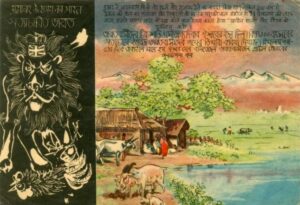
Though the INA did not achieve its military objectives, its symbolic significance was immense. The trials of INA officers in 1945–46 (notably of Shah Nawaz Khan, Prem Kumar Sahgal, and Gurbaksh Singh Multilingual Japanese leaflets were airdropped, extolling Indians to rise against British occupation Dhillon) became a lightning rod for nationalist sentiments. Public sympathy surged, leading to protests and mutinies within the British Indian armed forces.
British authorities recognized that continuing colonial rule would be increasingly untenable, especially with loyalty among Indian troops now in question. Many historians argue that the INA, and especially the reverberations of its defeat at Imphal, accelerated the timeline of Indian independence.
The INA’s role is still debated, especially regarding its alliance with the Axis powers. However, its influence on Indian nationalism, especially in showcasing the possibility of armed resistance, remains undeniable.

The story of the Indian National Army and the Battle of Imphal is not merely a tale of military action but of political awakening and national identity. It represents the global dimensions of India’s freedom struggle, where Indian aspirations intersected with the great powers of the time.
The soldiers who marched through the jungles of Burma and fell at Imphal did not see victory, but they contributed to a larger narrative that ultimately led to India’s freedom.
Remembering the INA and the Battle of Imphal is not just an act of historical reflection, but of honoring a complex, courageous, and deeply human chapter in India’s long journey to independence.
( All the artifacts depicted here are of the author’s own personal collection and he owns the rights to
them)
Promotional | Subscribe KRC TIMES e-copy