


A True Story of Courage and Faith
 KRC TIMES Desk
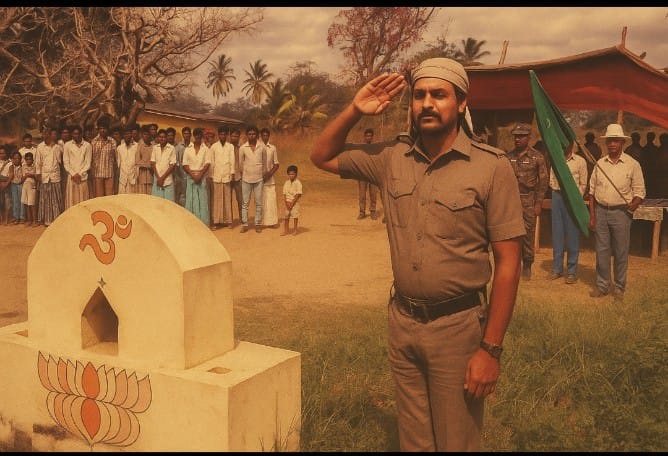
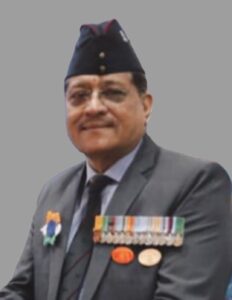
Col AKS Machhral (Retd)
Dedication : To my comrades, the brave soldiers of A Company, Jat Regiment,who stood tall in the jungles of Cheddikulam (IPKF) in 1988.Their courage still echoes where silence meets duty.
“Karmanyevadhikaraste ma phaleshukadachana, Ma karma-phala-heturbhur ma tesangostvakarmani.”
(You have the right to perform your duty, but not to the fruits thereof. Let not the result of action be your motive, nor let your attachment be to inaction.)
Bhagavad Gita, Chapter 2, Verse 47.
Introduction
This story is a solemn and long-overdue tribute to the five jawans of the Indian Peace Keeping Force (IPKF) who were ambushed and martyred by PLOTE militants on 20 October 1988, during the operational handing/ taking over, near the railway line at Cheddikulam, Northern Sri Lanka.
In the unforgiving jungles where humidity met hostility, a newly inducted company faced its baptism by fire. The ambush was meticulously planned by militants with silent claymores, crossfire from concealed flanks, and sudden radio silence, all meant to cripple the Indian soldiers before they could establish control.
Amid the chaos and loss, one man stood unshaken, Major Kumar, a battle-hardened officer of the Jat Regiment. Renowned for his composure under pressure with mastery of jungle & mountain warfare. He had already proved his mettle in Poonch, in a daring action against the armed enemy forces for which he was recommended for a gallantry award.
What followed was not retaliation, but righteous retribution. Driven by the memory of his fallen men and the sacred vow of a soldier to avenge his brotherhood, Major Kumar led a relentless hunt through the dense forests of Cheddikulam.
Within weeks, guided by instinct and intelligence, he personally planned and led a midnight raid on 11/12 November 1988 at the Musalkutti PLOTE Camp, neutralizing the militant stronghold commanded by the dreaded area commander, Plot Raja.
Cheddikulam: October 1988
In the sweltering humidity of October 1988, Major Kumar arrived at the forward operating camp in Cheddikulam. Deployed amidst intermittent rain and jungle mist, he carried the calm resolve of a man who had seen too many battles within and beyond the battlefield.
Sent from Vavuniya, he was tasked with suppressing insurgent activity in the jungle corridors infested with LTTE and PLOTE militants.
A man of few words, Commando-qualified and trained at the CIJW School, Major Kumar led his men, by instinct and example. His silence commanded respect. His men trusted his intuition; his enemies feared his unpredictability.
On the third day of the handing/taking over of charge, a patrol party under his command was ambushed, in a text- book type PLOTE trap. The silent claymore IEDs, crossfire, and lobbing of grenades along the railway track, resulted in the loss of his five men in no time. It was a major setback!
But, unshaken Major Kumar instantly regrouped, chased the attackers through the thorny undergrowth, and tried to turn their trap against them, but success eluded him. When the General Officer, accompanied by the Commanding Officer, visited the ambush site, he asked only one question:
“How were they ambushed? Kumar replied calmly,

“Sir, the party was busy in handing/taking over the charge of the area of responsibility along the rail- road opening site. It’s a war zone, sir anything can happen. After reaching here, we had not even fully taken over, when all this happened!”
The General nodded.
“Then settle down and get me five dead bodies of militants,” he said, and left towards his helicopter as I responded, “Yes Sir!” Kumar performed the last rites of his fallen men, saluted the pyres, and spent sleepless nights in planning and counting the days to deliver those five bodies as promised.
Allies in the Shadows
During operations, Maj Kumar caught a young boy ‘Chotu’ suspected to be an ex-LTTE cadre. Barely nineteen, Chotu had defected PLOTE. Wounded, broken, and bitter, he confessed during interrogation:
“I’ll help you, anna. Not for India, not for the Army but for my sister. They killed her when she tried to escape.” Moved by his pain, Kumar saw in the boy not an enemy, but a bridge.
Soon through Chotu, he met Neelam, a local school-teacher who had once worked as an underground worker with the LTTE but later aligned with the ENDLF. She had seen enough of war to hate it.
With Neelam’s intelligence and Chotu’s knowledge, Kumar discovered the location of a PLOTE militant camp deep in the jungle near the village of Musalkutti. Determined to avenge his fallen comrades, he immediately began planning its destruction.
Operation Vajra: The Last Flame
The final mission, Operation Vajra, was set to destroy the PLOTE camp at Musalkutti. Maj Kumar discussed everything & planned in detail on the sand- model and then the execution was briefed to his junior leaders. The final reconnaissance was to confirm ingress/ egress routes and positioning of the cut-off groups to block militants’ escape or reinforcement.

On the night of 11th/12th October 1988, local intelligence traced the exact location of PLOTE hideout to a marshy pocket five kilometers north of Cheddikulam.
Neelam’s final smuggled message confirming presence of the militants in their hideout and Chotu’s precise navigation, worked like fire support for the final assault! Kumar briefed his men at the last stage with minimal words, maximum faith. By midnight, they had crawled into position. The monsoon raged, and the stars hid behind smoke.
At 0100 hours, Kumar raised his hand. A single flare went up and the jungle erupted. The heay exchange of fire lasted one and half hour. Despite IEDs around the perimeter and heavy opposition, Major Kumar used his company support weapons and moved fearlessly with his brave men and ruthlessly destroyed the camp without any loss.
When the dust settled, an equal number of militants lay silenced as many as the soldiers lost in the earlier ambush. Retribution was complete. Balance restored.
The result: five militants, including Plot Raja, were killed; three surrendered; the camp stood razed to the ground. Eleven kidnapped villagers were rescued without firing a single shot.
“Mission First, Men Always.” The message was clear honour restored.
The operation revived morale within the formation and shattered the myth of militant invincibility. The jungle began to whisper:
“Mad Jat is in Cheddikulam. Even the trees warn each other before he walks.”
Among militants, he became a legend Kumar Anna, The Ghost in the Trees.
By mid-November, no group dared venture within two kilometres of his camp an invisible LakshmanRekha drawn by the discipline and will of his men.
Veeru: The Tiger Cub
Near the old ambush site, a tiger cub was found orphaned. Kumar fed it once then again. Over a time, a bond formed between the soldier and the beast. The troops named him Veeru.
Some claimed Veeru followed patrols like a shadow, others swore he guarded the perimeter. Even militants began to believe the tiger watched over the Indian soldiers.
The jungle, it seemed, had chosen its side. The Hanuman Temple
On a quiet roadside near the camp stood a small Hanuman temple its roof of corrugated iron, a humble sanctum amid the jungle. Each morning before dawn, Major Kumar would stop there, offer a single flower, and sit silently before stepping into battle.

But it was the dreams that stayed with him symbols that warned before danger: a torch, a leap, a heart aflame. Every time, the signs proved true.
His men whispered in awe: “Hanuman speaks to Kumar before the bullet moves.”
For him, it was not superstition it was ?raddh?, faith deeper than logic.
Years later, when peace returned, he stood again before that shrine and whispered:
“Jab kuchnahidikhtatha, aap hi dikhte the.” (When nothing was visible, only You were.)
Recognition and Legacy
For his exceptional leadership, indomitable courage, and gallantry in the face of overwhelming odds, Major Kumar was recommended for the Vir Chakra and awarded Mentioned-in-Despatches for his heroic action and distinguished service during Operation Pawan.
This story is not merely an account of a military operation it is a testament to the unyielding resolve of the Indian soldier, the sacred bond between commander and men, and the eternal truth that sacrifice never fades it becomes legend.
He had kept his promise. Soon, orders came from HQ, Major Kumar was reassigned to a classified mission with the General Staff.
The day he left, Veeru appeared at the jungle’s edge, eyes glowing like embers. Neelam handed him a folded map and a dried jungle leaf. Chotu saluted him not as a subordinate, but as a younger brother.
Kumar simply nodded, climbed into his vehicle, and disappeared into the monsoon. Neither Veeru nor Major Kumar was ever seen in Cheddikulam again.
Epilogue: The Legend That Walks
Back in India, Major Kumar rarely spoke of Sri Lanka.But the legend endured whispered from one generation of soldiers to the next:-
Of a fearless Major,
Of a boy who became a brother,
Of a teacher who healed through silence,
And of a tiger who guarded sleeping soldiers.
Some locals still say a tiger prowls the forest old now, but watchful guarding memories and sacred ground.
And sometimes, along lonely trails, footprints of a man appear beside those of a tiger.
Heroes are born heroes.
Their stories are not spoken they are remembered.
Their words are not words they are truths.
And their legends?
They walk, even when they are gone.
Author’s Note
This narrative is based on true events from Operation Pawan, 1988. It stands as a salute to the immortal spirit of Indian soldiers who fought selflessly on foreign soil and to every officer who led from the front, carrying faith as his only armour.
“Where nothing works, prayer works”.