

The freedom we enjoy today-to speak, to live, to dream, to celebrate diversity-is a gift earned through sacrifice, resistance, and resilience
 KRC TIMES Desk
Dr. Daisy Parihar
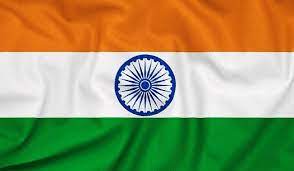
On this 15th August 2025, India completes 78 years of independence-a moment not just for celebration but for deep reflection. As the tricolour unfurls and the national anthem echoes across the country, we must remember that this day was not easily won. The freedom we enjoy today-to speak, to live, to dream, to celebrate diversity-is a gift earned through sacrifice, resistance, and resilience.
Azadi ka milan itna aasan nahi tha. Behind this day are stories of bloodshed, bravery, silence, and suffering-some recorded in the proud pages of history, others still hidden in the dust of forgotten villages, burnt archives, and unmarked graves.
It is crucial that every child of India knows this truth: freedom was not granted; it was earned, often paid for in blood. Bhagat Singh kissed the noose, Rani Laxmibai died with a sword in her hand, and thousands of tribal leaders, students, women, and farmers took to the streets, to the gallows, and to exile for the dream of a free Bharat. The cost of that freedom is far too high to be taken for granted.
But freedom was never meant to be only a political event. It was a promise-of dignity, justice, and opportunity for every citizen. A promise that no child would sleep hungry, that every woman could walk freely without fear, that the last man in the last village would have a voice. Today, in our 79th year of independence, we must honestly assess: have we upheld that promise?
India has indeed come a long way. From a nation bruised by colonialism, poverty, and partition, we have risen to become one of the fastest-growing economies, a global voice in diplomacy, and a powerhouse in science, space, and digital transformation.
Yet, side by side with this progress are grim challenges that demand urgent attention-corruption, unemployment, drugs, environmental degradation, and rising violence against women. These issues are not just social problems; they are moral failures, symptoms of forgetting what freedom was meant to achieve.
Corruption continues to rot our institutions, blocking opportunities for the honest and hardworking. It’s not just a political issue-it affects the poor farmer waiting for his subsidy, the student denied a scholarship, the patient in a hospital line. Unemployment haunts our educated youth, especially in rural and semi-urban areas.
Even as we produce graduates in millions, many are left without skills, direction, or purpose. Drugs are quietly destroying our youth, especially in border states like Punjab and parts of Jammu and Kashmir, where addiction has become an epidemic.
Violence against women remains a deep scar on our collective conscience. Every act of harassment, abuse, or rape is not just a crime against an individual but against the soul of the nation. No nation can truly be free if half its population lives in fear.
Then there is the environment-our rivers are choked with plastic and sewage, our forests are vanishing, and our cities are gasping for air. Climate change is no longer a future threat-it’s a present reality. Glaciers are melting, temperatures are rising, and the monsoon is becoming unpredictable. If freedom includes the right to a healthy life, clean water, and breathable air, then we are failing.
Education, one of the most vital tools of transformation, remains unequal and under-resourced. While urban India talks about smart classrooms and artificial intelligence, many government schools in remote regions still lack toilets, teachers, and textbooks.
A child in a tribal belt or Himalayan village is still far from the dream of quality education. Health care, too, paints a similar picture-one of excellence in cities and helplessness in many interiors. India has the talent, the doctors, and the technology. What it needs is a will to bridge the gap.
But despite all of this, hope is not lost. In fact, today’s India is also the land of rising sectors that are reshaping our nation and carrying the legacy of freedom into the future.
India’s digital revolution is one of the most powerful symbols of its transformation. With initiatives like UPI, Digital India, and Jan Dhan-Aadhaar-Mobile (JAM), even a vegetable vendor can now accept digital payments. Financial inclusion has reached places where banks had never stepped before. Rural women are now running micro-businesses through apps. India has shown the world how to use technology for empowerment.
In the realm of space and science, we have achieved historic milestones. The success of Chandrayaan-3 made us the first country to land near the Moon’s south pole-a feat that once belonged only in science fiction. ISRO’s upcoming missions, including Gaganyaan (India’s first human spaceflight program), signal our arrival as a serious player in space exploration. This is not just about rockets-it’s about pride, confidence, and inspiring the next generation.
Our defense sector has become stronger and more indigenous. With the development of the BrahMos missile, Tejas fighter aircraft, and advancements in drone warfare and cyber defense, we are no longer dependent on others for our security. But perhaps what is most heartening is the increasing presence of women in defense roles.
The startup ecosystem is another revolution reshaping India. With over 100 unicorns and thousands of innovators creating solutions for education, health, agriculture, and sustainability, the youth of India are not just looking for jobs-they are creating them. From Bangalore to Bhubaneswar, from Srinagar to Kanyakumari, entrepreneurs are building the new India with ideas born out of local need and global ambition.
The renewable energy sector has made India one of the top countries investing in solar and wind power. Our commitment to the International Solar Alliance and our targets for carbon neutrality are critical steps towards sustainable development. With rural solar initiatives, India is lighting homes that were once plunged in darkness after sunset.
In sports, too, India has moved beyond cricket. Be it badminton, boxing, wrestling, chess, or athletics, Indian athletes are competing globally with strength and spirit. The recent Asian and Olympic-level wins by female boxers, shooters, and runners have proved that sports is now a story of all of India-rural, urban, male, female, rich, poor.
Culture, too, is finding new wings. Our regional languages are being preserved through digital archives. Our folk music is being fused with global rhythms. Ayurveda, yoga, and Indian cuisine are gaining international recognition-not as exotic trends but as wisdom traditions. India’s cultural diplomacy is now a powerful soft force.
Yet, with all this growth, we must remember-true freedom is not just external; it is internal. It is not just economic; it is ethical. A nation’s progress is measured not just in skyscrapers or satellites but in how it treats its weakest, how it protects its forests, how it raises its children, and how it respects its women. Patriotism is not proven by hashtags or flag displays once a year.
It is practiced in everyday honesty, compassion, hard work, and responsibility. It is shown when we do not give or take bribes, when we vote with awareness, when we clean our surroundings, when we stand up for someone being harassed, when we speak against injustice-even when it is uncomfortable.
The role of civic sense in national development cannot be overstated. As citizens, we must cultivate discipline, environmental awareness, and social sensitivity. A clean road, a respectful conversation, a planted tree, a well-informed child-these are as much acts of patriotism as guarding a border or launching a satellite.
As we move closer to 2047-when India will complete 100 years of independence-we must decide what kind of country we want to be. Will we be merely a population of 1.5 billion, or a community bound by shared purpose? Will we be driven by short-term political gains, or by a long-term national vision? Will we let the divisions of caste, class, and religion poison our unity-or will we rise above them to truly become Ek Bharat, Shreshtha Bharat?
This is the time to rekindle the fire of freedom-not by looking back in nostalgia alone, but by moving forward with courage. Let this Independence Day be more than a ritual. Let it be a reminder that we are the inheritors of a great struggle, and the torchbearers of an even greater future. Let the flag fly not just from rooftops but from our conscience. Let us strive to build an India that is free, fearless, fair, and flourishing.
Promotional | North East Integration Rally