


Analysts warn that continued rights abuses could invite stronger measures, such as targeted sanctions or visa restrictions
 Sangram Datta
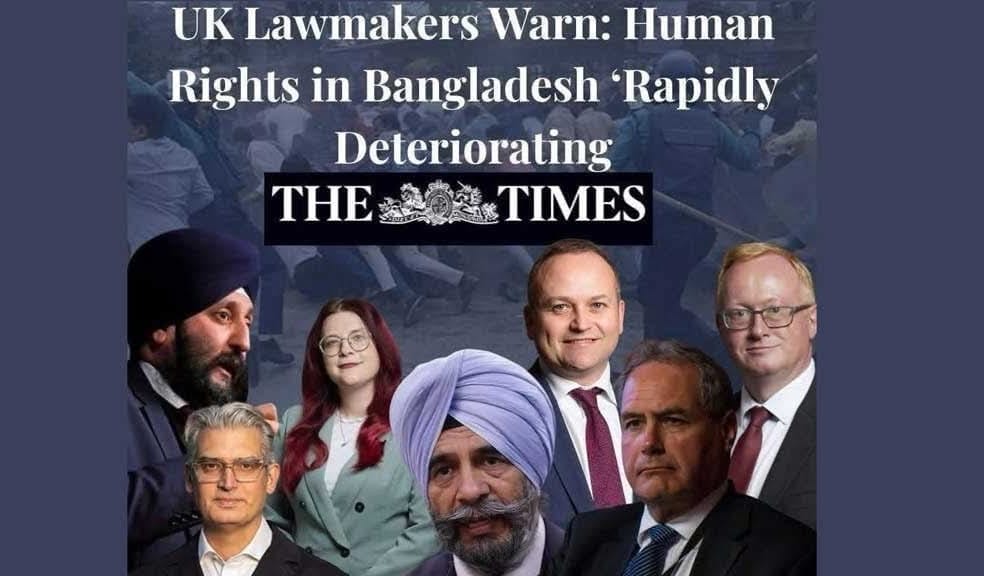
Dhaka Tribune reported that Seven British MPs have called for urgent international action over what they describe as a “deteriorating human rights situation” in Bangladesh, urging a swift return to free and credible elections.
In a letter published in The Times on Saturday, the MPs including Steven Powles KC, Bob Blackman, and Jas Athwal warned of “systemic failures” in Bangladesh’s justice system, an uptick in politically motivated arrests, and “targeted attacks” on minority communities. They appealed to the UK government, the United Nations, and other global actors to press Dhaka for reforms and a time-bound roadmap to elections.
The MPs’ statement coincides with growing international unease over Bangladesh’s political direction under the interim administration led by Nobel laureate Professor Muhammad Yunus. The Dhaka Tribune reported that the same group of lawmakers has formally urged a swift election, saying ongoing rights abuses and political repression are undermining the country’s democratic legitimacy.
Rising International Concern
The latest intervention follows a UK parliamentary event in July 2025 where experts and civil society representatives alleged judicial manipulation, suppression of dissent, and misuse of anti-terror laws to silence opposition.
Adding weight to those claims, the Office of the UN High Commissioner for Human Rights (OHCHR) released a fact-finding report in February this year documenting abuses during the July–August 2024 protests. The UN found evidence of excessive force by security agencies, arbitrary detentions, and violence against demonstrators and journalists.
Rights groups say these findings reflect a broader pattern of state intolerance toward dissent. “The international community cannot ignore the erosion of freedoms in Bangladesh,” said one rights advocate in London, reacting to the MPs’ letter.
Diplomatic and Domestic Implications
The publication of the letter in The Times ensures the issue reaches policymakers and the wider British public, potentially shaping UK foreign policy. For Bangladesh, the mounting criticism from democratic nations poses reputational and economic risks, including potential trade and aid implications.
Analysts warn that continued rights abuses could invite stronger measures, such as targeted sanctions or visa restrictions. “This letter signals a hardening tone in Western capitals,” said a Dhaka-based political analyst. “If the government doesn’t respond constructively, diplomatic isolation could deepen.”
Contested Narratives
However, not all international reports on Bangladesh have been free from controversy. In January, the All-Party Parliamentary Group (APPG) on Bangladesh withdrew a previous report critical of the country, citing concerns over bias and factual inaccuracies, The Guardian reported.
Supporters of the interim government argue that some foreign assessments are politically motivated and fail to recognize the complexities of Bangladesh’s post-crisis landscape.
A Moment of Reckoning
Despite such debates, observers agree that the latest British parliamentary letter represents a significant escalation in international scrutiny. Coupled with UN findings and parliamentary discussions, it highlights mounting pressure on Dhaka to restore democratic processes and ensure accountability for rights violations.
Whether this moment becomes a genuine turning point or simply another diplomatic warning will depend on how the Bangladeshi government and its allies respond in the weeks ahead.
Promotional | North East Integration Rally