


Raja Raghuvanshi’s murder and silence around crimes against men
 KRC TIMES Desk
ANSHUMAN DUTTA
To the outside world, Sonam and Raja Raghuvanshi appeared like any newly married couple. Their union was celebrated with tradition, warmth, and community. But what looked like a hopeful beginning was, in fact, a calculated entry point to a chilling betrayal.
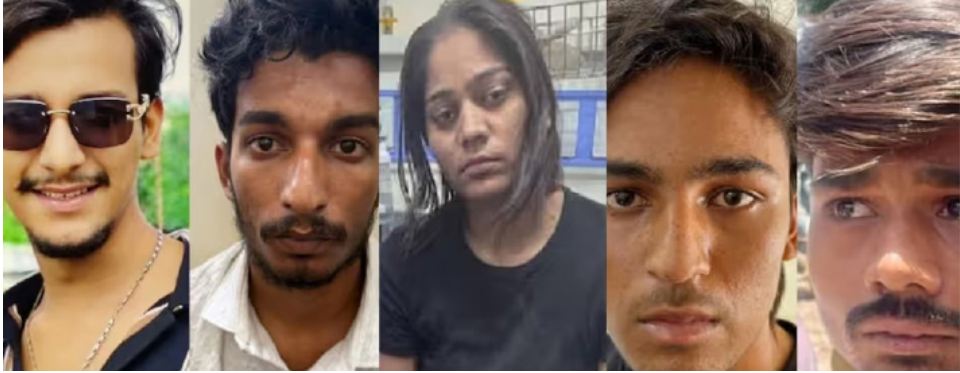
Authorities now allege that Sonam, while maintaining a secret relationship with another man, mar- ried Raja only to gain access and control eventually orchestrating his murder. In a disturbing twist, after Raja’s disappearance, Sonam too vanished. Sympathy poured in.
Was she kid- napped? Killed? Targeted for her back- ground? But days later, she was found alive, and very much part of the crime she had appeared to mourn. The vanishing act, it turns out, was a smoke screen. A way to escape suspicion. A way to play the victim.
The Rush to Slander: Meghalaya in the Crosshairs But the tragedy didn’t end there. As the case unfolded, a new kind of violence began to emerge this time, online and on-air. Sonam’s home state of Meghalaya quickly became the tar- get of uninformed hate.
Social media exploded with stereo- types: about the culture, about women from the Northeast, about inter-com- munity marriages. Influencers, news anchors, and comment sections alike threw around slurs and sweeping accusations, implying that this crime somehow reflected on the morality or trustworthiness of an entire state.
The peo- ple of Meghalaya uninvolved, shocked, grieving like the rest of the country were defamed, ridiculed, and othered, all because one woman committed a horrific act. News channels were quick to speculate. Very few paused to correct the narrative.

This wasn’t outrage. It was scape goating. And it revealed how easily regional prejudice can hijack the con- versation, diverting attention from the facts and from justice. A Pattern: When Husbands Become Targets Raja’s case is not an isolated inci- dent. In recent years, there has been a noticeable rise in cases where women, often with extramarital partners, have murdered their husbands: In Maharashtra, a man was poi- soned over months by his wife and her lover, who used his money to plan a new life.
In Tamil Nadu, a husband’s body was found dismembered and buried under his own home. In Rajasthan, a woman manipu lated social media and neighbors into believing her husband was abusive before killing him. Each story follows a disturbing pat- tern: manipulate, isolate, eliminate. And in each case, society’s condition- ing leads many to assume the woman must be the victim until evidence says otherwise.
The Atul Subhash Case: Killed Without a Weapon Then there are cases like Atul Subhash, whose death came not through violence, but through legal and emotional asphyxiation. Falsely accused of domestic vio- lence and dowry harassment, Atul lost everything his job, his reputation, his mental peace. The courts moved slowly, the stigma spread quickly.
In the end, unable to endure the pressure and shame, he died by suicide. His letter didn’t confess to any wrongdoing. It cried out for justice in a system that wouldn’t hear him out. A system where a man’s word weighs less. A system that forgot the princi- ple of “innocent until proven guilty.”
Atul was just one of thousands of men caught in the misuse of protec- tive laws laws that are vital, yes, but also vulnerable to exploitation. Why Male Victims Remain Invisible India has made progress in protect- ing women from domestic abuse and violence. That progress must never be rolled back. But in the process, we’ve created a public narrative where men are always seen as the aggressors never the victims.

There are almost no shelters for men. No government helplines. No large-scale campaigns acknowledging that men, too, can be abused, framed, or even murdered by their partners. When they speak up, they’re told to “man up.” When they suffer, they’re mocked.
And when they die? They’re often forgotten. Conclusion: Justice Must Be Equal, Not Convenient Raja Raghuvanshi lost his life, allegedly to a calculated plan by the woman he married.
Atul Subhash lost his to a justice system that turned its back. In both cases, the men were not just victims of individuals but victims of societal indifference, media bias, and gendered double standards. And in the midst of it all, Meghalaya and its people were vilified without reason, forced to bear the shame of someone else’s crime.
It is time we stop picking sides based on gender or geography. We must call out the crime without turn- ing it into a cultural weapon. Because justice isn’t justice unless it applies equally. And empathy means nothing if it’s reserved only for one side. Let Raja and Atul remind us: Men can be victims. Women can be perpetrators. And entire communities should never be made scapegoats for one person’s darkness.
Promotional | Subscribe KRC TIMES e-copy