


The Northeast remains a biodiversity jewel, but it is also a warning sign
 North East Integration Rally
The Northeast of India feels alive in a way few places do. Forests seem to breathe. Rivers cut softly through hills. Mist hangs low in the mornings, touching leaves and rooftops. Spread across Arunachal Pradesh, Assam, Manipur, Meghalaya, Mizoram, Nagaland, Sikkim, and Tripura, this region holds a rare world of life.
Here, nature works slowly and quietly. Plants grow in shapes found nowhere else. Animals adapt to rain, height, and dense forests. Some species are very old. Some are barely seen. Many now stand on the edge of disappearance. Fast development, loss of forests, hunting, and climate change have pushed several of them into danger. The Northeast remains a biodiversity jewel, but it is also a warning sign.
Arunachal Pradesh
Arunachal Pradesh is wide, rugged, and deeply forested. Large areas still remain untouched by roads or cities. In these remote hills lives the Mishmi Takin, a powerful animal built for steep mountain life. The Red Panda survives here too, quiet and shy, hidden among bamboo and high trees. The Bengal Florican, one of the rarest birds on Earth, struggles as grasslands slowly vanish.
The state is equally rich in plant life. Orchids grow in endless varieties. Rhododendrons light up the hills during spring. Once these forests are gone, the life within them may never return. Protection here is urgent.
Assam
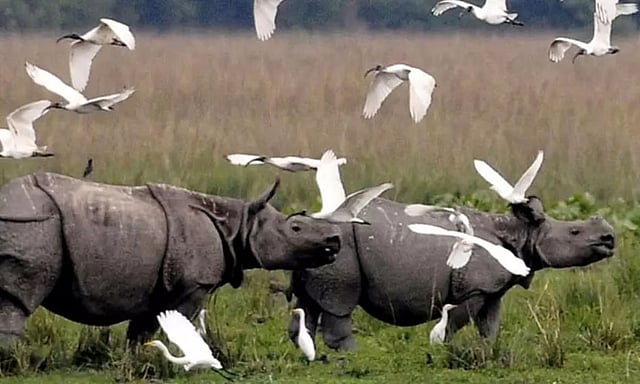
Assam sits at the center of wildlife conservation in the Northeast. The Indian One-horned Rhinoceros still depends on its grasslands and wetlands. The Pygmy Hog, the smallest wild pig in the world, survives in only a few safe pockets. The Golden Langur, with its bright golden coat, remains one of the region’s most striking animals.

Assam’s forests also shelter rare trees like Hollong and Assam Catkin Yew. But floods, poaching, and human pressure continue to threaten this balance. Conservation in Assam is no longer optional. It is essential.
Manipur
Manipur holds life that exists nowhere else. The Sangai, known as the dancing deer, lives only in Loktak Lake. It walks carefully on floating vegetation, a skill shaped over centuries. The Hoolock Gibbon, India’s only ape, swings through forest canopies. The Clouded Leopard moves silently through thick cover, rarely seen.
Plants like the Siroi Lily and Manipur Lily add beauty and identity to the land. Their future depends on how carefully humans treat wetlands and forests.
Meghalaya
Meghalaya is famous for rain, caves, and green slopes. But beyond tourism lies deep ecological value. Forests here support the Hoolock Gibbon, Asian Elephant, and Leopard. These animals need space to move, something shrinking forests cannot always offer.

The living root bridges show how humans and nature can work together. Ferns, orchids, and rare plants grow freely across the hills. Meghalaya proves that tradition and conservation can walk side by side.
Mizoram
Mizoram’s hills are wrapped in bamboo forests and steep valleys. The Serow, a goat-like animal, survives on rocky slopes. Phayre’s Leaf Monkey and Mrs. Hume’s Pheasant also depend on these forests. Hunting and habitat loss place them at risk.
Plants like the Red Vanda orchid and many bamboo species shape Mizoram’s ecology and culture. Saving forests here means protecting both wildlife and human livelihoods.
Nagaland
Nagaland is known for festivals, songs, and strong traditions. Its forests hide rare life forms. The Blyth’s Tragopan stays hidden in dense growth. The Naga Wren-Babbler exists only in this region. The Hoolock Gibbon survives in forest patches.
Flowers like the Dzükou Lily, pitcher plants, and rhododendrons bloom across highlands. Conservation here depends strongly on community care, as people and forests have lived together for generations.

Sikkim
Sikkim may be small, but its natural wealth is immense. The Red Panda, Snow Leopard, and Himalayan Monal rely on its mountains and forests. These species are sensitive to climate change and human activity.
Orchids, rhododendrons, and the rare Blue Poppy cover its slopes. Careful tourism and strict laws have helped, but long-term protection remains vital.
Tripura
Tripura’s forests shelter animals like the Clouded Leopard, Phayre’s Langur, and Indian Bison. Rapid development and deforestation threaten their homes.
The state is also rich in Agarwood and medicinal plants. Protecting these resources supports biodiversity as well as traditional knowledge.
A Shared Responsibility
The endangered plants and animals of Northeast India are not just local treasures. They belong to the world. Each species lost breaks a chain shaped over millions of years.
Conservation is not only about rules and parks. It is about respect, awareness, and balance. The future of these forests depends on how gently humans choose to live within them.
Saving the Northeast’s biodiversity means saving its stories, cultures, and life itself.
Promotional | North East Integration Rally