

Ziro Valley: Where the Apatani way of life shapes Arunachal’s most enduring landscape
 North East Integration Rally
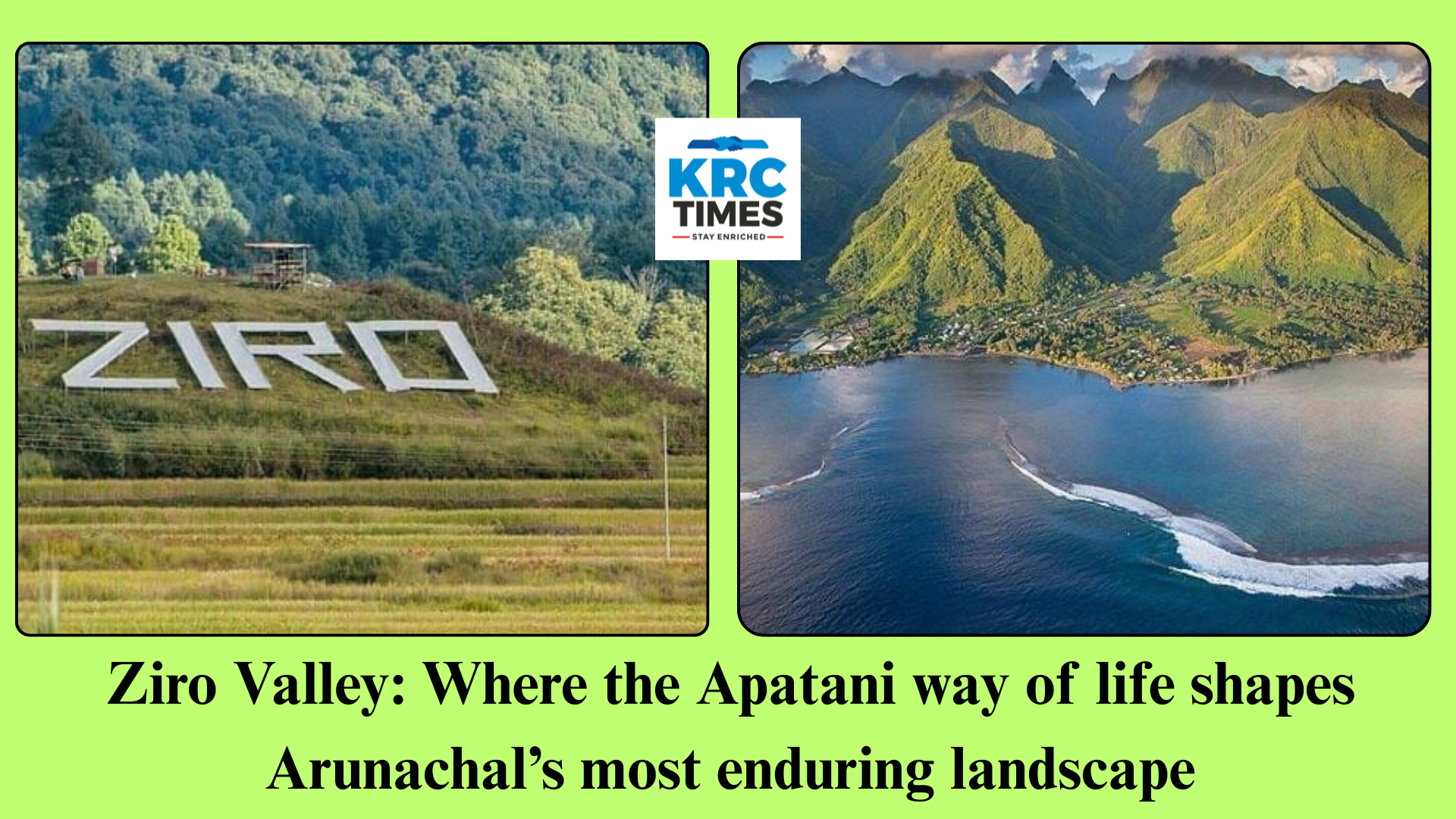
Ziro Valley sits quietly at 1,500 metres in Arunachal Pradesh, surrounded by pine-covered hills and wide, green basins of rice fields that seem carefully arranged rather than imposed on the land. Nothing here feels rushed. The valley opens slowly, revealing a landscape shaped as much by human care as by nature.
This is one of the oldest settled regions in the state. Long before roads and administrative boundaries, the Apatani tribe built a way of life that still defines Ziro today. Their presence is not decorative or symbolic. It is structural. The valley looks the way it does because of how the Apatanis chose to live.
The most striking feature of Ziro is its wet rice cultivation system, practiced permanently rather than seasonally. Unlike shifting or slash-and-burn cultivation common in many hill regions, the Apatanis developed a method that integrates paddy farming with fish rearing. Narrow channels guide water through terraced fields.
Fish move with the flow, fertilising the soil naturally while providing food. It is efficient, sustainable, and centuries old. No modern sustainability framework comes close to matching its quiet intelligence.

The Apatani villages reflect the same thinking. Houses built from bamboo and wood sit close together, conserving space and heat. Paths run between fields and homes without cutting the land apart.
Traditionally, Apatani women were known for facial tattoos and nose plugs, practices that have largely faded but remain an important part of the community’s historical identity. Even as customs evolve, the core relationship between land, food, and community remains intact.
Ziro is also a cultural landscape in the truest sense. It is not just scenic. It tells a story of coexistence. This is why the Apatani cultural landscape has been placed on UNESCO’s Tentative List for World Heritage Sites.
Spread across roughly 32 square kilometres of cultivated land within a much larger plateau, it represents a living system rather than a preserved relic. Conservation efforts here are not about freezing time. They are about protecting a functioning model of ecological balance.

The town itself is administratively centred in Hapoli, known locally as Hao-Polyang. This is where government offices, markets, and transport links converge. Yet even here, the pace is unhurried. Ziro remains more of a valley than a town, more lived-in than developed.
Beyond the fields and villages, the surrounding forests add another layer to the valley’s character. Talley Valley Wildlife Sanctuary lies nearby, dense with pine, bamboo, and subtropical growth. Treks throughout this region are less about adrenaline and more about immersion. Trails wind through mist, birdsong, and thick undergrowth. Wildlife sightings are unpredictable, but the sense of isolation is reliable.
Smaller landmarks dot the region. Siikhe Lake offers still water and quiet reflection, often visited by locals rather than tourists. Pine Grove is a simple stretch of forest that becomes a gathering space for picnics and walks. Meghna Cave Temple, believed to be thousands of years old, adds a spiritual dimension to the valley, blending local belief with ancient myth.

Once a year, Ziro changes its rhythm. September brings the Ziro Music Festival, an outdoor event that has grown from a niche gathering into an internationally recognised celebration.
Set against open fields and hills, the festival draws independent artists from across India and abroad. What makes it distinct is not scale but setting. Music here does not overpower the valley. It fits into it. When the festival ends, Ziro returns to its usual calm without residue.
The best time to experience the valley is during spring or autumn. March and April bring fresh green growth and clear skies. September and October balance mild weather with cultural activity. Winters can be cold but sharp, and summers are gentle compared to the plains.
Reaching Ziro requires intention. It lies about 115 kilometres from Itanagar, 112 kilometres from North Lakhimpur in Assam, and roughly 96 kilometres from Naharlagun railway station. An Advanced Landing Ground maintained by the Indian Air Force serves the area, underlining its strategic as well as geographic significance. The journey is winding, often slow, and entirely worth it.

What sets Ziro apart is not that it is untouched. It is that it has been touched carefully. Development exists, but it has not erased local logic. Modern education, administration, and tourism coexist with traditional farming and village governance. That balance is fragile, and the valley’s future will depend on how well it is protected from careless expansion.
Visitors often describe Ziro as a hidden paradise. That phrase is overused, but here it carries some truth. The valley does not advertise itself loudly. It rewards patience and curiosity. What this really means is that Ziro does not perform for the visitor. It continues its life, and you are allowed to observe.
At a time when many destinations trade depth for visibility, Ziro offers something rarer. A place where culture is not curated for display, where nature is not separated from daily life, and where sustainability is not a slogan but a habit. The valley stands as quiet evidence that another way of living has always existed, and in Ziro, still does.
Promotional | North East Integration Rally