

Tezpur isn’t a city you rush through- It’s a city that asks you to slow down, look around, and notice how many layers it holds beneath its calm surface
 North East Integration Rally

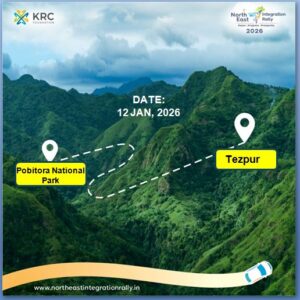
The NEIR-2026 will have its night activities in the beautiful Tezpur, a city in Assam’s Sonitpur district, situated on the banks of the Brahmaputra about 175 kilometres northeast of Guwahati, on January 12. Tezpur is the largest urban centre on the river’s north bank.
Tezpur sits quietly on the north bank of the Brahmaputra, but nothing about the town feels ordinary once you spend time with it. The place carries myth, war, scholarship, and culture in a way few Indian towns manage. Here’s what matters: Tezpur isn’t a city you rush through. It’s a city that asks you to slow down, look around, and notice how many layers it holds beneath its calm surface.
Start with the origin story, because it shapes everything. Tezpur’s history goes back to the legend of Usha and Aniruddha, the celestial lovers whose union sparked a battle so fierce that the land supposedly drank blood.
That’s how the town got its name. Walk through any of the old parts of the city and you sense that echo of myth. It’s not something you can quantify, but it’s there in the way locals talk about their landscape, their temples, and the stories they grew up hearing.
What this really means is that Tezpur is comfortable living with its own imagination. It never tries to hide the fact that folklore sits as close to daily life as the Brahmaputra itself. You see that duality most clearly at the ruins of Da-Parbatia.
The stone doorway with its intricate Gupta-era carvings feels like a portal that survived everything history threw at it. The city has grown around it, scooters zip past it all day, and yet the doorway remains, quiet and unshaken, as if refusing to be overshadowed by the modern world.
Move from ancient stones to living culture and you find another identity entirely. Tezpur has earned the title Cultural Capital of Assam for good reason. This is the hometown of Jyoti Prasad Agarwala, Bishnu Prasad Rabha, Bhupen Hazarika, and a long list of artists whose work still shapes Assamese music, cinema, and theatre.
Their presence isn’t frozen in museums or plaques. It’s alive in everyday life. You hear it in someone rehearsing a Rabha Sangeet in a college auditorium. You see it during Bihu celebrations at Tezpur Chowk. You feel it whenever the curtains rise at the district’s many stages and someone new steps into the spotlight, dreaming of carrying the legacy forward.
What sets Tezpur apart from other cultural centres is its relationship with introspection. Art here comes from observation. People watch the river, the changing colours of the Himalayan foothills, the busy markets, the shifting rhythms of a small city growing into a larger one—and they translate it into creative work. There’s no rush to brand everything as innovation or reinvention. The creativity feels natural, almost inevitable.
Nature, of course, grounds the entire place. Tezpur is flanked by some of the richest ecological zones in the region. The nearby Nameri National Park draws trekkers, birders, and anyone who needs a break from noise. You cross the Jia Bhoroli river, step into the forest, and the world changes.
This is where white-water rafting meets quiet birdwatching, where elephants graze a few hundred metres from trails, and where you’re reminded that the Eastern Himalayas start just beyond the canopy. The park pulls people in every season, and each visit feels slightly different because the forest is always changing.

Closer to town, Agnigarh Hill gives you another kind of natural refuge. It’s tied to the story of Usha, but even if you set the legend aside, the place has its own charm. Walk up the steps in the early morning and you get a clean view of the Brahmaputra flowing wide and unhurried.
From the top, Tezpur looks peaceful and expansive. In the evening, the breeze settles in, the city lights flicker on, and you understand why locals treat this hill almost like a personal retreat.
If you’re trying to understand daily life in Tezpur, head to the markets. Chowk Bazaar and Kacharigaon spill colour and sound in every direction. Fishermen arrive with the day’s catch. Vendors sell everything from mustard greens to silkworm pupae.
The air fills with the smell of fresh produce, ripe fruit, and the sharp edge of Assam’s famous chiles. Spend half an hour listening to the bargaining and the friendly arguments, and you get a real sense of the town’s character. People here are direct, practical, and warm once you break the initial reserve.
Education is another part of Tezpur’s identity that deserves attention. Tezpur University has changed the intellectual landscape of the region. It brought students from across the Northeast into one campus and gradually turned the town into a hub of research and ideas.

The university’s impact is subtle but steady. Cafes are filled with students debating politics, literature, science, and cinema. Bookstores stock titles you might not find in other mid-sized Assam towns. Conversations spill from classrooms into parks and tea stalls. The city’s energy has shifted because of it.
Now, let’s talk about the military presence because it plays a major role in shaping the town. The Indian Army and the Air Force maintain strong bases in and around Tezpur. This gives the city a mix of discipline and structure without overwhelming its civilian life.
The cantonments are clean, organised, and green. They bring families from across the country, creating a slightly cosmopolitan air in a place that might otherwise have remained too inward-looking. You notice it in the restaurants that serve everything from Assamese thalis to North Indian comfort dishes. You notice it in the range of languages you hear in coffee shops. The blend is subtle but real.
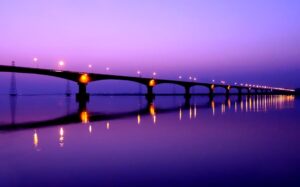
The city’s relationship with the Brahmaputra deserves its own space. The river shapes mood and memory here. Sometimes it feels calm and silver like a sheet of stretched cloth. Other times it rises with monsoon rain and reminds everyone how unpredictable it can be.

In the evenings, people gather near the ghats to talk, walk, or simply watch the sun fade behind the water. These quiet routines give Tezpur its gentleness. The river is not just a landmark. It’s part of the city’s emotional vocabulary.
Food ties everything together. Tezpur’s kitchens favour clean flavours and strong aromatics. Fish cooked in mustard, pigeon roasted with minimal spices, traditional Assamese sweets made from jaggery and rice—everything tastes rooted in home. Tea is a constant companion. Small stalls serve endless cups of it, and every conversation finds its way to a tea table eventually.
Tezpur is a place where history speaks softly, culture speaks constantly, and nature speaks in its own music. You learn to pay attention here. You learn to appreciate a slower rhythm. And you leave with the sense that this isn’t just a town—it’s an ongoing story, still unfolding, still inviting people to step in and listen.