Shillong: Where the Clouds Come Home
 North East Integration Rally
SUMANA ACHARJEE
I visited Shillong for the first time in April 2025. The experience stayed with me. I was overwhelmed by its quiet beauty, mesmerised by the rhythm of the hills, and struck by how effortlessly the city balances nature, culture, and everyday life. It felt less like a destination and more like a place that invites you to slow down, observe, and listen.
There are places that charm you the moment you arrive — and then there’s Shillong. I visited Shillong for the first time in April 2025, and it left me overwhelmed in the best possible way.
It doesn’t try to impress you. It doesn’t need to. The air itself feels alive, carrying the smell of pine, rain, and music. The city sits quietly in the heart of Meghalaya, surrounded by rolling hills that look like they’ve been sculpted out of mist. People call it the Scotland of the East, but that’s selling it short. Shillong isn’t anyone’s imitation. It’s a character of its own — poetic, unpredictable, and utterly human.

On most days, Shillong wakes up wrapped in fog. The clouds don’t float above you; they walk beside you, brush past your shoulders, and make even the most ordinary street feel mysterious. As the morning light slowly filters through, the city reveals its colors — deep green hillsides, tin-roofed houses with flower boxes, and winding lanes that seem to lead both everywhere and nowhere.
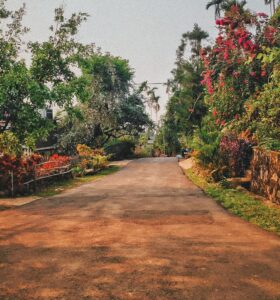
Driving through the city is like flipping through a book written by nature and nostalgia. Pine trees line the roads, old British-era bungalows peek through gardens, and every turn opens into a new view — a waterfall, a meadow, or a cluster of homes clinging to the slope. Even the traffic feels patient, as if time itself slows down here.

Shillong Peak, the city’s highest point, offers a panoramic view that’s almost cinematic. On a clear day, you can see the plains of Bangladesh stretching beyond the horizon. But most days, the clouds keep it to themselves — which is fine, because Shillong’s beauty isn’t in what it shows, but in what it hides.
You can’t talk about Shillong without talking about music. It’s not just part of the city — it is the city. Walk through Police Bazaar or Laitumkhrah on a weekend evening, and you’ll hear it everywhere: a kid strumming a guitar on a balcony, a group rehearsing in a garage, an old man humming a Western classic at a roadside tea stall.
For decades, Shillong has been India’s rock capital. Bands like Soulmate and legends like Lou Majaw didn’t just play music — they built a culture around it. Every café and pub has a stage, every festival has an open mic, and every young person seems to know how to keep rhythm. It’s not about fame or performance here. It’s about joy. Music is how the city breathes.
During the Shillong Autumn Festival, Ward’s Lake turns into an open-air concert ground, blending folk traditions with jazz, blues, and indie sounds. Even Christmas here feels like a musical — carols echo through every church and street, candles flicker in windows, and the whole city hums in harmony.
What makes Shillong stand out isn’t just its scenery, but its sense of proportion. It’s a hill station that hasn’t lost its humility. Locals greet strangers with a nod or a smile. Markets sell more flowers than souvenirs. Cafés serve food that feels homemade. There’s no rush to impress, no need for noise.
Visit the traditional markets like Iewduh (Bara Bazaar), and you’ll see what authenticity looks like. Khasi women, dressed in their elegant jainsem, sell fresh produce, wild honey, handmade baskets, and spices that carry the scent of the forest. The market is chaotic, yes, but also deeply human — a place where trade still feels personal.
Food in Shillong reflects that same simplicity. You can walk into a small café and find smoked pork with bamboo shoots, jadoh (a Khasi rice and meat dish), or a bowl of tungrymbai that tastes like comfort. The tea here deserves its own chapter — strong, fragrant, and always served with conversation.
Beyond the city’s hum lies an entire world of raw, untamed beauty. Drive a few kilometers out, and you’ll find yourself surrounded by waterfalls that seem to appear out of nowhere. Elephant Falls, just a short drive from town, is the most famous — a three-tiered cascade that catches the sunlight like silver. But lesser-known ones, like Laitlum Canyons, have a silence that stays with you long after you leave.
Laitlum, which literally means “the end of hills,” feels like the edge of the world. Stand there, and you can see deep valleys stretching into infinity, clouds drifting lazily below you, and villages tucked away like secrets. It’s the kind of place where silence has a texture, and wind becomes music.

Then there’s Mawphlang Sacred Grove — a forest that’s not just a place but a philosophy. Protected by the Khasi people for centuries, it’s considered sacred, and no leaf or stone is to be taken from it. Step inside, and you’ll understand why. The light barely touches the forest floor, moss covers everything, and the air feels heavy with age. It’s not about religion. It’s about respect — a living example of how deeply the Khasis value their relationship with nature.
The people of Shillong carry themselves with quiet pride. The Khasi matrilineal system gives women an equal — often leading — role in family and society. You feel it everywhere: in the confidence of shopkeepers, teachers, and musicians who own their space without needing to assert it.
The city is also strikingly cosmopolitan. Its schools and colleges have drawn students from across the Northeast and beyond for decades. You’ll find Assamese, Nagas, Mizos, Bengalis, and Nepalis all living side by side — a mix that makes the city both vibrant and grounded.
English is widely spoken, but the music of Khasi — soft, rhythmic, and full of vowels — adds its own melody to the streets. Conversations here flow easily. People are curious without being intrusive, proud without being arrogant.

Rain isn’t a season in Shillong — it’s a personality. It comes and goes as it pleases. Sometimes it falls softly, like a secret being told. Sometimes it arrives in sheets, drumming on rooftops until the whole city listens. Locals have made peace with it. They don’t rush for umbrellas or curse the clouds. They just move slower, talk longer, and let the world cool down.
That’s perhaps the real charm of Shillong. It teaches you how to pause. How to notice small things — the sound of church bells echoing across the hills, the glow of streetlights through fog, the laughter of schoolchildren racing home in the rain. Beauty here isn’t loud. It’s layered, patient, and alive in the details.
Most travelers arrive expecting scenery. They leave remembering a feeling. Shillong doesn’t overwhelm you with grand monuments or famous landmarks. It works quietly — through moments, people, and moods. It’s the way locals hum old rock ballads in tea stalls. It’s the warmth of a stranger offering directions. It’s the sense that life here moves at the right speed.
When you stand at Ward’s Lake as the sun sets, or sip tea on a rainy morning watching clouds roll across the hills, you realize something: beauty doesn’t always need to be dramatic. Sometimes it just needs to be honest.
Shillong is not a destination — it’s a state of mind. It’s what happens when nature, music, and humanity find their balance. It’s gentle but confident, modern but rooted, small but significant. In a world obsessed with noise and speed, Shillong reminds you that stillness can be just as powerful. The city doesn’t ask for attention. It earns it — quietly, beautifully, and completely.
Promotional | North East Integration Rally