

Manipur Seen as Key Test of Peace Push
 KRC TIMES Manipur Bureau
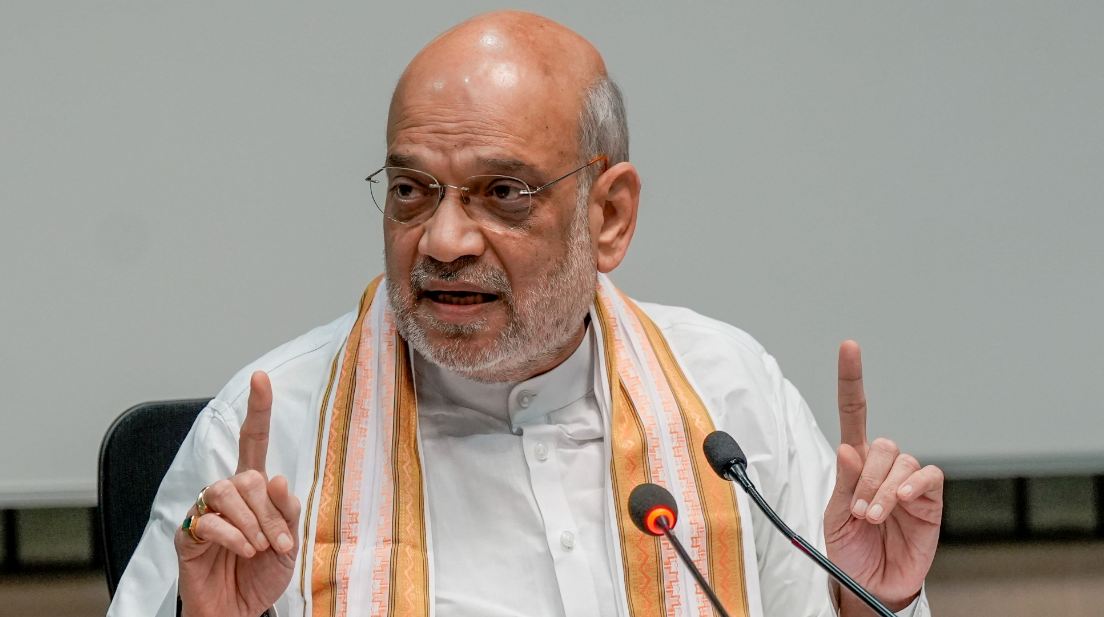
New Delhi/Imphal: Union Home Minister Amit Shah on Monday declared that terrorism and insurgency would be wiped out from Jammu & Kashmir and the Northeast by 2029, placing the troubled region – particularly Manipur – at the centre of the Centre’s internal security roadmap.
Addressing the 79th foundation day event of the Delhi Police in New Delhi, Shah said the government had already brought “around 80 per cent” of internal security challenges under control since 2014. He reiterated that the country would be freed from Maoist violence by March 31, 2026, and asserted that the Northeast was moving steadily toward lasting peace after decades of insurgency.
For the Northeast, where ethnic tensions and armed militancy have historically shaped politics and governance, the 2029 deadline carries deep significance. In Manipur – which witnessed devastating ethnic violence in 2023 and sporadic unrest since – the announcement is likely to be closely scrutinised by civil society groups, security experts and political leaders alike.
While Shah’s remarks were made at a national-level police event, the subtext of his speech pointed strongly toward the Northeast, where the Centre has in recent years signed multiple peace accords with insurgent groups.
“In the North-East, nearly 20 peace agreements have been signed and more than 10,000 youths have surrendered their arms and joined the mainstream,” Shah said, underlining what he described as a transformation in the region’s security landscape.

For Manipur, which has long grappled with insurgent outfits operating in the valley and hill districts, as well as cross-border arms trafficking and ethnic fault lines, the government’s claim of progress is both encouraging and contentious.
Over the past decade, several armed groups from across the Northeast – including those operating in Assam, Nagaland, Tripura and Manipur – have entered into Suspension of Operations (SoO) agreements or formal peace deals with the Centre. However, Manipur’s complex ethnic conflict, particularly between Meitei and Kuki-Zo communities, has posed fresh challenges beyond traditional insurgency frameworks.
Security analysts note that while insurgent violence in parts of the Northeast has declined significantly compared to the 1990s and early 2000s, Manipur’s recent unrest highlighted the fragile nature of peace in the region. The proliferation of looted weapons during the 2023 violence and the existence of armed village defence groups continue to test the state’s law-and-order apparatus.
Against this backdrop, Shah’s assurance that the Northeast would be free of violence by 2029 is being viewed as an ambitious political and security commitment.
The Home Minister contrasted the current situation with the pre-2014 period, when, according to him, Jammu & Kashmir, Maoist-affected areas and the Northeast faced serious internal security threats.
He claimed that decisive policy interventions, enhanced coordination between central and state agencies, and sustained security operations had significantly reduced violence levels. In the Northeast, this has included a mix of development initiatives, peace negotiations, and targeted security operations.
For Manipur, central intervention has been particularly visible since the outbreak of ethnic clashes in 2023. Thousands of central armed police personnel were deployed, buffer zones were created between warring communities, and operations to recover looted arms were intensified.
Despite these measures, sporadic gunfire incidents, arms seizures and tensions along district boundaries have persisted. Civil society organisations in Manipur have repeatedly called for political dialogue, reconciliation mechanisms, and constitutional clarity regarding land, identity and administrative demands.
Shah’s 2029 deadline, therefore, is likely to raise expectations for a comprehensive political settlement in Manipur that goes beyond security management.
Reiterating another key target, Shah said the government was “close to ending Maoist violence completely” and that India would be free from Maoist threats by March 31, 2026.
Although Maoist insurgency has had limited direct footprint in Manipur compared to central Indian states, security experts point out that porous borders and inter-state militant linkages require continued vigilance in the Northeast. Any instability in neighbouring regions can have spillover effects, especially in border states like Manipur, which shares an international boundary with Myanmar.
The political instability in Myanmar following the 2021 military coup has further complicated security calculations in Manipur. Insurgent groups have historically used cross-border sanctuaries, and refugee inflows have added humanitarian as well as administrative pressures.
Shah did not directly refer to the Myanmar situation in his speech, but officials in the security establishment acknowledge that stabilising Manipur is intertwined with managing border security and diplomatic coordination.

While much of the speech focused on national security, Shah also announced a series of initiatives aimed at modernising policing infrastructure. A key announcement was the expansion of the “Safe City” project in Delhi.
He said around 2,100 AI-enabled cameras would soon become operational, forming part of a broader network of 10,000 cameras under the Safe City initiative. An additional 15,000 cameras already installed across the capital are being integrated to enhance public safety.
Though these measures are specific to Delhi, similar technology-driven surveillance systems have gradually been introduced in parts of the Northeast, including Guwahati and Imphal, especially after the Manipur violence. Security planners believe AI-assisted monitoring and integrated command centres could play a role in preventing mob mobilisation and tracking arms movement in sensitive districts.
The Home Minister also said the introduction of three new criminal laws aims to modernise India’s criminal justice system and increase conviction rates to between 75 and 80 per cent. He cited states such as Assam, Haryana and Gujarat as having recorded conviction rate increases of over 20 per cent.
For the Northeast, where prosecution in insurgency-related and communal violence cases has often been slow and contested, the emphasis on higher conviction rates may translate into renewed pressure on state police forces and prosecutors.
insurgent activity – will depend on how security, political dialogue and community trust-building evolve over the next three years.
For now, the Northeast stands once again at the centre of India’s internal security discourse, with Manipur emerging as the crucial test case of the government’s promise to end insurgency for good.