

But fiscal share remains marginal
 KRC TIMES National Bureau
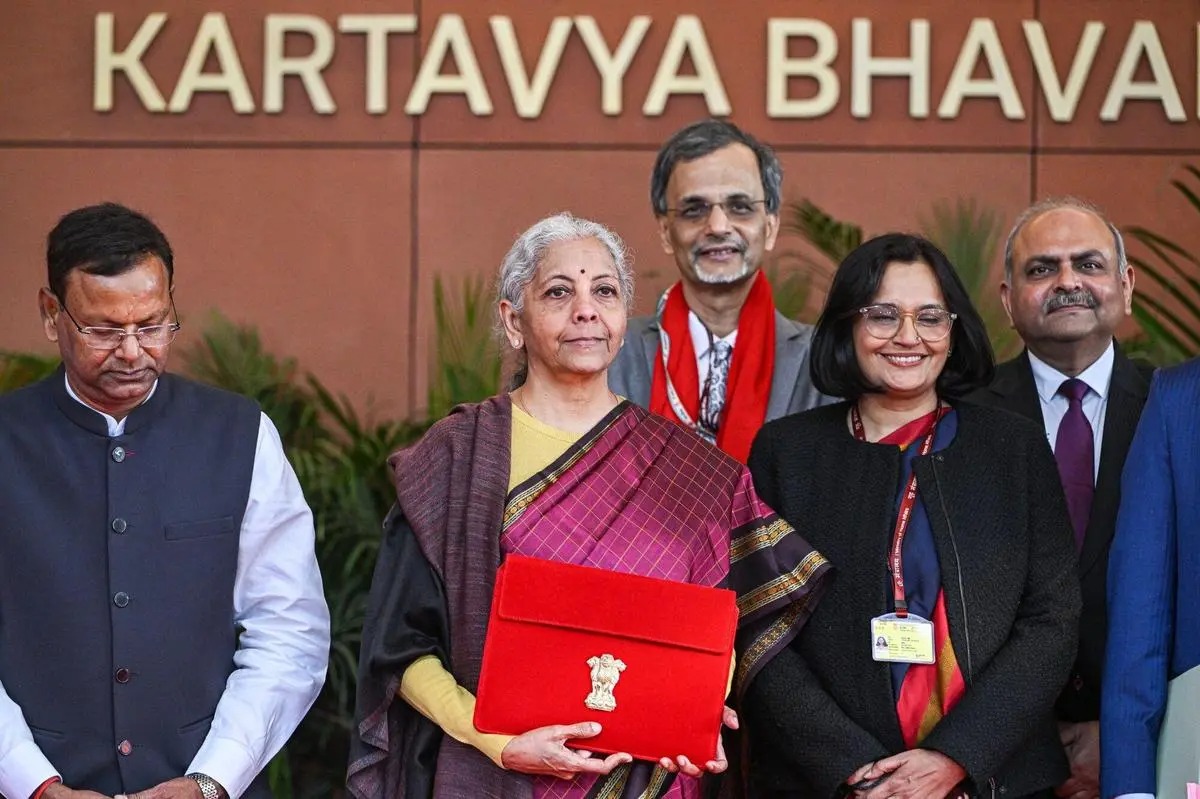
NEW DELHI : The Union Budget 2026-27 once again underscores the Centre’s stated commitment to the Northeast, invoking themes of connectivity, culture, agriculture and strategic integration. However, a closer look at allocations reveals only incremental gains, with the region’s overall share in the Union Budget remaining marginal.
In her Budget speech, Finance Minister Nirmala Sitharaman reiterated the government’s focus on what she termed the “Purvodaya States and the North-Eastern Region to accelerate development and employment opportunities,” placing the Northeast within a broader eastern growth narrative rather than treating it as a distinct fiscal priority.
At the heart of the budgetary engagement with the region is the allocation for the Ministry for Development of the North Eastern Region (DoNER). In 2025-26, DoNER received Rs 5,915 crore, around 0.12 per cent of the Union government’s total expenditure of Rs 49.64 lakh crore. For 2026-27, the allocation has increased to Rs 6,812.30 crore. Yet, against the expanded overall Budget outlay of Rs 53.47 lakh crore, DoNER’s share rises only marginally to about 0.13 per cent.

While the increase is significant in absolute terms, the Northeast’s proportional place in the Union Budget remains largely unchanged, continuing to hover just above one-tenth of one per cent of total central spending.
Beyond headline allocations, the Budget’s interventions for the region are spread across sectoral themes rather than consolidated into a comprehensive development package. Agriculture figures prominently, especially crops unique to the Northeast’s ecology. Announcing support for agar trees, Sitharaman highlighted the region’s agarwood economy alongside high-value crops such as cocoa, cashew and nuts cultivated in other parts of the country. The move signals an effort to commercialise local biodiversity while aligning it with national value-addition and export strategies.
Tourism and culture form another visible strand. Describing the Northeast as “a confluence of Theravada and Mahayana/Vajrayana traditions,” the finance minister unveiled a new scheme to develop Buddhist circuits across Arunachal Pradesh, Sikkim, Assam, Manipur, Mizoram and Tripura.

The initiative aims to preserve monasteries and temples, improve connectivity and upgrade pilgrim amenities, seeking to integrate the region more firmly into India’s spiritual tourism map.
Infrastructure commitments, meanwhile, are routed largely through national programmes rather than Northeast-specific announcements. Investments in waterways, logistics corridors and tourism infrastructure are expected to benefit the region indirectly.
The absence of dedicated budget lines, however, underscores the continued positioning of the Northeast as a beneficiary of wider eastern and border-area development strategies rather than a standalone fiscal focus.
The Budget also points to limited institutional strengthening in the region. The proposed upgradation of the National Mental Health Institute in Tezpur into a regional apex institution is expected to bolster specialised mental healthcare services and enhance Assam’s role in addressing long-standing gaps in the Northeast.
Overall, Budget 2026-27 offers continuity rather than transformation for the Northeast-marked by incremental increases, thematic inclusion and symbolic recognition of its cultural and ecological distinctiveness. Despite steady rises in allocations, the region’s share of the Union Budget remains virtually static, reinforcing the persistent paradox of rhetorical centrality and fiscal marginality in New Delhi’s engagement with India’s farthest frontier.
Promotional | North East Integration Rally