

Dr. Nag opened the session with a reminder that India’s long teaching tradition forms a core part of its knowledge heritage
 KRC TIMES Barak Valley Bureau
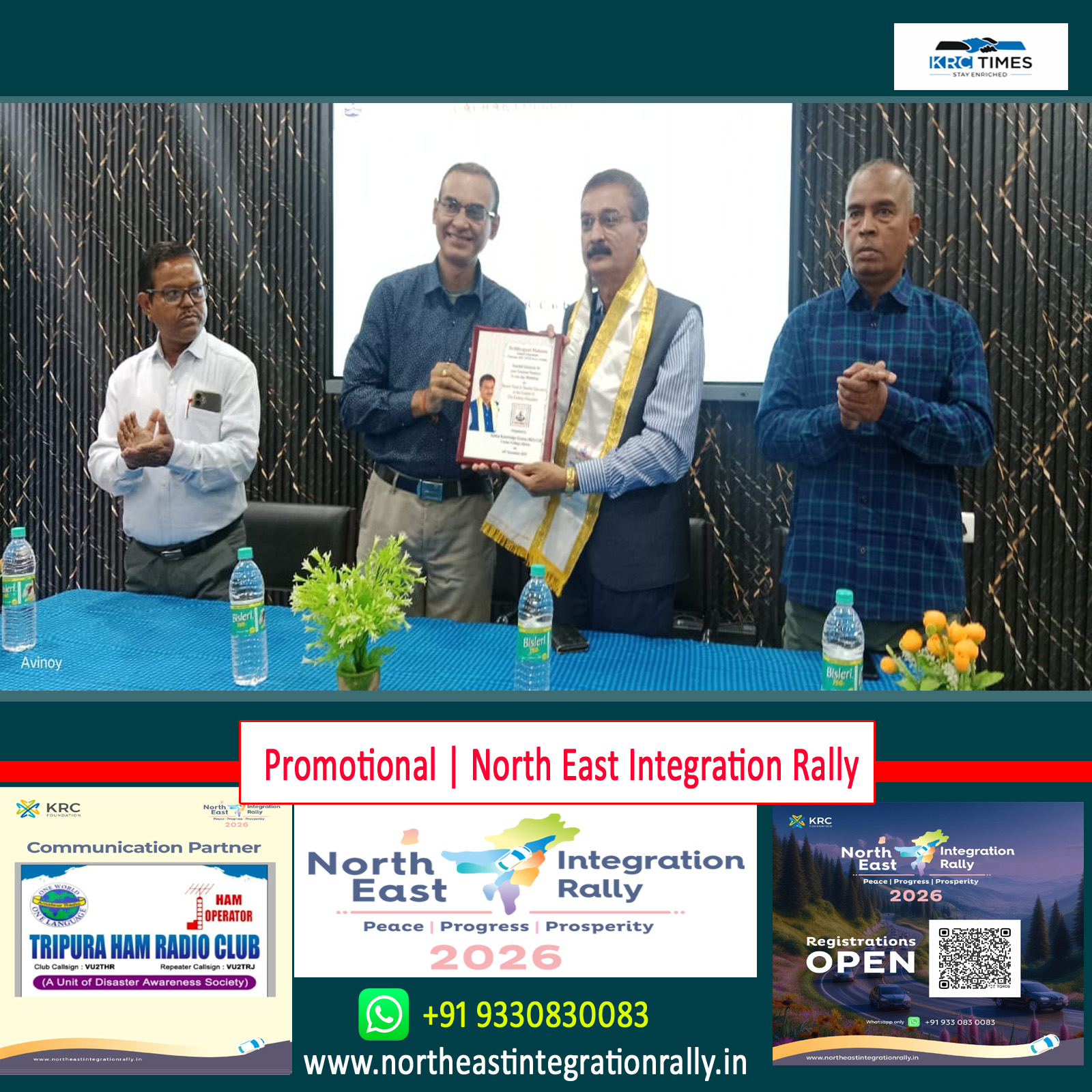
Silchar: Cachar College’s Indian Knowledge Tradition Centre held a one-day workshop on Friday focused on emerging approaches to teaching and learning in the twenty-first century. The programme brought together educators from across the Barak Valley for a close look at changing academic priorities and ongoing policy shifts.
Professor Dibyajyoti Mahanta, Chairman of NCTE and ERC, Government of India, delivered the keynote address. College principal Dr. Apratim Nag, vice principal Mohammad Samsuddin, and former acting principal Ratan Kumar Das were also present.
Dr. Nag opened the session with a reminder that India’s long teaching tradition forms a core part of its knowledge heritage. He said gatherings like this help both students and teachers understand how their roles are evolving.
In his keynote, Prof Mahanta traced India’s intellectual lineage from Nalanda and Takshila to the decline that began in the seventeenth century, and the post-Independence efforts to rebuild that tradition.
He pointed to the 1972 UN conference in Stockholm as a turning point in global thinking on education, where questions of humanity and the environment reshaped how nations viewed learning as a tool for social development. In a country as diverse as India, he said, education remains the most effective way to address long-standing social challenges.
He spoke at length on gender parity, noting that women make up nearly half the world’s population and that Article 15 of the Constitution protects gender equality. Strengthening women’s education, he said, supports broader social progress because the foundation of learning often begins at home.
He then outlined key education policies through the decades and explained how the 2020 policy reorganised school and higher education structures.
Prof Mahanta also highlighted the sweeping impact of digital tools, from the internet and AI to e-libraries and video conferencing, and said the new policy encourages transdisciplinary learning while giving undergraduates more freedom to choose subjects.
Dr. Ananda Chandra Ghosh conducted the programme. Workshop coordinator Dr. Hemanta Kumar Bora delivered the vote of thanks, with support from Dr. Abhinay Paul and Dr. Sandhya Rani Singh. Principals from M.K. Dey College and Kaliganj DIET College, along with more than a hundred teachers, faculty members, and students, attended. Participation certificates will be issued to all.