

The council will provide 4,000 acres of land for the project.
 Sushanta Roy
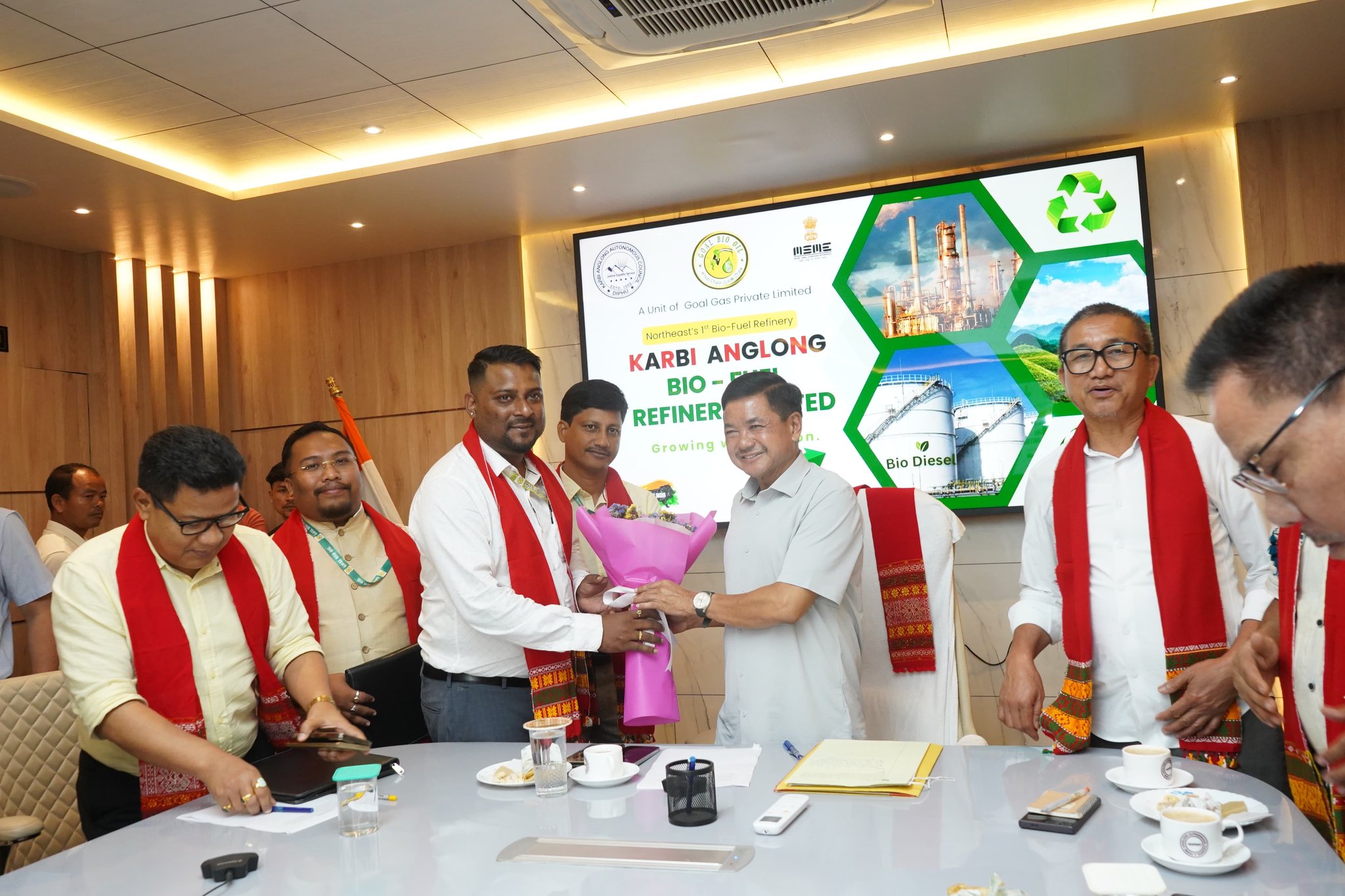
Diphu : An official Memorandum of Understanding (MoU) was signed between the Karbi Anglong Autonomous Council and Reliance Industries Limited for establishing an Integrated Compressed Bio-Gas (CBG) project within the jurisdiction of Karbi Anglong Autonomous Council.
The formal ceremony was held on Thursday at 10:00 AM in the Conference Hall of Kajir Ronghangpi Memorial Guest House, located in Taralangso village, located at the fringe of Diphu town.
Tuliram Ronghang, Chief Executive Member, of the council, Amarsing Tisso, Darsing Ronghang and Bidyasing Engleng, MLAs, all Executive Members and Members of the Autonomous Council, Principal Secretary of Karbi Anglong Autonomous Council, and other senior officials.
Reliance Industries Limited was represented by its Vice Chairman, Vamsee Krishna Jyothi, along with other company executives. Prior to the signing of the MoU, Ibon Teron, Deputy Secretary of the Council, delineated the administrative guidelines.
He mentioned that the council will provide 4,000 acres of land for the project. In return, an annual revenue of a total of ₹6,60,00,000 (Six Crores Sixty Lakhs) shall be paid to the council. He also mentioned that both the council and Reliance Industries Limited will have a 90-day window to withdraw from the agreement if necessary.
In addition, the MoU includes provisions to ensure the development of the rural economy and the generation of employment opportunities for the people of Karbi Anglong and West Karbi Anglong.
Interested cultivators may also grow Napier grass on their own lands, and Reliance will facilitate a buy-back arrangement under which cultivators can earn approximately ₹30,000 per acre annually.
Vamsee Krishna Jyothi, Vice Chairman of RIL, in his address, affirmed the company’s commitment to promote local employment and support farmers without disturbing the ecological balance of the area.
He expressed confidence in the potential of the project to bring significant benefits to the region.The council officials later held a discussion on the issue of cultivation of Napier grass, also known as elephant grass, as a sustainable feedstock for the Bio-CNG plant.
Owing to its rapid growth, high biomass yield, and suitability for anaerobic digestion, Napier grass is considered a promising resource for renewable energy production. This landmark collaboration between KAAC and RIL is expected to drive economic growth, promote green energy, and create new livelihood opportunities for the people of Karbi Anglong.
Promotional | Subscribe KRC TIMES e-copy