

Maruti Suzuki’s e-VITARA, in India, is sold under the Nexa premium channel as Maruti Suzuki’s first EV
 Biswadeep Gupta

Silchar : The e Vitara (also styled as e-Vitara or e VITARA) is Suzuki’s first mass-production battery electric vehicle (BEV), a compact/subcompact crossover SUV that revives the familiar Vitara name in fully electric form. It was unveiled globally in late 2024 and has rolled out in various markets by 2026, marking Suzuki’s (and its Indian subsidiary Maruti Suzuki’s) entry into the mainstream EV space.
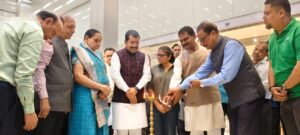
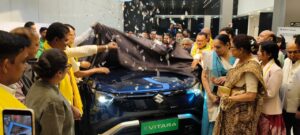
This model was officially unveiled in Silchar at a function held in the NEXA showroom on Tuesday evening, operated by Jain Udyog, where two Rajya Sabha MPs, Kanad Pukayastha and Sushmita Dev, along with other important citizens of the city, were present to witness the new entrant in the market.

Biplab Dey, the branch head, welcomed the guests and explained the various features of the vehicle. Maruti Suzuki’s e-VITARA, in India (launched February 2026), is sold under the Nexa premium channel as Maruti Suzuki’s first EV. It offers innovative pricing:
- Battery-as-a-Service (BaaS) introductory offer: Starts at Rs.10.99 lakh (ex-showroom) + battery rental at Rs.3.99 per km.
- Outright purchase (with battery): Rs.15.99 lakh to Rs.20.01 lakh (ex-showroom) across variants like Delta (49kWh), Zeta, and Alpha (61kWh).
- Features include Level 2 ADAS, 360-degree camera, electric sunroof, high-capacity lithium-ion batteries (operating range -30°C to 60°C), and an 8-year/160,000 km battery warranty.
- Waiting period: Around 6-8 weeks as of late February 2026, with supply constraints until July 2026. Deliveries have started, and it’s BNCAP 5-star rated for safety.
Early 2026 reviews call it a solid first effort from Suzuki—rugged, capable (especially with AWD), quiet for an EV, and competitively priced. It’s praised for durability, off-road chops in AWD form, and being a straightforward, no-nonsense electric SUV.
Jain Udyog, which was the first to start a full-fledged car showroom in Barak Valley, now employs around eight hundred people in the Tripura and Barak Valley region.