

The Unending Crisis of Relief Camps
 KRC TIMES Desk
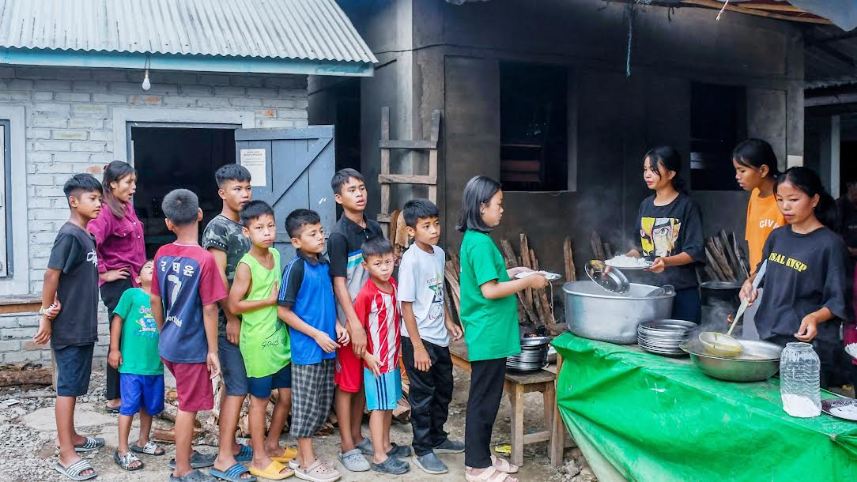
The anguish of life in these camps burst into public view on November 12, 2024, when IDPs from Sajiwa and Sawombung took to the streets carrying placards reading “We want to return home” and “How long must we stay in relief camps?”
Their protest was a cry not just for relocation but for recognition. Among them was Wahengbam Bebe, a displaced woman who described prefabricated shelters as “prison-like” kitchens and bedrooms crammed into single rooms, bedding thin and inadequate, and basic sanitation lacking. Tragically, these expressions of frustration are not abstract.
The suicide of a young IDP at the Sajiwa camp underscored a growing mental health crisis proof that for many, the camps no longer represent survival, but suffocation. The Human Cost: Lives Lost in Limbo“In Moreh alone, at least 30 IDPs have died in relief camps victims of untreated illness, trauma, and systemic neglect.
On June 30, 2024, 20-year-old Leishangthem Leima Chanu died of eye cancer in the Lamboi khongnang khong camp after months of inadequate medical care. Khaipao Haokip, 63, died of cardio-respiratory failure in Kangpokpi. Five others passed away in Ideal Girls’ College in Akampat, and three more at Lamding Higher Secondary School camp.
These are not isolated tragedies they are damning indictments of a system that has failed to deliver even basic healthcare. In many camps, access to hospitals in Imphal is blocked by ethnic tensions, forcing residents to rely on ill-equipped clinics or travel to Assam. Pregnant women give birth without medical support.
Children suffer malnutrition. Elders die from preventable ailments.““Invisible Wounds: The Mental Toll“Beyond the physical, the psychological scars of displacement are devastating. The suicide of 20-year-old Sukham Chanu at Mekola Higher Secondary School in January 2025 and Angom Prem Kumar’s death in Kwakta a year earlier speak to a silent epidemic of mental health crises among the displaced. Official records report at least six suicide attempts in 15 months, with two confirmed deaths.
The actual numbers are likely higher. The stigma around mental illness and a lack of monitoring conceal the true scale of despair. The trauma of losing ancestral homes, livelihoods, and community bonds is compounded by the hopelessness of long-term uncertainty. Not Safe, Not Secure“The camps, far from being safe zones, are increasingly fraught with danger. Reports of a 10-year-old girl allegedly raped in a Churachandpur camp and the suspicious death of a 9-year-old child expose glaring security lapses.
In the absence of mental health professionals or social workers, vulnerable populations especially women and children are left to navigate trauma and threats alone. A Life Without Basics“In Churachandpur, hundreds of Kuki-Zo families live in overcrowded camps that once served as hostels. In Kangpokpi, they rely on irregular food supplies and sleep in squalid conditions.
At the Manipur Trade and Expo Centre in Lamboikhongnangkhong, 745 IDPs endure leaking roofs, overflowing toilets, and a lack of clean water. Rainwater soaks bedding, and food rations often limited to rice and dal leave many malnourished. A community worker told Amnesty International, “We regularly see outbreaks of measles, dysentery, and fever.
There are no specialist doctors.” Pregnant women face childbirth without medical care. Chronic illnesses go untreated. Even daily sustenance is in question. At many camps, IDPs are allotted Rs 80 to Rs 85 a day an amount that barely covers a meal, let alone medication. One mother at Lamboikhongnangkhong said a strip of antibiotics costs more than her family’s entire daily allowance.
Hope in Small Acts, But Not Enough“In a moment of personal intervention, I hired two skilled masons from the Kangpokpi camps to offer them some financial relief and dignity through work. Many others across Manipur are doing the same small but meaningful acts.
Yet, these gestures, while uplifting, cannot replace the systemic overhaul that is so desperately needed. RK Sanahal, camp coordinator at Mandop Yumpham, noted that 1,100 IDPs there survive on that Rs 80 daily allowance, supplemented only by erratic relief distributions.
Despite allocations of Rs 217 crore in 2024–25 and a further Rs 1,926 crore in March 2025, the aid on the ground is scarcely visible. Barely 20% of families have received prefabricated housing. Thousands still live in tents along the highways. A Lost Generation The education of displaced children hangs in the balance. Schools in the camps, where operational, suffer from a lack of teachers and poor attendance. Parents describe the education system as mere tokenism.
“It feels like the government is using our children just to keep schools running on paper,” said one frustrated father. Children are growing up in instability, shaped more by trauma than by textbooks. Without structured education and emotional support, they risk becoming a lost generation robbed not just of homes, but of futures.
A Sliver of Hope and a Challenge A breakthrough appeared possible on July 2, 2025, when the Governor of Manipur assured civil society organizations that IDP rehabilitation would begin within the month. The assurance followed a June 30 meeting between 19 CSO leaders and the Ministry of Home Affairs in Delhi. Groups like AMUCO, COCOMI, and FOCS demanded immediate resettlement, protection for farmers, and reopening of key highways.
While the assurance is welcome, the IDPs have heard promises before. What they need now is delivery timebound, transparent, and accountable action. Thousands, like Naorem Rojita Devi, whose home in Churachandpur was razed by explosives, still languish in shelters that offer neither comfort nor hope. Rebuilding thousands of homes within six to twelve months is an ambitious goal, likely unachievable without significant resources and coordination.
Yet, it must be attempted with urgency and sincerity.““More Than a Policy Failure A Moral Reckoning“Relief camps in Manipur are not just humanitarian failures. They are moral reckonings. They reveal the consequences of bureaucratic apathy, delayed governance, and hollow policy.
The Rs 2,143 crore allocated in recent budgets must not vanish into paperwork and audit reports. It must translate into water, medicine, shelter, schools, and, above all, hope. The displaced are not asking for charity. They are demanding justice.
Their resilience in the face of abandonment deserves not just sympathy but solidarity. Civil society must continue to amplify their voices. Humanitarian organizations must scale up services. The public must demand accountability Will We Rise to the Challenge? The displaced people of Manipur those from Churachandpur, Moreh, and Kangpokpi have lost homes, livelihoods, and normalcy.
What they cannot be allowed to lose is hope. Relief camps can be transformed from spaces of despair to sanctuaries of healing. But that requires more than budgetary promises. It requires political will, public pressure, and collective conscience.““The time for empathy has passed. The time for action is now.

Know More – Apply Here