

Exposing Civic Vulnerabilities
 KRC TIMES Barak Valley Bureau
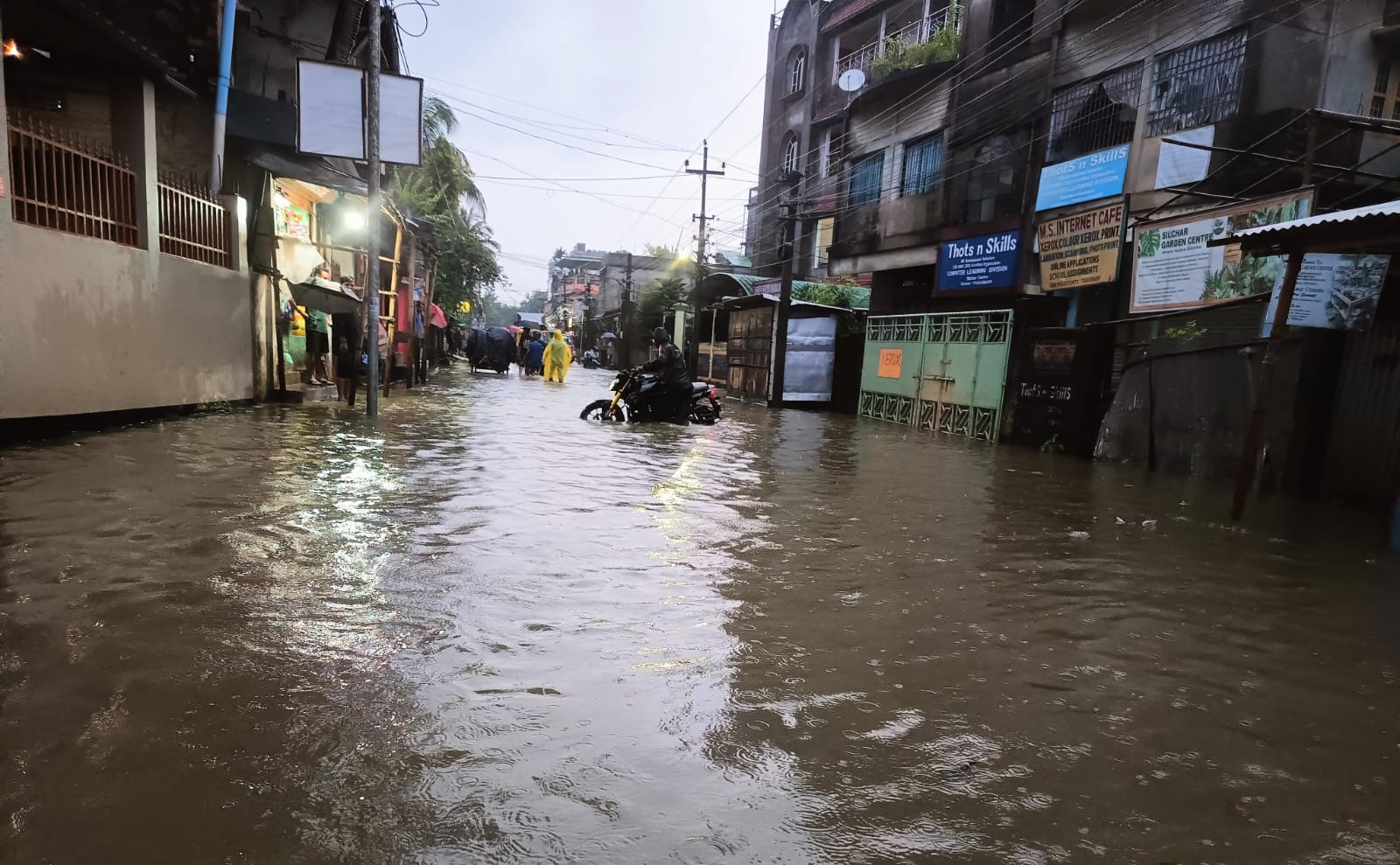
Silchar: A fresh spell of intense monsoon rainfall on Monday morning plunged several parts of Silchar into chaos, with extensive waterlogging and artificial flooding bringing life to a near standstill. The deluge disrupted vehicular movement, inundated homes and markets, and intensified the ongoing flood crisis in Assam’s Barak Valley.
Major roads such as the National Highway bypass, Link Road, Hailakandi Road, and Sonai Road were submerged for hours, forcing commuters to wade through knee-deep water. In New Silchar and other low-lying areas, stagnant water remained long after the rain stopped, pointing to a chronic issue — artificial flooding, as many locals call it — attributed to clogged drains and outdated drainage systems.
“The drainage system is simply not equipped to handle this volume of rain,” said a resident of Premtala. “This happens every year, but no permanent solution is ever implemented.”

The disruption extended beyond mobility. Several shops reported damages to stock, and market activity slowed sharply. Residents in affected neighbourhoods struggled to carry on with daily routines, as rainwater gushed into homes, causing loss of belongings and property.
The district administration of Cachar is overseeing mitigation efforts including pre-emptive drain clearing and regular monitoring of vulnerable localities. The administration has also issued advisories urging residents to avoid travel through waterlogged areas and remain indoors unless necessary.
At a recent review meeting, authorities pledged to implement time-bound solutions such as desilting storm drains, improving waste management, and upgrading drainage channels to prevent repeat scenarios.

Meanwhile, Assam Chief Minister Dr. Himanta Biswa Sarma, during his recent visit to the Barak Valley, acknowledged the acute stress faced by urban populations during the monsoon. He underscored the dangers of unplanned urban development without sustainable drainage infrastructure and advocated for long-term measures like wetland conservation to mitigate urban flooding.
Among the victims of the artificial flood was Sonu Devi, a homemaker from Tarapur, whose house was submerged overnight. “We stayed awake all night as water entered every room. We don’t know what to do anymore,” she lamented.
Experts warn that unless urgent infrastructural reforms are undertaken, Silchar will continue to reel under similar crises year after year.
With the India Meteorological Department forecasting more rainfall in the coming days, authorities are on alert, scaling up cleanup drives and emergency responses across the town.
As Silchar struggles to stay afloat, Monday’s deluge serves as a harsh reminder — without systemic reforms, the town’s monsoon woes may soon become a year-round crisis.

Know More – Apply Here