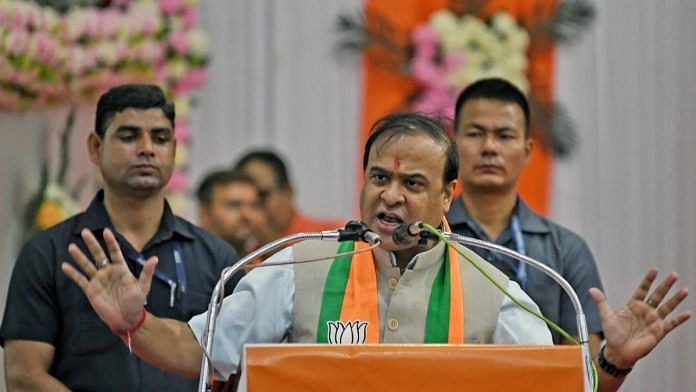


He warned that demographic shifts could begin to influence state institutions, including the bureaucracy and the police
 KRC TIMES Assam Bureau
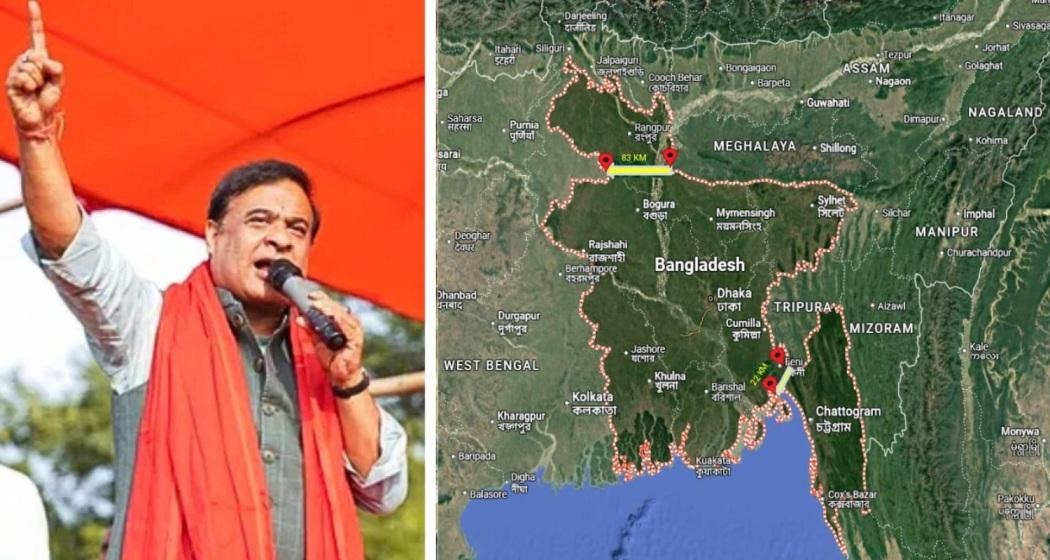
GUWAHATI : Assam Chief Minister Himanta Biswa Sarma has raised fresh concerns over demographic change, illegal infiltration and their potential implications for national security and governance in eastern India, particularly in areas surrounding the strategically sensitive Chicken’s Neck corridor.
In a recent interview, Sarma said that parts of the narrow Siliguri Corridor – which connects the Northeast to the rest of India – and adjoining regions are inhabited by communities with deep cultural, linguistic and familial ties to neighbouring Bangladesh. While stressing that these residents are Indian citizens, the Chief Minister suggested that cross-border linkages could influence regional dynamics in times of political or strategic stress.

“At the right moment, some may align with Bangladesh,” Sarma said, pointing to shared language, education systems, music and media consumption as factors sustaining close connections across the border. His remarks underscore long-standing security sensitivities associated with the corridor, which is often described as India’s most vulnerable geographic link.
Sarma also focused on what he described as a steadily changing demographic profile in Assam, attributing it largely to decades of illegal infiltration. Referring to observations made by the Supreme Court during hearings related to the state, he noted that demographic changes in Assam have been recorded since the 1940s, with a sharper acceleration after 1961.
Citing Census data, the Chief Minister said that the Muslim population in Assam stood at around 34 per cent in 2011. Based on past trends, he claimed that the figure would have risen significantly had the decennial Census been conducted in 2021. “By 2021, it would have been around 38 per cent.
If the same trend continues, it could touch 40 per cent by 2025,” Sarma said, adding that even a reduction in infiltration over the past decade would make only a marginal difference to the overall numbers.
According to Sarma, crossing what he termed a “critical threshold” could have far-reaching consequences for the functioning of the state. He warned that demographic shifts could begin to influence state institutions, including the bureaucracy and the police. “I can only defer this situation for about 10 years. I do not have a permanent solution,” he said, indicating the limits of administrative and political interventions in addressing the issue.
The Chief Minister emphasised that the challenge of illegal infiltration is not confined to Assam alone. He said several states in eastern India, including West Bengal and Jharkhand, are also facing similar pressures, making it a broader regional concern rather than a state-specific one.

Sarma’s comments come at a time when issues of border management, citizenship, and demographic change continue to dominate political discourse in Assam and the Northeast. The region has a long history of movements centred on identity and migration, most notably the Assam Agitation of the late 1970s and early 1980s, which eventually led to the signing of the Assam Accord in 1985.
In recent years, the BJP-led government in Assam has repeatedly highlighted illegal infiltration as a key governance and security challenge, linking it to land pressure, social tensions and electoral politics. Measures such as eviction drives, tighter border surveillance and coordination with central agencies have been projected as steps to address the issue.
Critics, however, have argued that demographic projections and political rhetoric around infiltration risk deepening social polarisation and targeting specific communities. They have also called for greater reliance on verified data, inclusive policy responses and long-term development strategies to address the underlying causes of migration and demographic change.
Sarma’s latest remarks are likely to add momentum to ongoing debates over national security, border control and demographic trends in eastern India, even as questions persist over how these challenges can be addressed without undermining social cohesion and constitutional principles.