

Our sewerage infrastructure must be forward-looking and capable of adapting to the rapid urban growth of the capital region,” Singh stated
 KRC TIMES Manipur Bureau
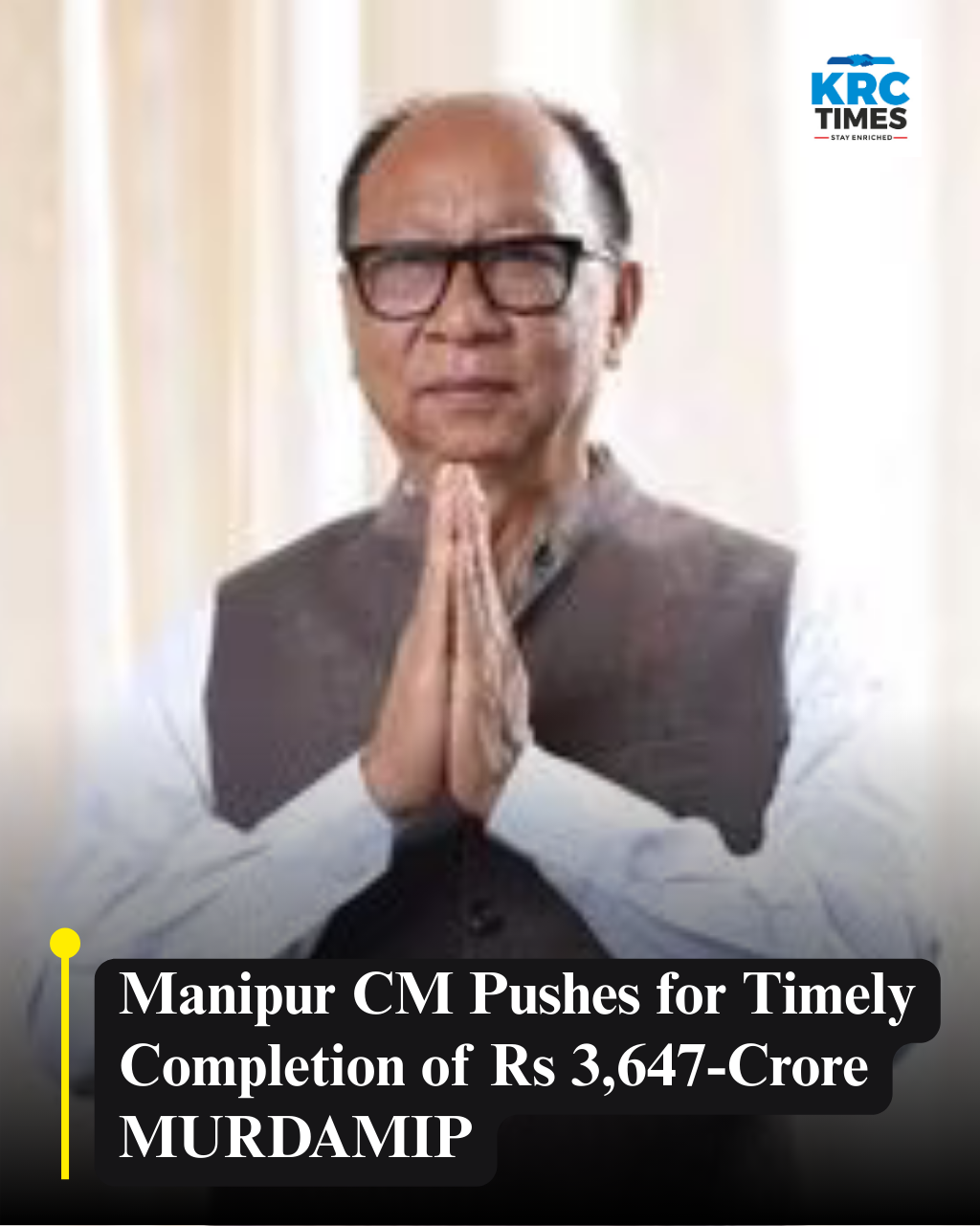
Imphal : Yumnam Khemchand Singh on Friday night reviewed the progress of major urban infrastructure works in Greater Imphal, directing officials to ensure quality execution and timely completion of projects under the Rs 3,647-crore Manipur Urban Road, Drainage and Asset Management Improvement Project (MURDAMIP) and the city’s integrated sewerage system.
Chairing a high-level meeting at the Chief Minister’s Secretariat, Singh met MLAs and senior officials of the Water Resources Department and Public Works Department (PWD) to assess ongoing sewerage and concrete road works aimed at transforming the capital’s urban landscape.
The review comes amid accelerated efforts to modernise Imphal’s civic infrastructure in response to rapid urban growth that has strained existing road networks, drainage systems, and sanitation facilities.
In a post on X following the meeting, the Chief Minister underlined the need for forward-looking planning and durable construction.
“Our sewerage infrastructure must be forward-looking and capable of adapting to the rapid urban growth of the capital region,” Singh stated. He also stressed that concrete pavement works should guarantee durability and longevity, minimising the need for frequent repairs and maintenance.
He described the review as productive and said clear directions were issued to uphold the highest construction standards while ensuring adherence to project timelines.

The state government has positioned the infrastructure push as part of a broader vision to build a modern, resilient, and citizen-centric urban ecosystem in Manipur.
Officials informed the meeting that MURDAMIP remains the principal infrastructure initiative underway in Imphal as of early 2026. The project, partly funded by the Asian Infrastructure Investment Bank, involves a total outlay of Rs 3,647 crore.
The project covers 547 kilometres of road network across Greater Imphal and includes the construction of rigid (concrete) pavements alongside concrete-lined and covered stormwater drains on both sides of roads.
The integrated approach aims to tackle one of the city’s long-standing civic problems-chronic waterlogging and seasonal flooding caused by inadequate drainage and unplanned urban expansion.
Concrete roadside drains are being constructed in tandem with road improvements to ensure effective stormwater management. Officials said the emphasis on rigid pavements is intended to enhance load-bearing capacity and reduce maintenance costs over the long term.
Waterlogging has been a persistent challenge in several parts of Imphal, particularly during the monsoon season. Poor drainage infrastructure has not only disrupted daily life but also contributed to the deterioration of road surfaces and public health risks.
Under MURDAMIP, covered drains are being installed to facilitate efficient runoff while reducing open exposure of wastewater. The project is also expected to improve asset management and maintenance systems, allowing authorities to monitor and sustain infrastructure more effectively.
Authorities said the initiative is designed to provide long-term solutions rather than short-term fixes, aligning with the Chief Minister’s directive for sustainable and durable construction.
Parallel to the PWD-led road and drainage works, the state government is developing an integrated sewerage system for Imphal city to manage wastewater more effectively.
Rapid urbanisation has outpaced existing sanitation infrastructure, leaving significant portions of the city without sewer connectivity. At present, only 11 out of 27 municipal wards are covered by a sewered sanitation system. In the remaining wards, households rely primarily on septic tanks.
In areas lacking a sewer network, untreated or partially treated wastewater is discharged into open drains, eventually flowing into the Imphal and Nambul rivers. This has led to concerns about declining water quality and environmental degradation.
Officials noted that segments of the drainage network and receiving river systems currently fail to meet standards set by the Central Pollution Control Board (CPCB), highlighting the urgency of comprehensive wastewater management reforms.

The ongoing sewerage project seeks to expand network coverage, reduce direct discharge of wastewater into natural water bodies, and bring urban sanitation infrastructure in line with national environmental norms.
Addressing a Growing Urban Footprint
Imphal’s population growth and expanding built-up areas have intensified pressure on civic amenities. Encroachment, unregulated construction, and increased vehicular traffic have further complicated drainage and road maintenance.
The Chief Minister emphasised that infrastructure planning must anticipate future expansion rather than merely respond to present deficiencies.
Officials at the meeting reportedly presented progress updates, implementation timelines, and strategies to minimise disruption to residents during construction.
The state government has described the sewerage and road improvement initiatives as critical to improving the quality of life for residents of Greater Imphal. By addressing inadequate sanitation coverage, reducing river pollution, and strengthening urban mobility, the projects aim to lay the groundwork for sustained economic and social development.
Singh reiterated the government’s commitment to delivering infrastructure that is both modern and resilient. “We are collectively committed to building a robust urban infrastructure that serves citizens efficiently and sustainably,” he noted.
With substantial financial backing and ongoing monitoring at the highest levels, the Rs 3,647-crore infrastructure push marks one of the most ambitious urban development drives in Manipur’s recent history.
As implementation progresses through 2025-2026, the effectiveness of these interventions will likely shape Imphal’s trajectory as a growing capital city striving to balance development with environmental and civic sustainability.