

Fewer than 25 mature individuals were recorded, all confined to an area of less than 20 square metres
 KRC TIMES Assam Bureau
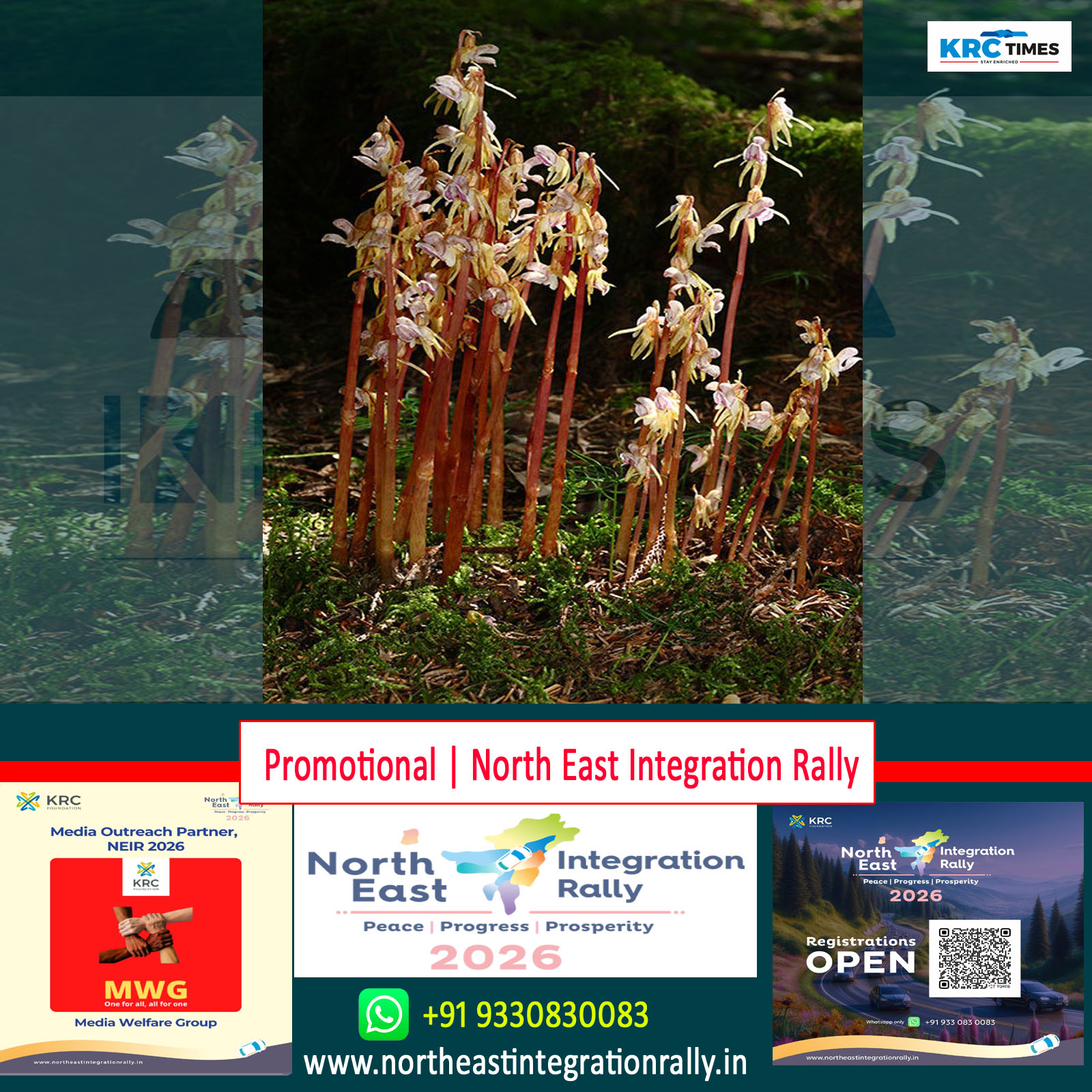
Guwahati : A rare, leafless orchid species last documented during the British colonial era has been rediscovered in Meghalaya’s Khasi Hills after a gap of 175 years, marking the oldest recorded plant rediscovery in the state and highlighting the fragile biodiversity of Northeast India.
The orchid, Chamaegastrodia vaginata-commonly referred to as a “ghost orchid”-was rediscovered by researchers Yalatoor Mahesh, Rikertre Lytan and Ramalingam Kottaimuthu of the Botanical Survey of India (BSI), Eastern Regional Centre, Shillong. The discovery was made during botanical field surveys conducted under the project Parasitic Angiosperms of Meghalaya and has been published in the scientific journal Vegetos.
The species was located at Lawsohtun in Upper Shillong, with its identity confirmed through detailed comparison with historical botanical descriptions and type specimens preserved at the Royal Botanic Gardens, Kew.

Chamaegastrodia vaginata was first collected in 1850 from Mamloo in the Khasi Hills by renowned botanists J.D. Hooker and Thomas Thomson. Since then, it had not been recorded in India, leading botanists to believe the species may have disappeared from the region.
Unlike most plants, the orchid is leafless and lacks chlorophyll, making it incapable of photosynthesis. Instead, it survives through mycoheterotrophy-a rare ecological strategy in which the plant derives nutrients from underground fungi associated with decaying organic matter in forest soils.
Researchers said this unusual lifestyle makes the species extremely vulnerable to habitat disturbance, as it depends on intact forest floors and stable microhabitats. Its small size and brief flowering period further increase the likelihood of it being overlooked during routine surveys.
The rediscovery, while confirming the orchid’s continued survival in Northeast India, has also raised serious conservation concerns. Fewer than 25 mature individuals were recorded, all confined to an area of less than 20 square metres.
Based on its highly restricted distribution and small population size, the species has been provisionally assessed as Critically Endangered in India. At present, Meghalaya is the only state in the country where the orchid is known to survive.

The orchid was found growing at elevations between 1,500 and 1,650 metres in damp, disturbed evergreen broad-leaved forests, under the canopy of tree species such as Pinus kesiya, Castanopsis, Schima wallichii and Litsea. Similar forest types also occur in parts of neighbouring Assam.
Researchers warned that urban expansion, habitat degradation and unregulated tourism in and around Upper Shillong pose direct threats to the fragile population. Even minor changes to soil structure or forest canopy could lead to the local extinction of the species.
Globally, Chamaegastrodia vaginata is known only from India and China, making the eastern Himalaya-Indo-Burma region a critical stronghold for its survival.
“Given the extremely limited number of individuals, this species warrants urgent conservation measures. Its future survival depends on the continued protection of its existing habitat,” the researchers said.
Promotional | North East Integration Rally