

Colyttus bilineatus had been reported only from Southeast Asian countries, including Indonesia, Malaysia and Singapore
 KRC TIMES Barak Valley Bureau
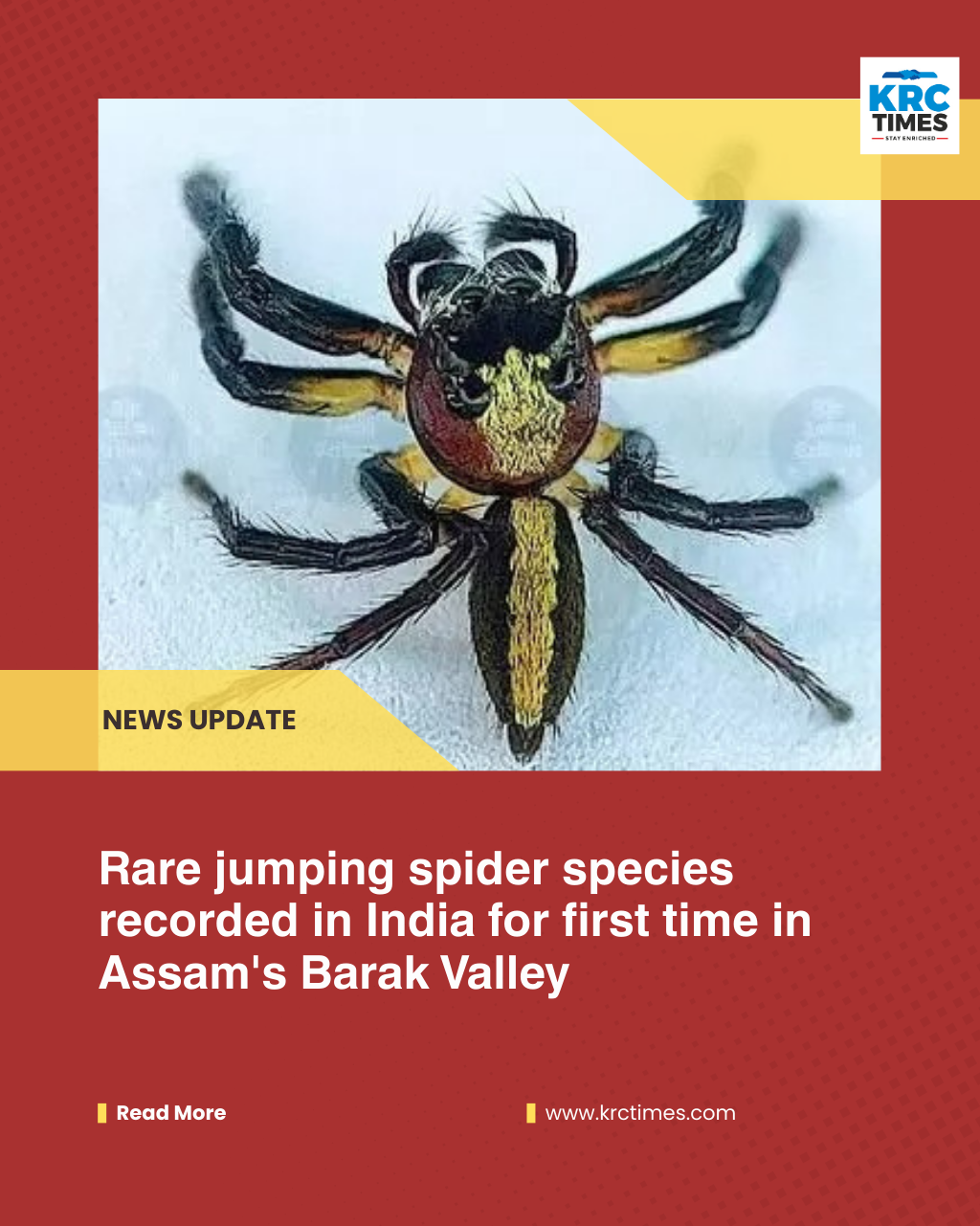
Silchar : In a discovery highlighting the rich but underexplored biodiversity of Assam, researchers from Assam University, Silchar, have recorded the first-ever Indian sighting of a rare jumping spider species, Colyttus bilineatus, in the forests of the Barak Valley.
The finding, published in the latest issue of the Journal of Threatened Taxa, marks a significant extension of the species’ known geographical range. Until now, Colyttus bilineatus had been reported only from Southeast Asian countries, including Indonesia, Malaysia and Singapore.

The research was conducted by Assam University scholar Monica Chetry under the supervision of Professor Parthankar Choudhury, in collaboration with noted arachnologist John T.D. Caleb of Saveetha University, Chennai. The spider was discovered in the Loharbond area of Cachar district, within an Inner Line Reserved Forest known for its high but largely unexplored biodiversity.
Researchers said the discovery reinforces Assam’s importance within the Indo-Burma biodiversity hotspot, one of the most species-rich yet least studied ecological regions in the world. “Assam’s forests continue to be a frontier for biological discovery,” Prof Choudhury said, recalling earlier notable findings from the Barak Valley, such as the Man-face stink bug (Catacanthus incarnatus) reported from Pailapool in 2003 and the walking leaf insect discovered in Katlicherra in 2006.
Emphasising the ecological significance of the find, Chetry said the discovery highlights the need to study lesser-known life forms. “Assam’s biological richness is not defined only by large mammals and birds. It is equally shaped by small, often overlooked microfauna,” she said.
Experts noted that despite their small size, jumping spiders are active predators and play a crucial role in regulating insect populations, thereby contributing to the overall health and balance of forest ecosystems.