

Cachar Administration Strengthens Multi-Sectoral Road Safety Measures under 4E Framework
Police, Transport, Health & Civic Bodies Join Forces for Holistic Reforms
 KRC TIMES Barak Valley Bureau
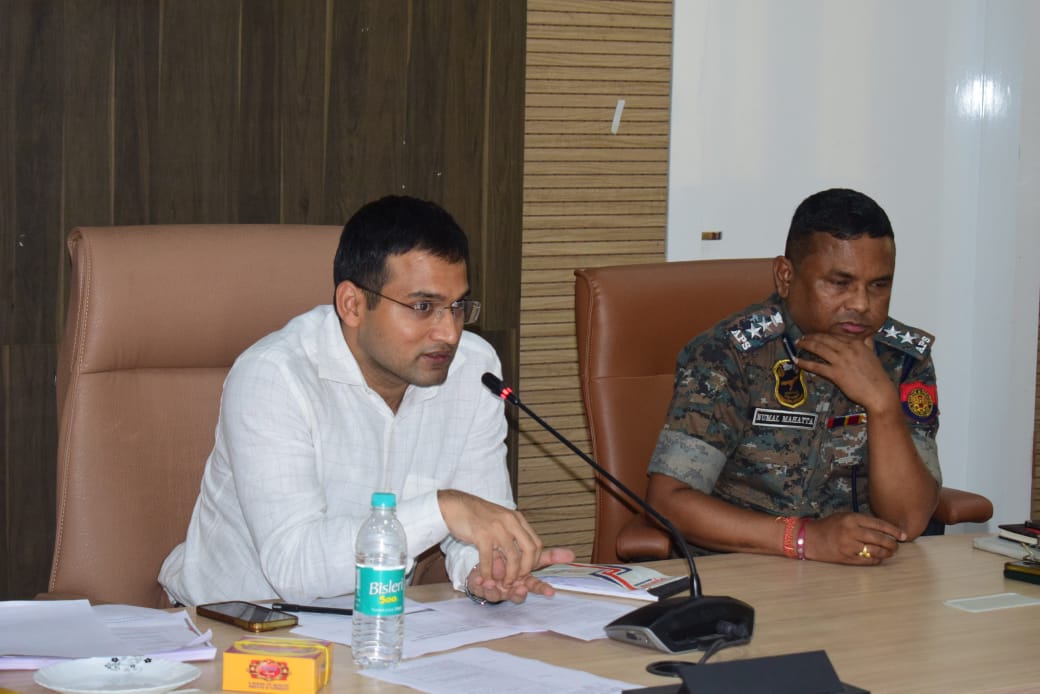
Silchar : “Road safety is not merely a government obligation; it is a shared social duty,” asserted Mridul Yadav, IAS, Deputy Commissioner of Cachar and Chairman of the District Road Safety Committee (DRSC), while chairing a high-level review meeting of the committee at the DC office’s new conference hall on Tuesday.
Emphasizing a shift in public perception, the DC urged citizens to view traffic rules not as restrictions but as life-saving safeguards. He underscored the need for collective ownership of road safety, stating that every preventable accident is a shared failure unless all stakeholders including the public actively participate.
The meeting marked Cachar’s intensified efforts to implement the 4E framework Engineering, Enforcement, Education, and Emergency Care as a unified strategy to curb road accidents. Yadav appreciated the coordinated efforts of departments including Police, Transport, PWD, NHIDCL, Health, Education, Excise, and civic agencies, which have already yielded visible improvements in infrastructure, enforcement, and awareness.
Key Interventions Highlighted
- Black spot rectification through speed breakers and signage installation.
- Repair of critical infrastructure, including Gammon and Sadarghat bridges.
- Lighting upgrades near hospitals and schools.
- Clearing roadside encroachments in key urban corridors for smoother pedestrian and vehicular movement.
Senior Superintendent of Police Numal Mahatta, APS, reaffirmed the police department’s commitment to proactive enforcement, particularly in high-risk areas like Silchar Bypass and Mizoram Road. Special patrols during rush hours and nighttime, combined with helmet checks, breathalyser tests, and surveillance of highway eateries, have helped in curbing alcohol-related violations.
Modern enforcement tools barricades, body-worn cameras, traffic jackets, and recovery vans have been deployed to strengthen rapid response and on-ground law enforcement.
Enforcement and Awareness Drives
The District Transport Office, Excise, and Police have jointly conducted drives against over-speeding, illegal parking, and vehicle overloading. The “No Helmet, No Petrol” initiative has significantly boosted compliance with helmet laws. Additionally, mobile tableau campaigns have reached urban and rural pockets, spreading road safety awareness.
Schools & Students Leading Behavioural Change
The Education Department, in collaboration with the Regional Office of Information & Public Relations (Barak Valley Zone), has integrated road safety modules across 20 schools. Morning assemblies now feature awareness videos, while students participate in quizzes, rallies, street plays, and drawing contests. A helmet mandate has also been introduced for student riders, fostering responsible behavior from a young age.
Emergency Response Strengthened
The Health Department, in coordination with the DTO, has reinforced trauma care readiness. Key measures include:
- Strategic ambulance positioning at accident-prone spots for <10-minute response time
- Distribution of trauma kits, oxygen-enabled trolleys, traffic cones, and crash recovery tools
- Eye check-up camps for drivers to ensure road-worthiness.
- Accident Data Trends: Progress Amid Rising Traffic Volume
- Data from the Integrated Road Accident Database (IRAD) and SAM POLICI platform revealed notable trends:
- 2023–2024: Total accidents dropped from 651 to 630 (3.33% decrease)
- Fatalities reduced from 137 to 100 (37% drop)
- Grievous injuries, however, rose from 452 to 540 (16.3% increase)
The January–June trend showed:
- Accidents rose from 312 (2023) to 343 (2024) and to 380 (2025)
- Fatalities continued to decline: 81 (2023), 55 (2024), and 41 (2025)
- Grievous injuries climbed steadily: 193 (2023), 291 (2024), and 388 (2025)
While growing vehicular activity has marginally increased accident numbers, the steady decline in fatalities is seen as an encouraging outcome of the administration’s multi-pronged strategy. The rise in grievous injuries, however, has prompted authorities to double down on both prevention and emergency response.
Towards a Safer Tomorrow
The review meeting, attended by SSP Numal Mahatta, ADC Antara Sen, Additional SP Subrata Sen, Assistant Commissioner Phunlalngir Chorei, DTO Ramesh Shyam, officials from NHIDCL, PWD, Health, Education, Excise, Legal Metrology, and representatives of NGOs, reflected a strong inter-departmental synergy.
Reaffirming its vision of “Turning Every Mile into a Smile”, the DRSC underlined its commitment to a data-driven, people-centric, and inclusive approach. Cachar’s collaborative model stands out as an emerging example of how governance, backed by community participation, can pave the way to safer roads and a more responsible travel culture.

Know More – Apply Here