

NEIR 2026 heads to Malda for its January edition
 North East Integration Rally
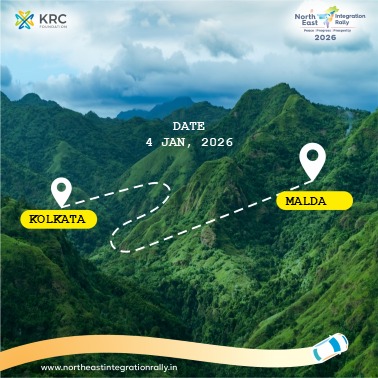
Malda sits in its own rhythm, far from Kolkata’s rush yet tied to the city by history, trade, and memory. The contrast hits you the moment you arrive. Kolkata pulls you with its noise, its intellectual restlessness, and its habit of demanding attention.
Malda greets you with orchards, slow rivers, and long stretches of land where the past still lies close to the surface. The two places don’t compete. They form a conversation about what Bengal has been and what it’s becoming.
Here’s the thing. Malda doesn’t need to shout to tell its story. The district has evolved at the pace of its rivers, and that slower, steadier tempo makes its layers easier to read. You see it in the way fields meet ruins, in the way markets speak in more than one language, and in how the region’s politics and culture are shaped by borders that are both real and emotional.
Start with the geography. Malda stands at the meeting point of the Mahananda and Kalindi rivers, an intersection that has shaped everything from its soil to its settlement patterns. The land here has been desirable for centuries. Long before Kolkata emerged as a modern capital, Malda anchored the medieval capitals of Bengal.
Gaur and Pandua weren’t just administrative centers. They were thriving cities where architecture, power, and trade left lasting marks. When you walk through the old stones of Gaur, you aren’t just looking at relics. You’re stepping into the blueprint of Bengal’s early identity.

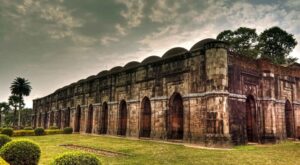
The Adina Mosque, built in the fourteenth century, is the clearest reminder of that era’s ambition. Its scale alone forces you to pause. You look at its arches and understand immediately that Malda once commanded an empire’s attention. The Firoze Minar in Gaur carries the same authority. These structures don’t whisper history.
They present it plainly, with a presence that resists decay even after centuries of monsoon and neglect. Kolkata, for all its cultural dominance today, doesn’t carry this kind of medieval memory. Malda does, and it does so without ceremony.
Then comes the landscape that defines the region’s everyday life. Malda’s orchards aren’t just agricultural plots. They are the district’s pulse. Lakshmanbhog, Himsagar, Fazli—each mango has its own fan base, its own season, its own sense of arrival. Mango season turns Malda into a map of movement. Traders travel, families gather, and shipments leave for Kolkata in the early hours of dawn.
For Kolkata, Malda becomes a seasonal presence, the arrival of mango-laden trucks signaling the unofficial beginning of summer. It’s one of the clearest connections between the two places: one grows, the other consumes, and the rhythm repeats every year without fail.
But Malda’s economy isn’t defined by mangoes alone. The district sits close to the Bangladesh border, and that proximity creates a blend of opportunity and tension. The markets here have always been shaped by cross-border movement, whether official or informal.

Jute products, river fish, traditional silk, and tobacco pass through the region’s trade networks before making their way to larger markets. Kolkata absorbs much of this produce, just as it absorbs people from Malda who travel to the city for education, work, or a sense of possibility.
This movement of people creates a quiet kind of cultural exchange. Students from Malda go to Kolkata seeking colleges that offer courses unavailable at home. Families send members to work in the city’s vast informal sector. Traders maintain long-standing relationships with Kolkata markets.
Malda sends its produce, its people, and its stories to the city. Kolkata sends back income, aspiration, and an urban imagination that shapes how the next generation views opportunity.
Yet Malda’s cultural voice remains distinct. It’s quieter than Kolkata’s theatrical confidence, but that doesn’t make it any less expressive. Folk music holds its ground here because communities still treat it as part of daily life rather than a performance for tourists or cultural festivals. Walk into villages around Old Malda or Kaliachak and you’ll hear Baul singers practicing without seeking attention.

Terracotta artisans continue working in courtyards, their craft shaped by tradition rather than commercial trends. Rural theatre groups rehearse scripts that move between myth and current events with surprising ease. These forms survive because they are embedded in livelihood and lineage.
Of course, no honest portrait of Malda can avoid its challenges. The district has spent decades fighting the slow violence of river erosion. The Ganga has swallowed villages, farmland, and schools, piece by piece. Families move, then move again, rebuilding lives on borrowed land or government rehabilitation plots. These losses don’t always make headlines, but they shape everyday politics and memory. Conversations about development here always begin with land—land lost, land shifting, land becoming unstable.
Infrastructure struggles to keep up with the needs of a growing population. Healthcare gaps lead to long queues in district hospitals. Schools work hard but still face shortages of trained teachers and basic facilities. Irrigation networks remain unpredictable in some blocks.
These weaknesses create a sense of uncertainty that the district carries even as it pushes forward. Kolkata often overlooks these realities because the distance between the two places isn’t just geographical. It’s emotional and political.
What this really means is that Malda stands at a crossroads. The district is negotiating its layered past while facing pressures that range from migration to climate change. It isn’t trying to reinvent itself into another Kolkata. It’s trying to hold on to what makes it distinct while improving what limits it. That balance isn’t easy, but it’s what defines the region’s character.

Look closely and you’ll see that Malda has always shaped Bengal quietly, steadily, and without demanding recognition. It supplied the mangoes that became part of the state’s culinary identity. It preserved architecture that predates most of modern Bengal.
It absorbed waves of migration over centuries and learned to live with the complexities of a border district. Its people move between rural and urban worlds with a flexibility that reveals how interconnected the state’s districts really are.
Bottom line: Malda may not dominate headlines or political debates, but it remains one of Bengal’s clearest mirrors. If you want to understand the state beyond Kolkata’s spotlight, you start here. You walk through the orchards at dawn. You spend time on the old stones of Gaur.
You stand near the eroding riverbanks and see how communities adapt to loss. You sit in markets where goods cross boundaries both visible and invisible. And you listen to the everyday stories of people who keep the district moving, season after season.
Malda doesn’t rush you. It invites you to read it slowly. And that, in a state defined by its extremes, is its greatest strength.