

Both the villages are a part of a newly created constituency named Ranganadi and also fall under the Ranganadi Gaon Panchayat
 North East Integration Rally
Prof (Dr) Sukamal Deb
The North East Integration Rally, 2026, among others, aims to unfold the untold stories from the isolated landscapes of the North East that bring appreciation for its vivid culture, the warmth and myriad traditions.
Today’s story is about the two contiguous villages, Jariguri and Pokonia, that I visited. The names them selves are storytellers. Here, Jari means a tree,and Guri means beneath. Thus, Jari Guri together means that a person is trapped in a flood, so he shelters under a tree as he can’t move away. Pokonia means encircled or surrounded.
Here, Pokonia conveys that the entire habitat is encircled by floodwater, the village is captured by floodwater, and they are isolated from the rest. These are terms coined by the Mising Tribe. These two are adjoining Mising villages in Nowboicha Circle, North Lakhimpur, Assam.
Women of both villages are amazing artisans, spinning and weaving Eri silk on simple country looms, their prime livelihood. Their golden fingers are a metaphorical expression that gives an elegant texture with their traditional motifs and nature’s gentle and delicate touch.
They have outstanding features in traditional handloom weaving. Their designs can have captivating impressions, inspired by nature, folk arts and the life they live. Mising Community, self-dependent on clothes, contribute immensely to preserving their culture and identity through artistic creativity. There was a time when clothing was a challenge to the tribal communities of this region.
Out of dire need, they tried various ways to face the challenges of their clothing, which perhaps eventually made the tribal textiles so elegant, creative and matchless, using a wider variety of natural raw materials.
The Mising population in Assam is estimated to be around 800,000, while in Arunachal Pradesh, it is approximately 30,000 (Census, 2011). In Assam, they predominantly inhabit various districts, like Dhemaji, Lakhimpur, Sonitpur, Golaghat, Jorhat, Sibsagar, Dibrugarh and Tinsukia. Mising is an endonym which literally means “man on the soil”.
Both the villages are a part of a newly created constituency named Ranganadi and also fall under the Ranganadi Gaon Panchayat. Jariguri and Pokonia villages are located in the Nowboicha block of North Lakhimpur, 30 km from the district headquarters in North Lakhimpur.
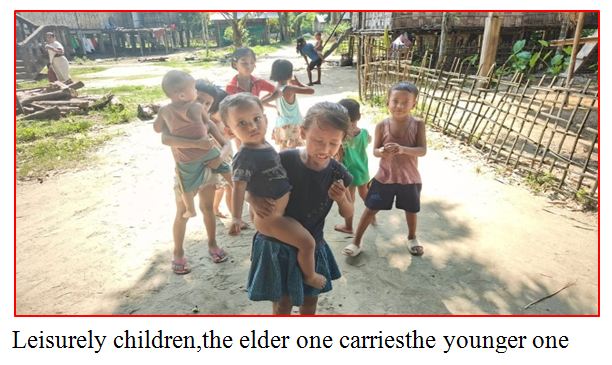
While Jariguri has 152 households with a population of 760, the other one has 79 households with around 600 people. The Mising Community has inhabited these tribal villages for ages internally without access to a better habitat.
Although the Eri silk textiles they make are elegant, colourful and artistic, they produce them for self-consumption. This is probably because they do not have access to the outside markets. They live in a guild partitioned from the bigger world of ours.
While continuing her spinning work on Takli, a simple tool that supports the spindle for making yarn by twisting, Sewali Pegu (50) said that they sometimes sell Eri yarn that costs Rs 5000 to 8000 per kg these days. The villagers are doing Eri cocoon rearing; in local terms, they say Polu rearing.
Their talents could have been harnessed, providing them with much-needed support and introducing them to an outside market.
There are only two LP schools, although they have government employees from these villages who work as police, defence staff, or school teachers. Jyoti Pegu, who appeared in the class XII examination, Karisma Doley, who passed the class XII and Dipika Pegu, who appeared in the class XII examination, all housewives narrated their intimacies with the Polu rearing and weaving of Eri silk textiles as a means of their livelihood.
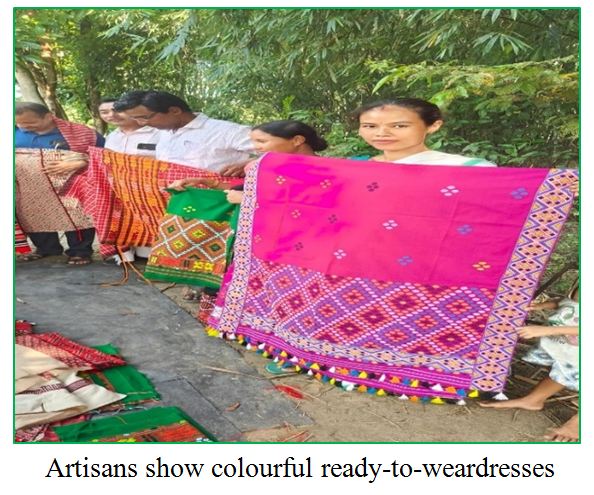
They narrated the stories of design thinking they portraying on Gero, the women’s special dresses they wear during festivals. Gero is an exquisite pure handloom shawl cum stole skillfully made by them, crafted from the finest Eri silk-cotton blend and adorned with a traditional design that seamlessly combines comfort and style.
Ali Aye Ligang is the main festival of the ethnic Mising Community; they perform traditional rituals and dances. This is celebrated on the first Wednesday of Phagur month, which falls in mid-February. Ali Aye Ligang is a festival of the Mising tribe, Assam’s second-largest tribe.
This festival is a remembrance of their rich crafts and cultures. The artisans of these villages don’t work on cotton yarn; they say that work on cotton fabric fades faster, unlike the Eri. They also work with wool. Women Development Centre (WDC), an NGO, has guided and supported these artisans.
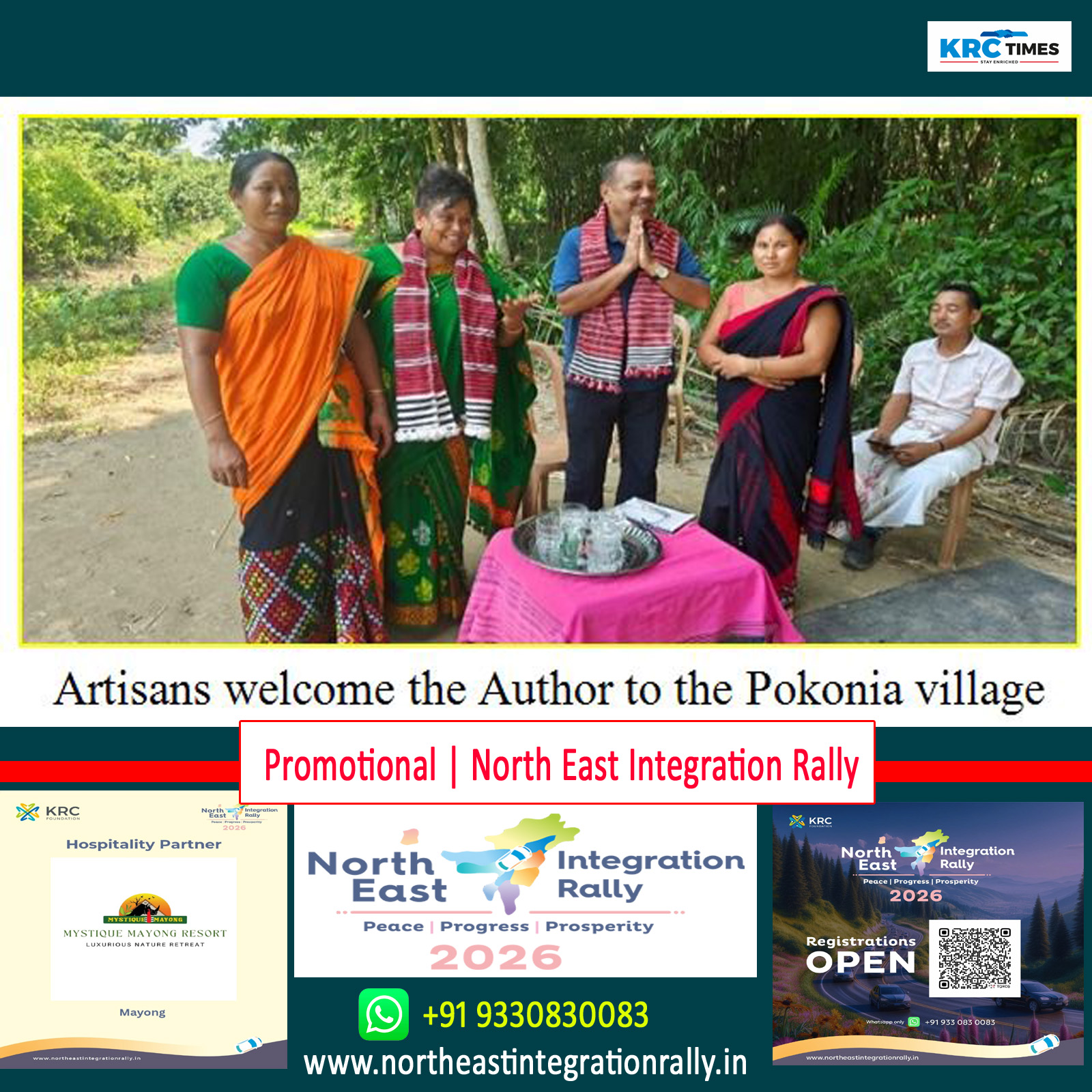
To keep us away from the full sun, the scorching heat of the sun in August, penetrating our skin, the villagers arranged our sitting for interactions at Pokonia village under the deep bush of tall Jati Bamboo (a species of bamboo called Jati baa in Assamese and Bamboosa Tolda botanical name) on the sandy village link road.
We all sat there and interacted on issues that connected their life, crafts, and the rich traditions they fostered for generations, silently, away from so-called fast-developing India, with visible poverty here and there.
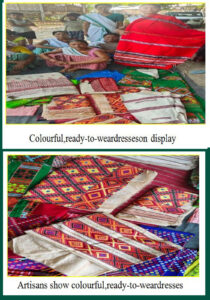
With great esteem and admiration, we saw the Eri textiles they had woven and made, displayed at the place where we had our conversations, spread carefully on the village street. We savoured their tribal food again at Prabin Morang and Ganaka Rani’s elevated bamboo house.

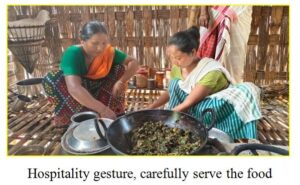
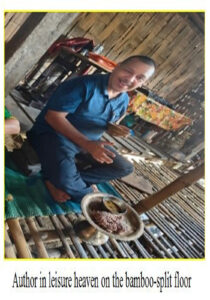
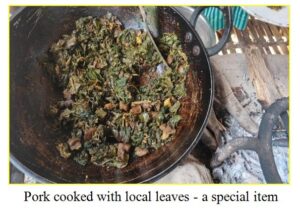
The women served us delicious country chicken, pork with Sai Mod or PoroApung(traditional wine) and red rice (that sometimes my mother used to cook decades back in my village; I felt nostalgic). The food was served on “Kahor Kahi”, a special bell metal or bronze plate occasionally used for esteemed guests.
To our utter surprise, later we came to know that the owners were not at home when we were relishing food in their kitchen, they went to attend a meeting in town and being this house is a better place to welcome guests, the neighbours were entrusted to take care of us in their absence here, I could see in it, again, the admirable community cohesion of tribal communities.
The warmth and love that surrounded us in a short spell of time is unforgettable, the best part of my visit.
Promotional | North East Integration Rally