


Bagdogra isn’t the destination- It’s the doorway that gives you your first sense of the journey ahead
 North East Integration Rally
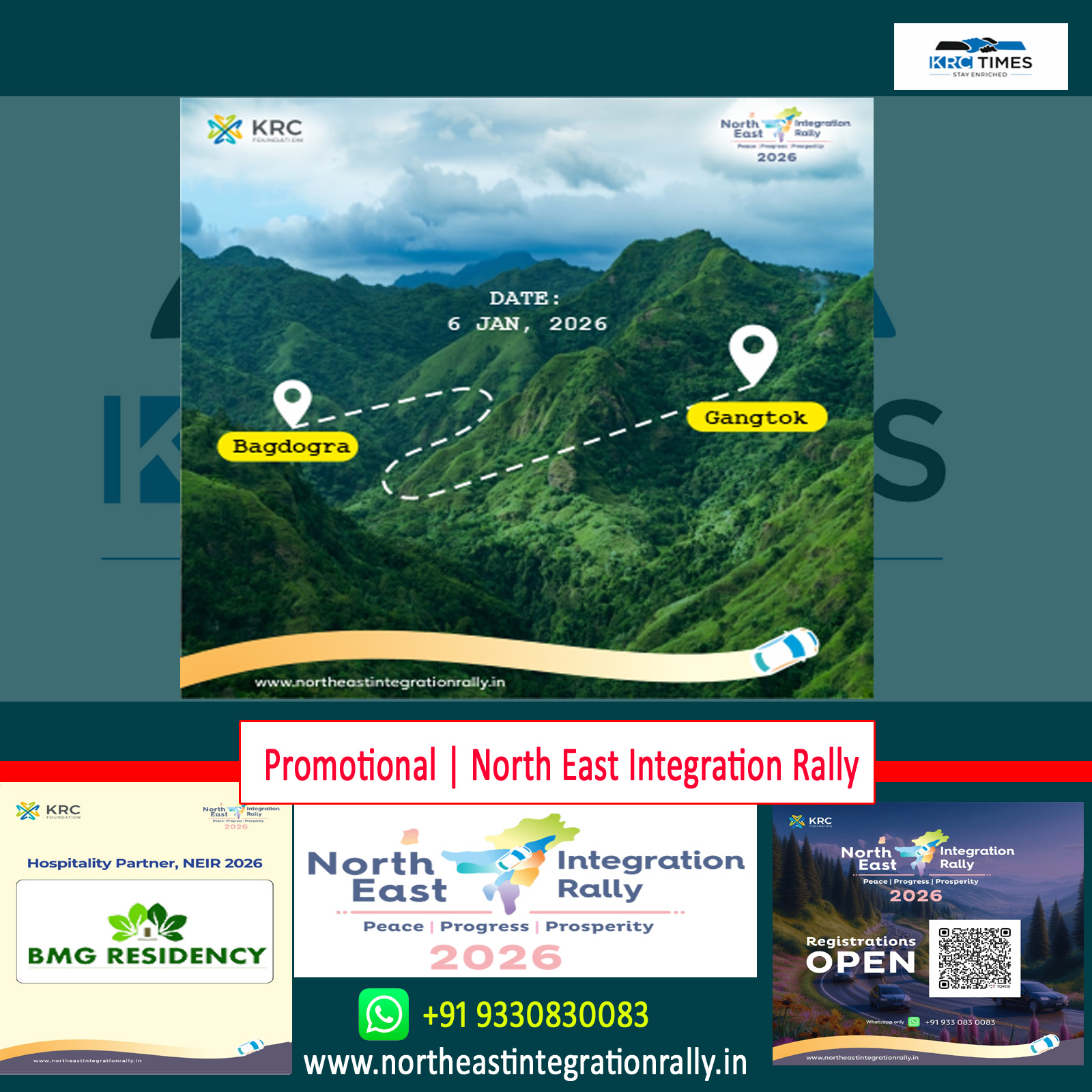
The NEIR 2026 has Bagdogra to traverse. Bagdogra rarely announces itself. It isn’t a city people dream about or a destination that inspires early-morning plans. Yet anyone who has travelled to the eastern Himalayas knows this place, even if only from an airport tarmac, a tea-fringed highway, or a fog-laden morning when flights seem to hang in limbo. Bagdogra is a threshold. It’s the moment where the plains loosen their grip and the hills start calling.
Here’s what matters. When you look past the idea of Bagdogra as just a transit point, you find a landscape where the region’s stories mingle and collide. Soldiers, tea workers, students, pilgrims, backpackers, traders, and truckers all pass through the same roads. The result is a place shaped less by permanence and more by movement. That’s its character. Bagdogra grows around moments of arrival and departure.
Start with geography. Bagdogra lies at the foothills of the Darjeeling Himalayas, just outside Siliguri, where the plains begin tilting upward. The Teesta and Mahananda rivers carve through the region, shaping not just the soil but the rhythm of life. Drive a few minutes in any direction and the scenery shifts. On one side, tea gardens unroll in long green corridors.
On the other, the land leads toward the Dooars, with forests that still feel ancient. Keep going north and the hills start climbing toward Darjeeling, Kalimpong, and Sikkim. Bagdogra sits at the hinge of all these different worlds.
The airport is where most people meet. Unlike big metros, Bagdogra Airport isn’t overwhelmed by glass, steel, or noise. It’s practical, busy, and surprisingly human. You can stand outside arrivals and watch the story of the region unfold in a single frame. Families waiting for sons returning from army duty.
Hoteliers from Darjeeling with placards. Taxi operators negotiate rates in Nepali, Hindi, and Bangla without missing a beat. Tourists try to figure out whether they want the hills or the forests first. For a small town, it handles a lot of ambition.

But Bagdogra is more than a gateway. The tea gardens around it shape both its landscape and its economy. These estates are older than the airport, older than most of the town’s residential clusters. Walk through them and the air changes. There’s a quietness that doesn’t belong to highways or markets.
Workers move with steady pace, plucking leaves with a rhythm that feels learned over generations. The gardens treat time differently. They slow it down, stretch it, and give it space to breathe. That calm sits in sharp contrast to the frantic energy of travellers hurrying between flights and taxis.
Then comes the proximity to the mountains. You don’t need to drive far before the air turns cooler. Fog slips across the road as if it’s testing the ground. The hills rise in layers, one behind another, like pages waiting to be read. Bagdogra doesn’t claim the mountains, but it introduces them. It’s the first hint of the terrain that shapes life in the northernmost part of Bengal and the neighbouring Himalayan states.
Because of this geography, Bagdogra attracts a mix of people that few towns of its size can claim. Students from the hills come here for colleges or coaching institutes. Workers return from Sikkim or Bhutan with stories of border towns.
Tea garden families head to Siliguri for healthcare. Tourists arrive with trekking shoes or prayer flags sticking out of their bags. The Indian Army moves through regularly, because the region is close to strategic international borders. This steady flow creates a cultural blend that feels both temporary and deeply rooted.
Here’s the thing. Bagdogra’s identity isn’t built on nostalgia. It’s built on utility. The place exists because it connects, and that function has shaped everything from its shops to its food stalls. In the market areas, you’ll find momo counters next to Bengali sweet shops, Nepali thalis next to North Indian dhabas. Taxi operators speak multiple languages without thinking about it. Everyone here has learned to navigate differences, because difference is the default.
Yet Bagdogra isn’t free from the region’s anxieties. The town and its surroundings deal with the constant pressure of expansion. More flights mean more traffic. More tourism means more construction. Tea estates feel squeezed by development on one side and shifting climate patterns on the other.
The region’s roads carry the weight of both local life and national security movement, and that strain shows. Monsoon brings its own challenges. Fog delays flights. Landslides block hill roads. The place adapts, but not without cost.
Economically, Bagdogra lives in a balancing act. Tourism brings money, but the town doesn’t control the narrative the way Darjeeling or Gangtok does. The military presence brings infrastructure, but it also imposes restrictions.

Tea gardens provide employment, but wages and working conditions are shaped by national and international market forces. This mix gives Bagdogra an undercurrent of restlessness. People stay, but they dream about moving. People arrive, but they treat the place as temporary. That duality holds the town together.
Still, Bagdogra doesn’t feel incomplete. It feels honest. It knows what it is and what it isn’t. It isn’t trying to become a hill station or a commercial hub. It isn’t chasing an identity that doesn’t fit. Its strength lies in its purpose.
It lets people pass through while giving them small glimpses of the region’s soul. A mountain breeze that arrives unannounced. A row of tea bushes catching afternoon light. A sky that opens wide enough to remind you how close the Himalayas really are.
If you step away from the airport and walk into the quieter parts of town, you’ll see a different Bagdogra. Children cycling on narrow roads through tea estates. Elderly workers sunning themselves outside their quarters. Small temples with bells that ring whenever a breeze moves through. Dogs sleeping on warm patches of ground. These scenes don’t make the postcards. They make the place livable.
What this really means is that Bagdogra teaches you to pay attention. You look up at the sky because the clouds matter. You watch the trees because the wind carries the first hint of incoming weather. You listen to the traffic because the mix of honks and conversations usually signals where people are headed next. Everything here is in motion, and still, everything holds its place.
Bagdogra isn’t the destination. It’s the doorway that gives you your first sense of the journey ahead. To understand the eastern Himalayas, you begin here. In the tea gardens that guard the plains. In the airport that channels both local struggle and international movement. In the quiet roads where the foothills whisper their first greeting. Bagdogra may not demand attention, but it frames the entire story of the region. And once you see it clearly, you never pass through it the same way again.
Promotional | North East Integration Rally