


Modi proposed a “Ganga-Mahakam Vision” aimed at strengthening cooperation in trade, technology, maritime security, and amplifying the voice of the Global South
 KRC TIMES Desk
Dr. D.K. Giri
India is now learning to speak not only the language of diplomacy but also that of deterrence. Prime Minister Narendra Modi’s recent visit to Indonesia clearly reflects this shift. From July 6 to 11, Modi embarked on a three-nation tour covering Indonesia, Australia, and New Zealand. By the time this article was written, he had completed the Indonesia leg and departed for Australia. The major outcomes of the Jakarta visit are significant.
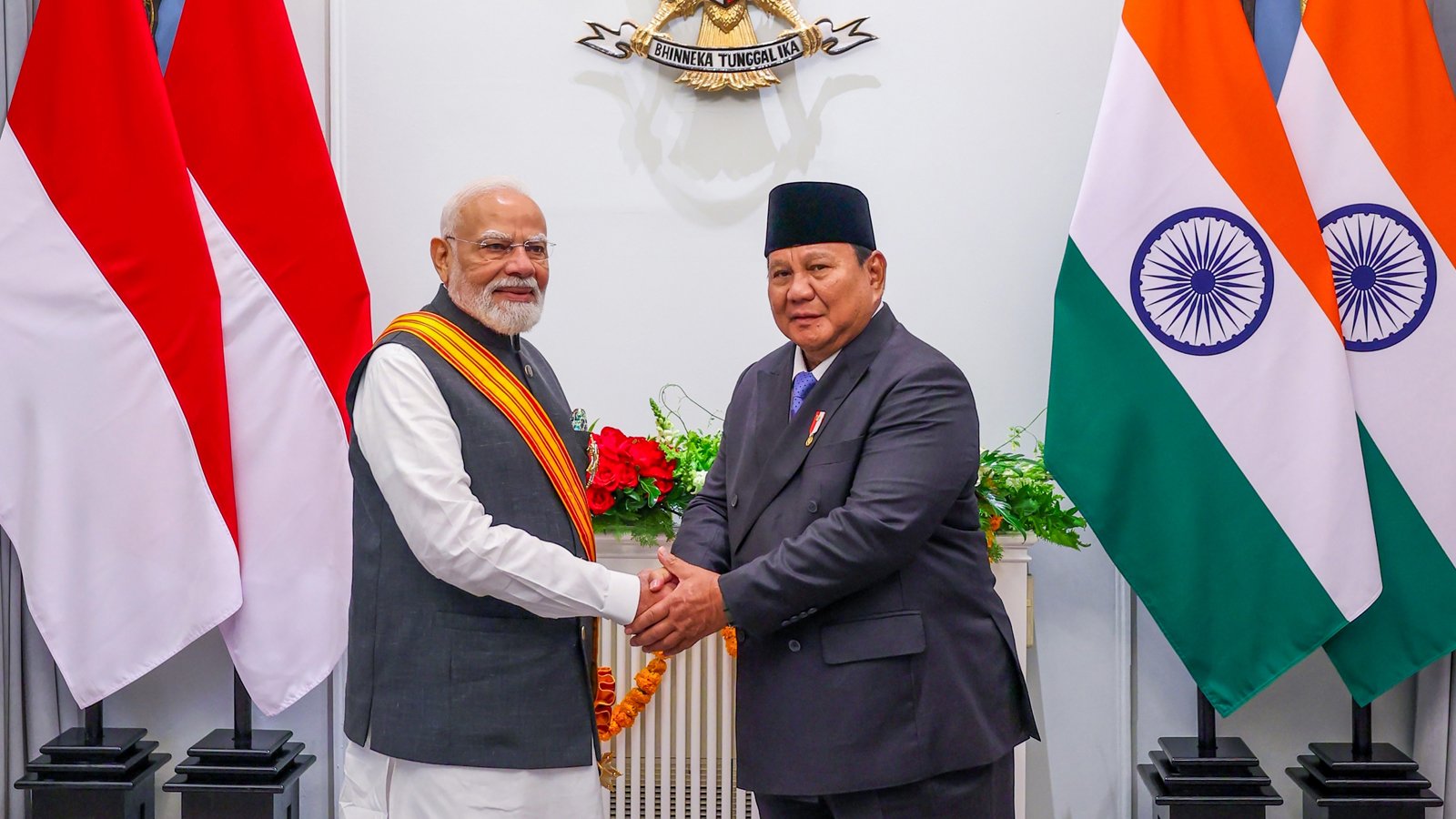
This was Modi’s third visit to Indonesia as Prime Minister and the first bilateral summit since the two countries elevated their relationship to a Comprehensive Strategic Partnership in 2018. Modi also became the first Indian Prime Minister to address the Indonesian Parliament.
In his speech, he highlighted the deep historical ties between India and Indonesia. He recalled India’s support for Indonesia’s independence at the United Nations. He also referred to the daring mission carried out by Biju Patnaik in 1947, under the direction of then Prime Minister Jawaharlal Nehru, to safely evacuate Indonesian Prime Minister Sutan Sjahrir and Vice President Mohammad Hatta. Modi praised Nehru’s support for Indonesia’s freedom struggle and reminded lawmakers that Indonesian President Sukarno was the chief guest at India’s first Republic Day celebrations in 1950.
Emphasising the concept of unity in diversity, Modi linked India’s philosophy of “Vasudhaiva Kutumbakam” (the world is one family) with Indonesia’s national motto “Bhinneka Tunggal Ika” (Unity in Diversity). His reference to Nehru on foreign soil sparked debate on social media, with many viewing it as a sign that India’s foreign policy transcends ideological boundaries and acknowledges a shared national legacy.

Send your resume:
biswa@jigyasu.co.in
krcfoundation@gmail.com
Modi proposed a “Ganga-Mahakam Vision” aimed at strengthening cooperation in trade, technology, maritime security, and amplifying the voice of the Global South. The initiative is being seen as an important step toward elevating India-Indonesia relations to a new strategic level, one that could raise concerns in Beijing.
India and Indonesia also signed a Memorandum of Understanding (MoU) for the supply of the BrahMos supersonic cruise missile. Valued at around $630 million, the agreement makes Indonesia the third country in the region, after the Philippines and Vietnam, to acquire the BrahMos system.
The agreement has two major dimensions. First, it provides a major boost to India’s defence exports under the “Make in India” initiative and strengthens Indo-Pacific security cooperation with ASEAN’s largest economy. Second, it is not merely a missile deal but a geopolitical statement. Indonesia sits astride the Malacca, Sunda, and Lombok Straits, through which nearly 40 percent of global trade and around 80 percent of China’s oil imports pass.
By deploying BrahMos missiles in Indonesia’s coastal regions, India is helping Jakarta secure critical sea lanes over which Beijing seeks to maintain influence. This also means India is no longer focused solely on defending its own maritime boundaries but is increasingly playing the role of a security partner in safeguarding Asia’s maritime gateways.
The supply of BrahMos missiles to Indonesia is not preparation for war but an effort to establish a balance of power in the region. As one Southeast Asian official reportedly remarked, “We are not trying to stop China; we are helping our neighbours become more capable.” When Jakarta can demonstrate that it has strategic alternatives, Beijing may be compelled to reassess its approach.
Three ASEAN countries concerned about developments in the South China Sea-the Philippines, Vietnam, and Indonesia-are now showing interest in India’s BrahMos missile system. For China, this signals that India’s “Act East” policy is no longer merely a diplomatic slogan but is increasingly taking shape through concrete security partnerships.
Technically, the BrahMos missile, with a strike range of 290-400 kilometres, travels at several times the speed of sound and is extremely difficult to intercept. Its deployment could significantly alter the coastal defence equation in the region.

China has invested heavily in ports such as Gwadar (Pakistan), Hambantota (Sri Lanka), and Kyaukphyu (Myanmar), and is now seeking to expand its presence in Indonesia’s Natuna region. In response, India is advancing its own strategy through the development of Sabang Port, BrahMos exports, and broader maritime cooperation agreements.
India’s position is clear: “We are not building military blocs; we are strengthening the capabilities of our partners.” This is precisely why India’s approach is relatively less provocative while still making it difficult for China to counter effectively.
Indonesia could emerge as an important bridge between the Quad and ASEAN. Although it is not a member of the Quad, it holds a leadership position within ASEAN. By helping Indonesia strengthen its defence capabilities, India is also signalling to Quad partners-the United States, Japan, and Australia-that it can reinforce the security capacities of ASEAN countries without drawing them into formal alliances.
China’s real concern may be that India is helping build a network of capable, independent, and non-aligned nations that can confidently say “no” to coercion or aggression. Beyond defence cooperation, India and Indonesia signed around 20 agreements covering economic and strategic sectors. Cooperation in nickel, steel, and critical minerals is particularly important. Indonesia possesses the world’s largest nickel reserves, a resource crucial for India’s electric vehicle battery industry.
In this context, India’s public sector company SAIL and Indonesia’s Krakatau Steel agreed to establish a stainless-steel manufacturing venture in Indonesia. In education, the Indian Institute of Management (IIM) Bangalore is expected to establish a campus there. In healthcare, India will supply affordable medicines and provide training to Indonesian medical professionals.
Under digital cooperation initiatives, discussions were held on developing electronic voting machines tailored to Indonesia’s needs and creating digital commerce platforms modelled on India’s UPI and ONDC frameworks.
In the maritime domain, both sides agreed to develop Sabang Port near the Malacca Strait and create an institutional framework for maritime security cooperation. An MoU was also signed to expand collaboration in agriculture.
Bilateral trade between India and Indonesia stood at roughly $25 billion last year. The two leaders agreed to accelerate negotiations on a preferential trade agreement to further boost economic ties.
Prime Minister Modi was also conferred Indonesia’s highest civilian honour. On the occasion, President Prabowo Subianto remarked that he had learned much from Modi’s leadership. He also acknowledged the profound influence of Sanskrit on Indonesian languages and culture.

The two leaders visited the UNESCO World Heritage site of Prambanan Temple. The Ramayana and Hindu-Buddhist cultural traditions remain vibrant in Indonesia. Many tourist destinations still stage Ramayana performances through traditional puppet theatre. The author notes having personally seen Muslim puppeteers narrate stories from Indian epics.
The visit demonstrated a powerful combination of India’s civilisational heritage and strategic diplomacy. A morning visit to Prambanan Temple and an evening BrahMos agreement symbolised the emerging character of Modi’s foreign policy.
A second important aspect was defence diplomacy. BrahMos exports should not be viewed merely as commercial transactions. They help establish India as a credible security partner in ASEAN at a time when China is seeking to expand its regional influence.
A third dimension was the use of history as a bridge. Modi invoked both Jawaharlal Nehru and Biju Patnaik, leaders associated with different political traditions. Their inclusion conveyed the message that India’s foreign policy is shaped not only by partisan politics but also by national continuity. For countries of the Global South, this offers reassurance, especially at a time when uncertainties in U.S. foreign policy have affected many traditional partnerships.
The next stop on Modi’s tour is Australia, where the key agenda items include the Quad, defence cooperation, critical minerals, education, and engagement with the Indian diaspora. Discussions are expected on partnerships involving lithium, cobalt, and rare earth minerals, reviews of Quad maritime security initiatives, and mobility agreements for Indian students and skilled professionals. Modi is also expected to address the Indian community in Australia, which now numbers over one million people.
The final leg of the tour is New Zealand. It will be the first visit by an Indian Prime Minister to the country in many years. The primary objectives are to revive negotiations on a Free Trade Agreement (FTA), strengthen cooperation in dairy and agriculture, and deepen collaboration on Indo-Pacific security, climate change, and people-to-people ties. Engagement with the Indian diaspora will also be a key component of the visit.
The broader message of Modi’s three-nation tour is clear: India is moving beyond “Act East” toward “Act Indo-Pacific.” Defence cooperation with Indonesia, strengthened critical-mineral and Quad partnerships with Australia, and expanded trade and strategic engagement with New Zealand together underline the evolving direction of India’s Indo-Pacific strategy.
Dr. D.K. Giri, Professor of Practice, Institute of Management, Bhubaneswar

