

It wasn’t just a place where [the Russians] planted a flag they also had a strong presence in California
 Sangram Datta
Sangram Datta
In the spring of 1867, after brief negotiations, the United States agreed to purchase Alaska from Russia for $7.2 million. Covering more than half a million square miles, Alaska is today the largest U.S. state. In the 1850s, following defeat in the Crimean War, Russia was burdened with heavy debt. To ease that burden, the Russian government entered into a real estate deal with the United States—selling its colony of Alaska to America.
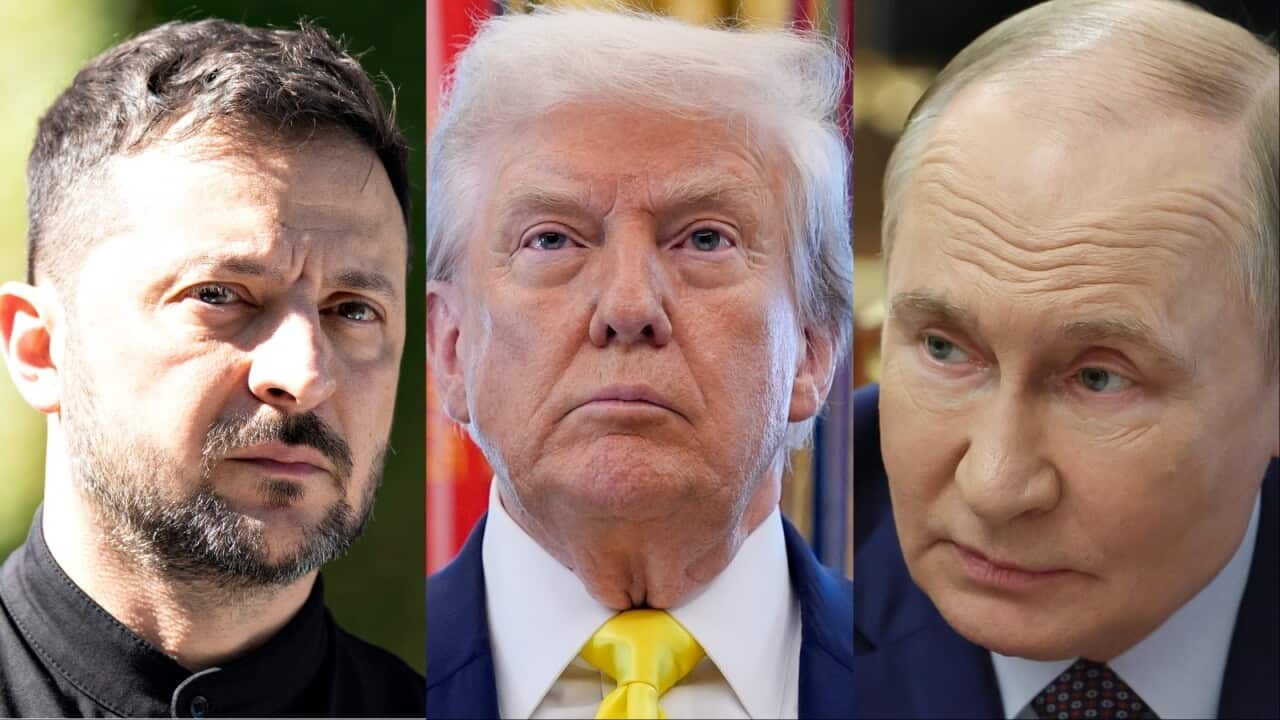
This Friday, U.S. President Donald Trump and Russian President Vladimir Putin meet for a summit in Alaska. On the agenda: another difficult and costly conflict involving Russia—this time over Crimea, a region seized from Ukraine that remains at the heart of the ongoing war.
The decision to meet in Alaska is based largely on practical reasons. It is one of the few places where the United States and Russia are almost face-to-face, separated by just 55 miles across the Bering Strait. But beyond geography, the location carries symbolic meaning and a remarkable shared history.
From 1799 to 1867, Alaska was a full-fledged Russian colony. Kremlin envoy Kirill Dmitriev and some Russian citizens have been using social media to recall that era, posting images of the onion-domed Russian Orthodox churches built there in the 19th century that still stand today.
Lee Farrow, a professor of history at Auburn University at Montgomery, Alabama, and author of Seward’s Folly: A New Look at the Alaska Purchase, notes:
“Some Americans may know we bought Alaska from Russia, but they may not know it was actually a colony. It wasn’t just a place where [the Russians] planted a flag they also had a strong presence in California.”
Here, Farrow was referring to Fort Ross, a Russian outpost established in what is now Sonoma County in Northern California. After Russia’s defeat in the Crimean War of 1853–56 by the combined forces of Britain, France, and the Ottoman Empire, the empire needed funds to pay off war debts.
By then, Russian hunters in Alaska had nearly wiped out many valuable fur-bearing animals bears, wolves, otters, and others making the colony far less profitable. Remote and difficult to manage, Alaska was increasingly seen by Russia as more of a burden than an asset. Some even referred to it as the “Siberia of Siberia.”
In the spring of 1867, brief negotiations led to the U.S. purchase of Alaska for $7.2 million just two cents per acre. At the time, it became known as “Seward’s Folly,” after Secretary of State William Seward, who negotiated the deal under President Andrew Johnson. Critics mocked Alaska as an “icy, desolate wasteland,” though Farrow notes that even then, the description was inaccurate.
Although the United States was rapidly expanding westward at the time, the Alaska purchase caused little public stir. Washington saw some political debate, and a few newspapers opposed it, but it never became a major political controversy.
Little U.S. Investment at First
In the early years as a U.S. territory, Alaska and its Indigenous peoples were largely neglected. The U.S. government invested very little there, and the few Americans who arrived were mainly missionaries or adventurers, often relying on their own resources.
Development began decades later: gold was discovered in 1896, Alaska became a state in 1959, and vast oil reserves were found in the 1950s and ’60s. Even today, some Russians believe Alaska should belong to them. Farrow recalls that during a trip to Russia in 2017, after publishing his book, he always faced one predictable question from audiences:
“At least one person in every group would ask if the U.S. had actually paid for Alaska—or if it had just been leased to us and should be returned.” Unlike Alaska, which changed hands peacefully, Crimea has often been at the center of conflict due to its strategic position as a Black Sea peninsula.
In 1853, Russia went to war against the Ottoman Empire, aiming to expand its influence in the Black Sea region. Expecting an easy victory, Russia did not anticipate Western intervention. But Britain and France joined the fight against Russia, and the Russian army proved far weaker than Tsar Nicholas I had hoped, ending in a decisive defeat.
In the 20th century, Crimea became part of the Soviet Union. After the USSR dissolved in 1991, it became part of independent Ukraine.
In 2014, during his military campaign in Ukraine, Putin sent Russian troops into Crimea, seizing it with little direct fighting. Ukraine has vowed to reclaim the territory and continues to launch drone and missile strikes on Russian forces there. Any serious peace talks will have to address Crimea.
Promotional | North East Integration Rally