

The question rises again, not to kings but to us: Can we, even today, rediscover the unity we lost?
 North East Integration Rally

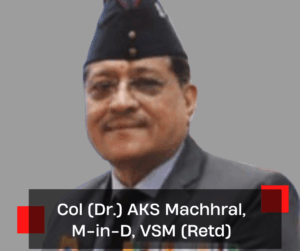
Col (Dr.) AKS Machhral, M-in-D, VSM (Retd)
Preface
This story is a creation of the author’s imagination. It is a vision of what might have happened had India, fragmented by pride, politics, and petty rivalries, stood united behind Raja Dahar when the first west-Asian armies approached Sindh in 711 AD. It does not claim to rewrite history, but to remind every Indian of the cost of disunity and the power of standing as one civilization.
1. The Warning from the West.
The winds from Arabia carried news of an approaching army, young, fierce, and determined. At the western frontier of Bharat, Raja Dahar felt the tremor long before it reached the gates of Sindh.
He gazed across the sands and whispered to his generals:
“If we are divided, we fall. If we are united, we become a wall the world cannot break.”
Thus began the call for unity. What might have happened if the Hindu kingdoms of India had united behind Raja Dahar when the first Muslim armies approached in 711 AD?
The Unwritten Chapter of Raja Dahar and the Western Gate.

2. The Unthinkable Happens, India Unites.
The message shook the northern kingdoms.
Kannauj.
The proud emperor accepted the truth. For the first time in decades, he put aside rivalry and said: “Dahar fights for India. Kannauj will fight for Dahar.”
Gujarat.
The sea kings of Gujarat saw the danger at the ports and sent their best naval warriors up the coast.
The Rajputs of Rajasthan
Hearing that a foreign army had crossed the desert, the Rajput clans declared, “It is not Dahar’s battle. It is every Hindu’s battle.”
Kashmir.
From the snow-clad mountains came skilled archers, the finest in Asia.
Punjab.
The warlike frontier tribes rallied, saying, “No invader shall pass the Indus while a single Punjabi breathes.” And in a moment India never had in recorded history, they all marched toward Sindh. Over 70,000 warriors, from elephants of the Deccan to horsemen of Rajasthan, gathered under one banner: “One Bharat. One Dharma. One Defence.” Even the common folk said:

“This is no time for kings to argue. This is the time to save the land.”
3. Muhammad bin Qasim Reaches Debal.
Young Muhammad bin Qasim, confident from victories in Persia, reached Debal expecting a quick victory. But the sight before him stunned him. Debal’s temple flag the one he planned to shoot down was protected by three concentric lines of Indian armies:
Sindhi infantry
Rajput cavalry.
Gujarat naval archers on coastal towers. The Arab scouts returned nervous and confused.“General, this is not the Sindh we expected.
All of India seems to be here.” Qasim, only seventeen, realised he was facing something the Umayyad empire had not calculated:

A united Indian subcontinent:
4. The Battle of Debal, The Turning Point
The Arabs launched their first assault. But Indian unity changed everything. Sindh held the fort walls.Gujarat’s sea warriors cut off Arab supplies coming by ship.
Rajput cavalry encircled the desert flank. Kashmiri archers rained arrows with deadly precision. The Arabs fought bravely, but they had never faced: elephants charging in formation.
armoured Rajputs on horseback. tribal warriors fighting hand-to-hand an entire subcontinent acting as one body. After three days of battle, exhausted and surrounded, Qasim’s army was forced to retreat into Makran. It was the first major defeat of the Umayyad Empire in the East.
5. The Indian Response, Beyond Defence
Instead of waiting for another attack, the United Indian coalition marched westward: They secured Makran. Built fortified outposts along the desert. Established a frontier alliance with local Baluchi tribes.
Strengthened naval patrols along the Arabian Sea. The message was clear:
“Thus far, and no further.”

6. The Golden Age That Followed
The unity forged in war did not dissolve in peace. The kings recognised the power of standing together.
They formed what historians in this alternate world call: The Sindhu-Samrat Sabha (Council of the Indus Kings)
It ensured: mutual defence, trade cooperation, protection of pilgrimage routes
preservation of temples and mathematics schools, removal of petty regional conflicts
India, which in real history entered a long period of invasions and fragmentation, in this imaginary world entered a Golden Age centuries earlier.
In this alternate timeline:
Nalanda and Takshashila flourished longer. The Rajputs built a frontier wall along Sindh. Gujarati ships dominated the Arabian Sea trade. Sanskrit learning spread across Central Asia.
Yoga, Ayurveda, and Indian astronomy became global centuries before the Renaissance. No foreign power could enter India for the next 800 years.
Dahar became known as: “Sindhu Rakshak: The Protector of the Indus” And the phrase children learned in gurukuls across the land was: “When Bharat stood together, No army could break her.”
7. The Final Lesson of an Alternate World
This story is imagined. But the message is not. India did not fall because foreign armies were powerful. India fell because India was not one.
8. India Today.
And the question rises again, not to kings but to us: Can we, even today, rediscover the unity we lost?
Can we place Bharat above vote banks, above caste divisions, above dirty politics? Can we revive the spirit of Sanatan Dharma not as a religion, but as the civilizational force that once united this land from Kashmir to Kanyakumari?
If our ancestors could not do it then, perhaps it is our duty to do it now. A united India, rooted in Dharma and freed from political poison, can still rise powerful, peaceful, and guide the world once more.
9. Author’s Note.
I, offer this alternate-history tale not as a criticism of our past but as a mirror for our present. History has already shown what happens when we divide ourselves: we lose more than land; we lose dignity, culture, and continuity. But history also tells us that revival is possible. Sanatan Dharma survived invasions, colonialism, and centuries of turmoil because it lives in the soul, not in buildings.
May this story remind us that unity is not a slogan, it is a duty. When we rise together, no force on earth can bend us.
Promotional | North East Integration Rally