

The committees have been directed to submit their recommendations within six months
 KRC TIMES NE Desk
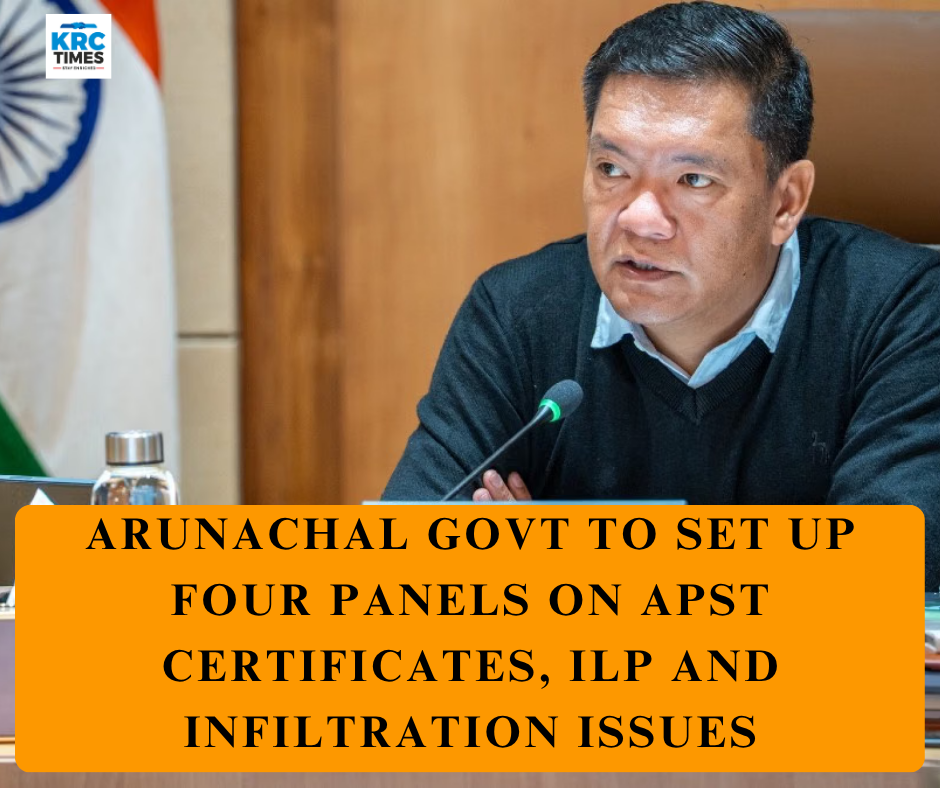
ITANAGAR : Pema Khandu on Friday announced that the Arunachal Pradesh government will constitute four high-powered committees to examine issues related to APST certificates, non-APST offspring, the Inner Line Permit (ILP) system and infiltration concerns in the state.
The decision was taken following consultations with the Arunachal Indigenous Tribes Forum (AITF), All Arunachal Pradesh Students’ Union (AAPSU), the ST Bachao Andolan Committee, community-based organisations, government officials and legal experts.
“Formation of four high-powered committees has been agreed upon today,” Khandu said in a post on X after the meeting. According to the Chief Minister, the committees will study the issues in detail and recommend appropriate measures. Official notifications constituting the panels are expected to be issued by Monday.

The committees will separately focus on re-verification of Arunachal Pradesh Scheduled Tribe (APST) certificates, issues concerning non-APST offspring, strengthening of the ILP mechanism including a review of the ILP Guidelines 2026, and matters related to infiltration.
Khandu said each committee would be headed by a cabinet minister and include representatives from AITF, AAPSU, the ST Bachao Andolan Committee, legal experts, research scholars and women representatives to ensure an inclusive and action-oriented process.
The move follows a series of consultations between the state government and stakeholders, including a high-level meeting chaired by the Chief Minister on May 27 and another consultative session held at the civil secretariat on Friday.
The committees have been directed to submit their recommendations within six months, although the timeline may be extended depending on field studies and consultations with stakeholders. To monitor progress, the government will hold three review meetings under the chairmanship of the Chief Minister during the course of the committees’ work.
The development comes amid increasing demands from indigenous groups for stricter implementation of the ILP regime and resolution of issues linked to tribal identity, demographic concerns and the status of different communities in the state.