


A Major Test for India’s Foreign Policy and Economy
 KRC TIMES Desk
Dr. Tomasz Lukaszuk
The conflict in the Persian Gulf has emerged as one of the most significant tests of India’s foreign policy in the 21st century. The war has exposed the limits of India’s influence in the Indian Ocean in the face of American actions, while also revealing the constraints of the strategic autonomy that India has been seeking to develop over the past decade.
Economically, the conflict has forced India to reassess its supply chains in relation to energy security and to reevaluate Gulf markets for Indian goods, services, and labor exports. It has also highlighted the need to accelerate the development of domestic energy capabilities and diversify gas sources used for fertilizer production.
There are growing expectations that the implementation of the India-Middle East-Europe Economic Corridor (IMEC)-a hybrid transport and economic corridor linking Red Sea ports, Saudi rail networks, and Israeli Mediterranean ports-will gain momentum.
Since Prime Minister Narendra Modi assumed office in 2014, India has pursued a multi-aligned foreign policy. India describes this approach as “strategic autonomy,” a concept inspired by the tradition of non-alignment, while American and European analysts often characterize it as a balancing or pendulum policy. India has simultaneously cultivated relations with Israel, Iran, and the Gulf states.

Send your resume:
biswa@jigyasu.co.in
krcfoundation@gmail.com
Indian diplomacy is largely driven by economic considerations, as all these countries play important roles in India’s trade and investment landscape. Israel is a major trading partner, with bilateral trade exceeding $6 billion and investments surpassing $300 million. It is also a source of advanced technologies in agriculture, irrigation, desalination, defense industries, and healthcare.
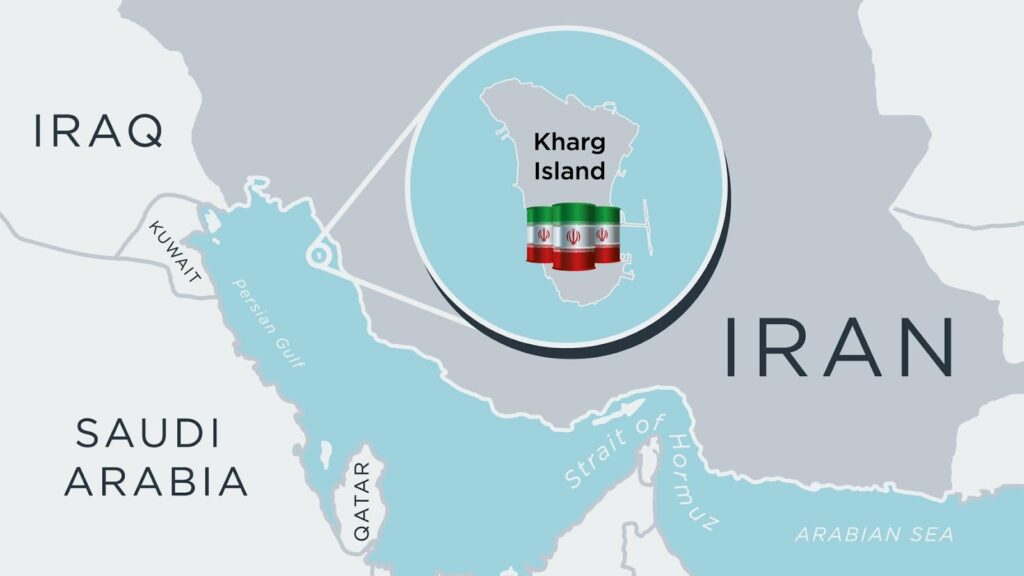
Iran has traditionally been an important source of oil and gas, although U.S. sanctions have limited cooperation. It also serves as a market for Indian rice exports. Additionally, India has invested in the Chabahar Port near the Strait of Hormuz.
The facility is intended to provide a counterbalance to the China-Pakistan Economic Corridor and the Chinese-developed Gwadar Port in Pakistan. From India’s perspective, Iran also plays a crucial role in monitoring and balancing Pakistan’s influence in Afghanistan.
The Gulf states meet approximately 50 percent of India’s oil requirements and 40 percent of its liquefied natural gas needs. They also account for around 15 percent of India’s exports and 20 percent of its imports.
Nearly nine million people of Indian origin live in the region-the largest overseas Indian community in the world-and they send home roughly $50 billion annually in remittances. Indian citizens constitute around 35 percent of the population of the United Arab Emirates.
The war that began in February posed a challenge to India’s efforts to maintain balance in its foreign policy. The initial responses of Prime Minister Modi and External Affairs Minister S. Jaishankar were measured.
They expressed concern, called for dialogue, and appealed for the protection of civilians. India sought to remain neutral while indirectly supporting the United States and Israel and criticizing Iran for attacks on Gulf countries. In this context, Modi’s visit to Israel two days before the outbreak of hostilities was viewed as an important signal.

The sinking of an Iranian vessel off the coast of Sri Lanka caused concern in New Delhi. The ship had departed from Visakhapatnam, India’s largest naval base on the Bay of Bengal, after participating in a joint military exercise.
The incident highlighted the limits of India’s status as a security provider in the eastern Indian Ocean, a role it has developed with American support. Despite India’s confidence in its strategic autonomy, these limitations are still influenced by decisions made in Washington under President Donald Trump’s administration.
To offset potential damage to its image, Indian authorities agreed to provide shelter to Iranian vessels at the naval base in Kochi on India’s western coast.
From India’s perspective, another significant aspect of the U.S.-Iran conflict and the Gulf war was Washington’s acceptance of Pakistan’s offer to act as a mediator in peace talks with Iran. External Affairs Minister Jaishankar criticized Pakistan, arguing that it was behaving more like a broker than a genuine mediator.
He emphasized that India would not accept such a role for Pakistan and stressed the need for a rapid end to the conflict in the Gulf. India’s reaction reflects its continuing rivalry with Pakistan and concerns about influence in the Gulf region and the quality of its relationship with the United States.
The lack of strong public comments from the Indian government on the matter was interpreted in India as a sign that New Delhi had accepted Trump’s request for greater freedom of action for the United States in India’s neighboring regions. The primary concern of Indian policymakers has remained the stabilization of supply chains and ensuring the safety of Indian citizens abroad.

From a supply-chain perspective, the blockade of the Strait of Hormuz became a major issue. Before the conflict, around two million barrels of oil passed through the strait daily. Indian diplomacy successfully secured permission for more than a dozen vessels to transit Iranian maritime zones.
The Indian government also obtained approval to increase oil imports from Russia. This has helped replenish India’s strategic petroleum reserves, estimated at around 25 million barrels. Disruptions in imports of gas and other materials used in fertilizer production have forced India to seek alternative suppliers and reroute shipping networks. New routes connect India with Morocco and Jordan via the Cape of Good Hope and with Indonesia and Malaysia through the Bay of Bengal.
Due to shortages in liquefied natural gas supplies, domestic producers in India are operating at only about 60 percent of their capacity.
Approximately one million Indian citizens have already returned home, either individually or in groups. Officials in New Delhi recognize that providing employment for all returnees during a prolonged conflict will be extremely difficult. The situation could evolve into a broader social challenge. Many returnees fear losing their property, jobs, and social benefits in Gulf countries, where more than half of them had worked in the construction sector.
Another concern involves 14 Indian commercial vessels located near the Strait of Hormuz and their need for humanitarian assistance. Initially, 37 ships were stranded, but diplomatic efforts enabled 23 of them to continue their journeys.
Despite a temporary ceasefire agreement, clashes between Iranian and American forces continue, and both sides offer differing assessments of progress in negotiations. Under these circumstances, India must prepare for further economic challenges and may need to consider adjustments to its foreign policy in the coming months.