


Experts believe the site holds considerable potential for understanding the region’s historical settlement patterns
 KRC TIMES NE Desk
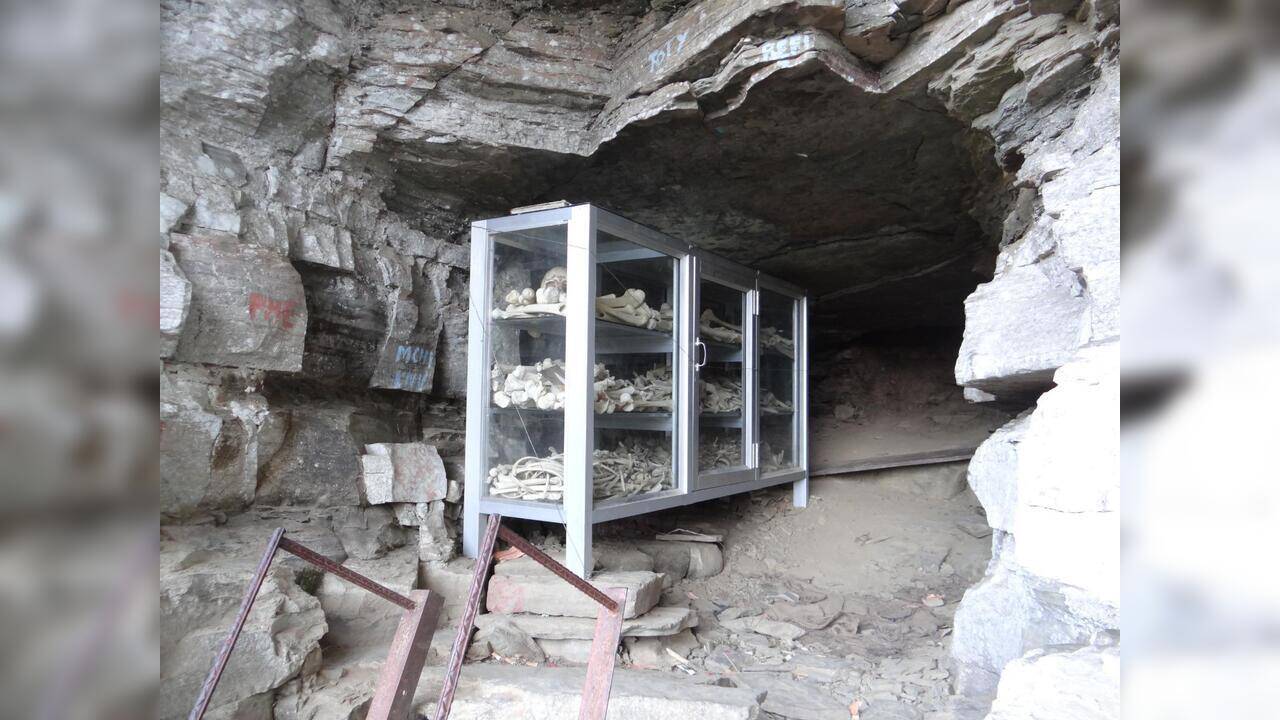
Aizawl | Human skeletal remains recovered from Lamsial Puk cave in Mizoram’s Champhai district have been scientifically dated to the late 18th century, marking a significant development in efforts to unravel the archaeological history of one of the state’s most important heritage sites.
The Mizo Archaeological Society (MAS) said radiocarbon (Carbon-14) analysis of a skeletal sample recovered from the cave dated the remains to between AD 1729 and AD 1789.
The sample was sent to a specialised radiocarbon dating laboratory in Miami, Florida, where scientific analysis was carried out to determine its age. The results provide one of the first scientifically established dates for human remains discovered at the cave.
However, MAS cautioned that the findings relate only to the single sample tested and should not be interpreted as representing all the skeletal remains found at the site.
The cave contains numerous human bones and skulls, and further radiocarbon testing will be required to establish the age and chronology of the remaining remains, the society said.

“The result applies only to the tested sample. Additional scientific investigations are necessary to determine the age of other skeletal remains recovered from the cave,” MAS stated.
The society also said it had received financial assistance of ?1.5 lakh from the Mizoram Art and Culture Department in 2023 to undertake the Carbon-14 dating process.
Located near Farkawn village in Champhai district, close to the India-Myanmar border, Lamsial Puk is regarded as one of Mizoram’s most significant archaeological sites. The cave, situated atop a rocky hill formation, has long drawn the attention of archaeologists and researchers because of the large number of human skeletal remains discovered there.
Experts believe the site holds considerable potential for understanding the region’s historical settlement patterns, migration history and cultural practices.
Archaeologists said the latest dating results represent an important first step in establishing a scientific chronology for the cave and could pave the way for more comprehensive archaeological research in the future.
Further studies, including the dating of additional skeletal samples and detailed archaeological surveys, are expected to provide deeper insights into the history of the site and its significance in the broader context of Northeast India’s past.

