


The importance of this milestone becomes clearer when viewed against the sheer magnitude of Indian Railways
 KRC TIMES Desk
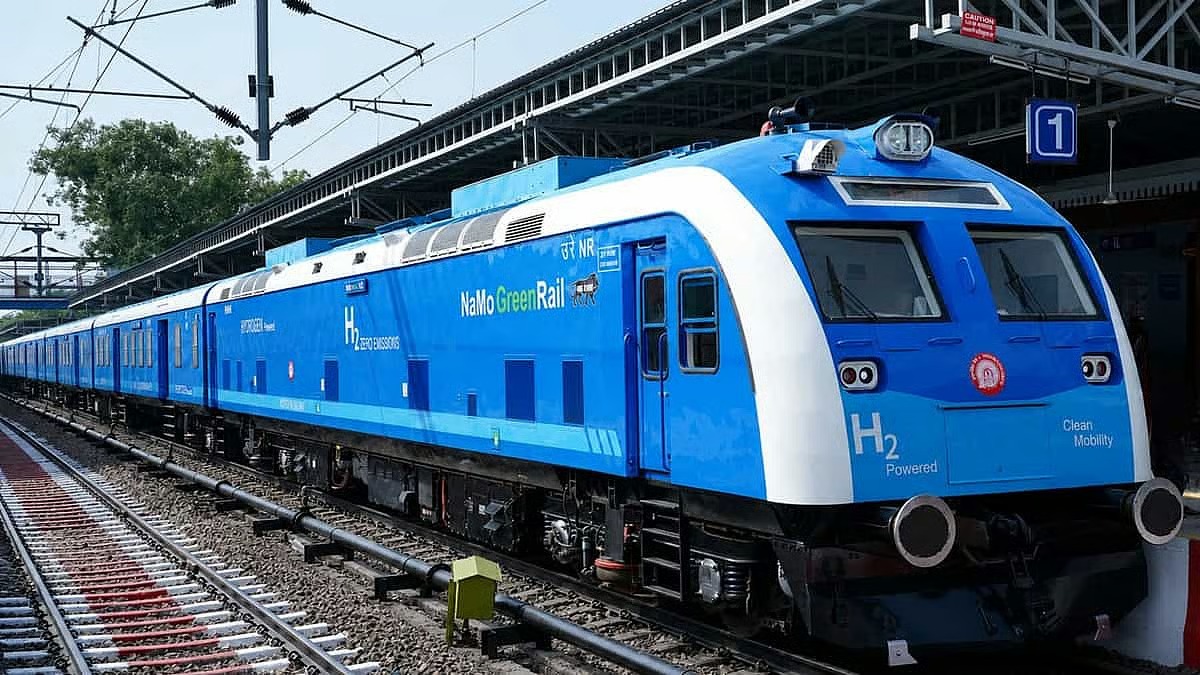
The ceremonial flagging off of India’s first hydrogen-powered train by Prime Minister Narendra Modi between Jind and Sonipat in Haryana last week was more than another addition to the long list of infrastructure inaugurations. It marked the beginning of a potentially transformative chapter in the evolution of Indian Railways-one that could redefine how one of the world’s largest transport networks approaches sustainability, energy security and technological innovation.
Hydrogen-powered railways are still a relatively new concept globally. Yet India has chosen not merely to adopt the technology but to do so on an ambitious scale. The newly launched train is reportedly a 3,200-horsepower, ten-coach service, making it significantly more powerful than the smaller hydrogen trains currently operating in parts of Europe. This achievement is not simply symbolic; it demonstrates India’s growing confidence in designing and deploying advanced transport technologies suited to its own unique requirements.
The importance of this milestone becomes clearer when viewed against the sheer magnitude of Indian Railways. Few transport systems in the world operate on such an enormous scale. Every day, the railway network carries around 24 million passengers and transports nearly three million tonnes of freight. It connects densely populated metropolitan regions, industrial centres, remote villages, deserts, forests and mountainous terrain through more than 68,000 kilometres of track.
Managing such a network efficiently is a formidable challenge. Transforming it into an environmentally sustainable system is an even greater one. The hydrogen train is not an isolated innovation. It represents the latest phase in a long process of modernisation that has fundamentally reshaped Indian Railways over the past decade.

For much of the twentieth century, India’s railways depended first on steam locomotives fuelled by coal and later on diesel engines that became the backbone of railway operations. While these technologies served the nation well during periods of rapid industrialisation and economic expansion, they also left behind a substantial environmental footprint.
Recognising the urgency of reducing carbon emissions, Indian Railways embarked on one of the world’s largest railway electrification programmes. Today, more than 95 per cent of the country’s broad-gauge network has been electrified-a remarkable achievement considering the vast geographical spread and operational complexity involved.
Electrification has already produced multiple benefits. It has reduced dependence on imported diesel, lowered operating costs, improved train speeds and significantly reduced greenhouse gas emissions. More importantly, it has created the foundation for India’s ambitious target of becoming a net-zero carbon emitter in railway operations by 2030, decades ahead of the country’s overall net-zero target of 2070.
Yet electrification alone cannot solve every challenge. One misconception surrounding hydrogen trains is that they are intended to replace electric trains. That is neither practical nor necessary. Instead, hydrogen should be viewed as a complementary technology designed for routes where conventional electrification is difficult, expensive or environmentally disruptive.
India possesses several railway lines that pass through ecologically sensitive regions, steep mountain gradients and heritage corridors. Installing overhead electric wires in such locations often involves cutting trees, constructing numerous poles, altering landscapes and undertaking expensive engineering work that may not be justified by relatively low passenger traffic.
These trains generate electricity onboard through hydrogen fuel cells, emitting only water vapour as a by-product. Since they do not require overhead power lines, they preserve the visual and ecological character of heritage routes while reducing emissions.
This explains why Indian Railways has identified hydrogen technology primarily for its “Hydrogen for Heritage” initiative. The plan envisions deploying 35 hydrogen-powered trains across eight heritage and hilly routes, including regions where conventional electrification presents significant engineering and environmental challenges.
Such an approach reflects practical planning rather than technological enthusiasm. Critics often point to the high costs associated with hydrogen technology. Their concerns are not entirely misplaced. Hydrogen trains remain considerably more expensive than diesel locomotives in terms of initial investment. Producing green hydrogen through electrolysis is still costly, while fuel-cell systems and specialised storage tanks add further expense.
However, focusing solely on today’s costs ignores the long-term economic picture.
Technologies almost always become cheaper as production scales up. Solar power offers perhaps the best example. Two decades ago, solar electricity was considered prohibitively expensive. Today, it is among the cheapest sources of power in many parts of the world because governments invested early, manufacturing expanded and technological improvements steadily reduced costs.
As India’s National Green Hydrogen Mission gathers momentum, domestic production of electrolysers, renewable-powered hydrogen plants and storage infrastructure could substantially reduce costs over time. The railway sector itself can help create stable demand that encourages private investment across the hydrogen value chain.
Viewed over the lifetime of railway assets-which often exceed three decades-the economics become far more favourable than today’s price comparisons suggest. Perhaps the strongest argument in favour of hydrogen lies beyond environmental considerations. Modern economies increasingly recognise that energy diversity is a strategic necessity.
Indian Railways has benefited immensely from electrification, but complete dependence on a single source of energy also introduces vulnerabilities. Power grid failures, natural disasters, cyberattacks on critical infrastructure or disruptions during geopolitical conflicts could affect electricity supplies.

Send your resume:
biswa@jigyasu.co.in
krcfoundation@gmail.com
Recent international events have illustrated how quickly energy markets can become unstable. Conflicts in West Asia, disruptions in global shipping routes and fluctuations in fuel supplies have underscored the risks associated with excessive dependence on any one energy source.
A diversified railway energy system-combining electrification, battery technologies, diesel backup where necessary and hydrogen fuel cells-offers greater operational resilience.
Hydrogen trains can function independently of overhead electric infrastructure, making them valuable during emergencies or in regions where power supply remains less reliable.
For a nation as geographically vast and strategically important as India, such redundancy is not wasteful; it is prudent planning. While the launch deserves celebration, optimism should not become complacency. India’s hydrogen ecosystem remains at an early stage.
Commercial-scale production of green hydrogen is still limited. Electrolyser manufacturing capacity needs substantial expansion. Safe transportation, storage and refuelling infrastructure require significant investment. Safety protocols, maintenance expertise and specialised workforce training will all have to evolve alongside the technology.
Hydrogen itself presents technical challenges. It is highly combustible, requires specialised storage under high pressure and demands rigorous engineering standards throughout the supply chain.
These issues are manageable, but only through sustained investment, regulatory oversight and continuous research. There is also the question of producing genuinely “green” hydrogen.
If hydrogen is manufactured using electricity generated from coal-fired power plants, its environmental advantages diminish considerably. The long-term success of hydrogen railways therefore depends on expanding renewable energy generation alongside hydrogen production.

