


The Government of India is undertaking a comprehensive approach in dealing with cross-border security challenges in coordination with State governments of the Northeastern states
 KRC TIMES National Bureau
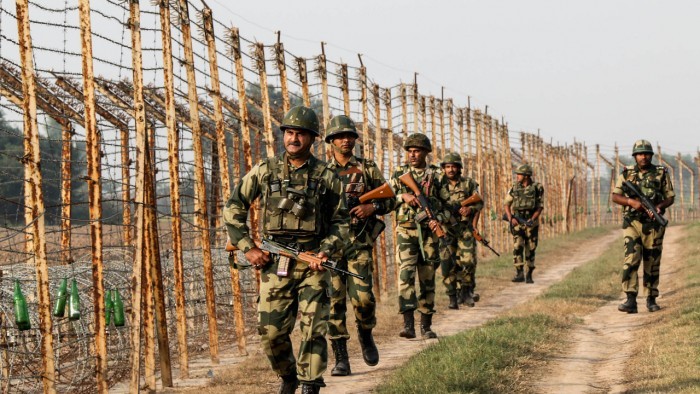
New Delhi | The prevailing situation in Bangladesh has direct implications for the security of India’s Northeast, the Ministry of External Affairs (MEA) has told a Parliamentary Committee on External Affairs amid strained ties between the two neighbouring countries.
The ministry said the government was adopting a comprehensive approach to address cross-border security challenges in coordination with the governments of Northeastern states, border-guarding agencies, central investigative agencies and law-enforcement bodies.
” The Government of India is undertaking a comprehensive approach in dealing with cross-border security challenges in coordination with State governments of the Northeastern states, border guarding agencies, Central investigation agencies and law enforcement,” the MEA informed the committee.
The issue assumes significance for Assam and other Northeastern states sharing borders with Bangladesh, as the region remains vulnerable to illegal migration, smuggling, drug trafficking and infiltration by extremist groups.
According to the ministry, 14 terrorists affiliated with the Ansarullah Bangla Team have been arrested by the Assam government since December 2024 in joint operations involving the state police and other agencies.
The government also informed the committee that heightened security along the border in recent months had led to the detention of several Bangladeshi nationals and the seizure of around 12,300 kg of narcotics.
The developments were highlighted in the latest report of the parliamentary panel, chaired by Lok Sabha MP Shashi Tharoor, on ‘Future of India-Bangladesh Relationship’, which was tabled in Parliament.

Send your resume:
biswa@jigyasu.co.in
krcfoundation@gmail.com
The committee noted that the security, stability and economic development of the Northeast were closely linked to effective management of the India-Bangladesh border.
It called for a more holistic and coordinated approach involving the MEA, Ministry of Home Affairs, Ministry of Development of North Eastern Region (DoNER) and governments of the border states. The panel said closer coordination was necessary to address interconnected challenges, including illegal migration, smuggling, drug trafficking and infiltration by extremist groups.
The committee also underlined the need for India to engage proactively with Bangladesh on possible refugee inflows and humanitarian challenges, including those arising from the situation in Myanmar.
“India should engage proactively with Bangladesh on managing potential refugee inflows and humanitarian challenges, including those emanating from Myanmar, to ensure that responses remain consistent with India’s security and humanitarian obligations,” the report said.
The panel’s observations come at a time when India-Bangladesh relations have faced renewed strain, making border management a key security concern for the Northeast. The MEA, meanwhile, said its States Division works with DoNER on infrastructure projects aimed at strengthening socioeconomic development and connectivity in the Northeastern region.
The projects cover sectors such as roads, healthcare, education, water supply, power, tourism and digital connectivity and are being implemented under schemes including the Prime Minister’s Development Initiative for North Eastern Region (PM-DevINE), North East Special Infrastructure Development Scheme (NESIDS), schemes of the North Eastern Council and Special Development Packages.
The government maintained that stronger connectivity and infrastructure, alongside coordinated border management, were essential components of a broader strategy to strengthen the Northeast’s security and economic development.