What began as peaceful marches escalated dramatically over the weekend, drawing over 550,000 people nationwide according to the Interior Ministry
 KRC TIMES Desk
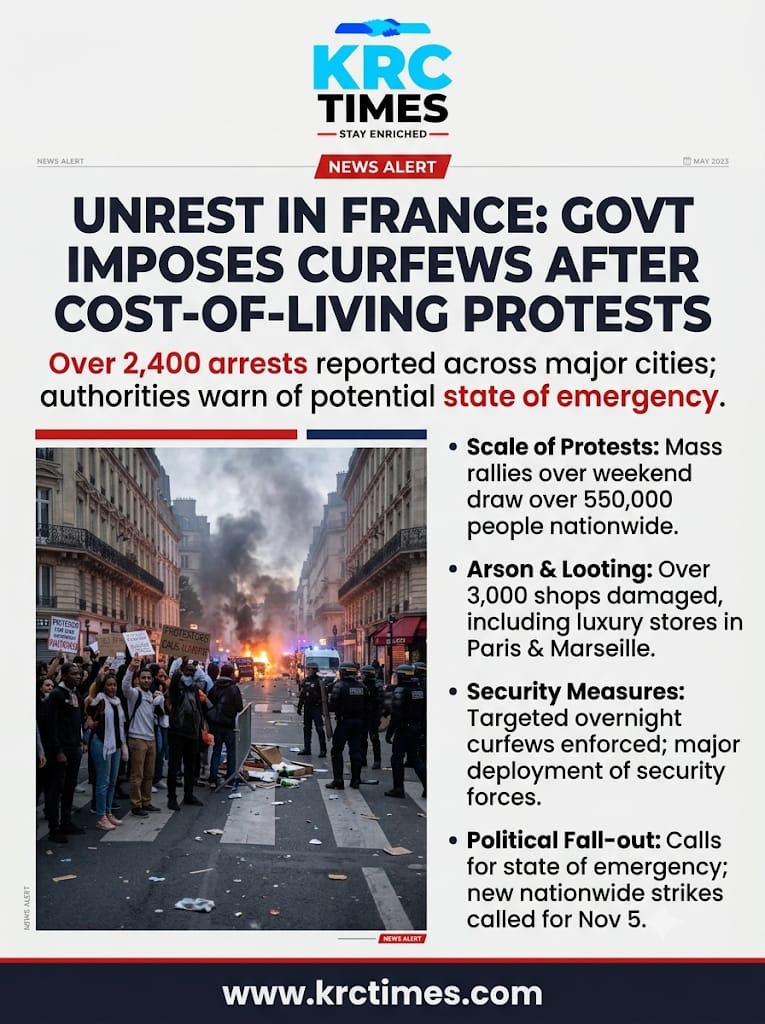
The French government has imposed targeted overnight curfews and deployed heavily armed security forces across several major cities following a weekend of escalating violence and looting during nationwide protests over the rising cost of living.
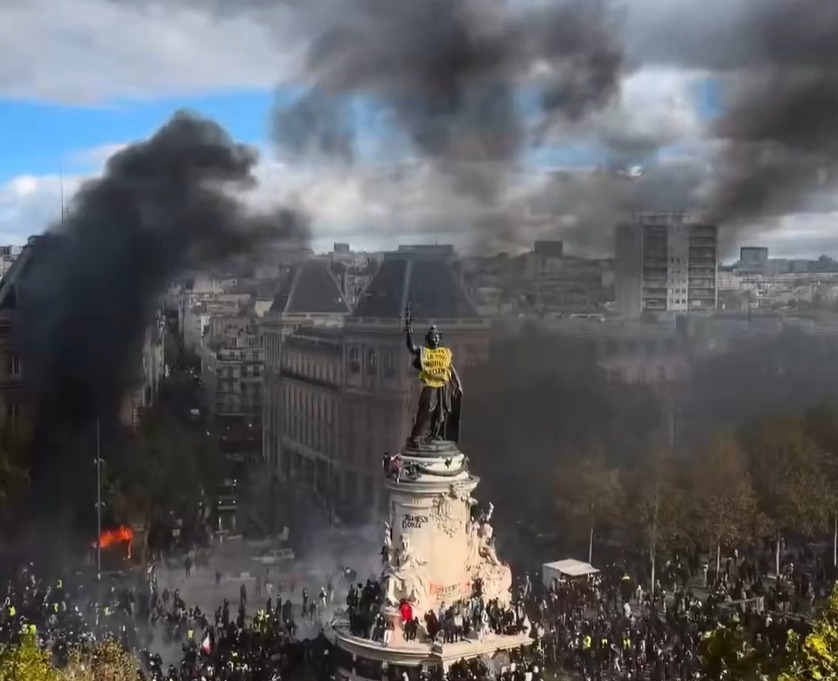
The unrest, described by some as the worst in years, has resulted in over 2,400 arrests and widespread destruction, prompting serious calls within the political establishment to declare a state of emergency.
The Scale of Protests
What began as peaceful marches escalated dramatically over the weekend, drawing over 550,000 people nationwide according to the Interior Ministry. Demonstrators took to the streets across France to voice outrage over the escalating cost of living, deteriorating public services, and falling purchasing power. However, the large-scale demonstrations were quickly overshadowed as fringe groups and rioters clashed with police.
Arson and Looting Impact Businesses
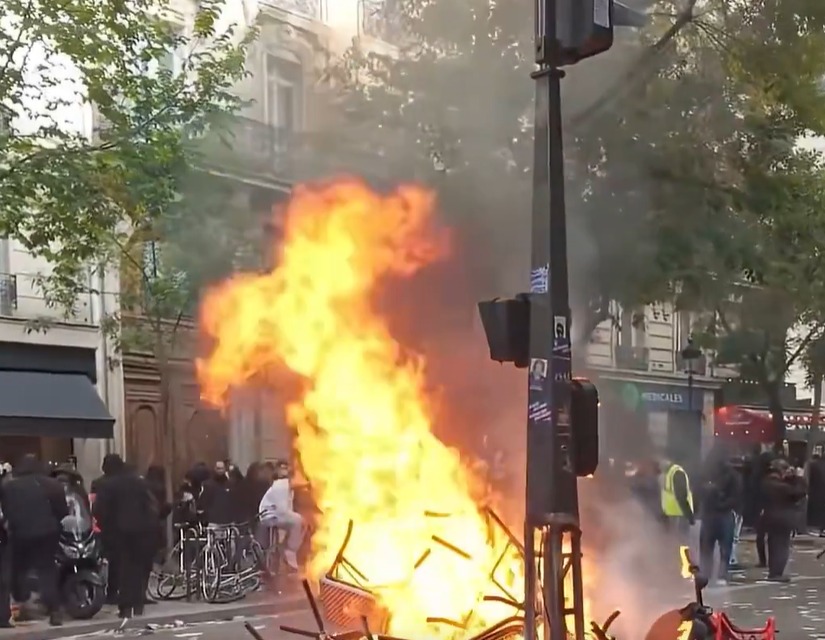
In cities like Paris and Marseille, the unrest quickly devolved into riots, arson, and looting. High-end retail districts and local shops were heavily targeted, with over 3,000 businesses, luxury stores, and public buildings damaged.
Video footage and photos from key cities showed shopfronts entirely demolished, cars and scooters set ablaze, and streets covered in debris. According to police and trade representatives, the damage is expected to reach millions of euros as shop owners count the cost of looted stock and shattered infrastructure. Over 1,000 law enforcement officers and gendarmes were also reported injured during the weekend’s clashes.
Strict Security Measures and Curfews
In response, Prime Minister Sébastien Lecornu and local authorities announced the enforcement of targeted overnight curfews in Paris and several other hard-hit northern and coastal cities. While a blanket nationwide curfew was ruled out, localised restrictions, protest bans, and transit suspensions have been implemented to restore order.
Tens of thousands of police, including elite tactical units, have been deployed to patrol high-risk areas during curfew hours. Authorities have warned that if the violence does not subside, the government could declare a formal state of emergency to grant law enforcement wider search-and-seizure powers.
Political Fallout and Future Outlook
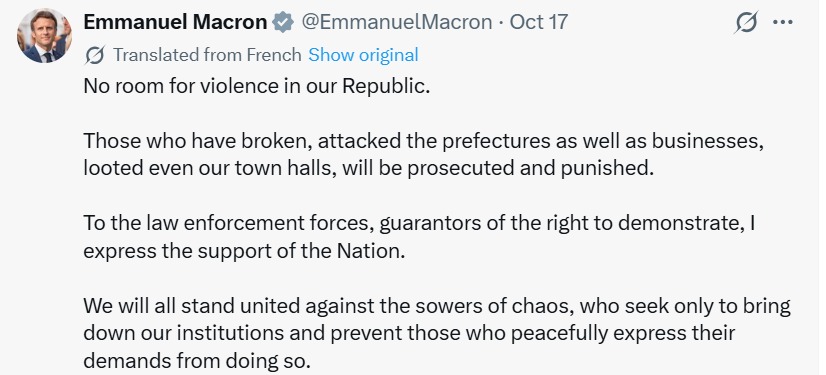
The crisis has intensified the political pressure on President Emmanuel Macron’s government; right-wing and conservative opposition figures have demanded swifter, more punitive measures to restore order, while left-leaning and labour leaders argue that suppressing the protests ignores the desperate economic reality faced by working-class families.
A coalition of major French unions has already called for a new round of nationwide strikes and rallies on November 5. With public anger over inflation and the cost of living still mounting, the coming weeks will test whether the government’s restrictive security approach can contain deep-seated economic unrest, or whether the country is heading toward even more widespread paralysis.