

An IIT or IIM degree can open doors far beyond the classroom. Students gain access to research, internships, industry networks, entrepreneurship programmes and global exposure
 KRC TIMES Desk
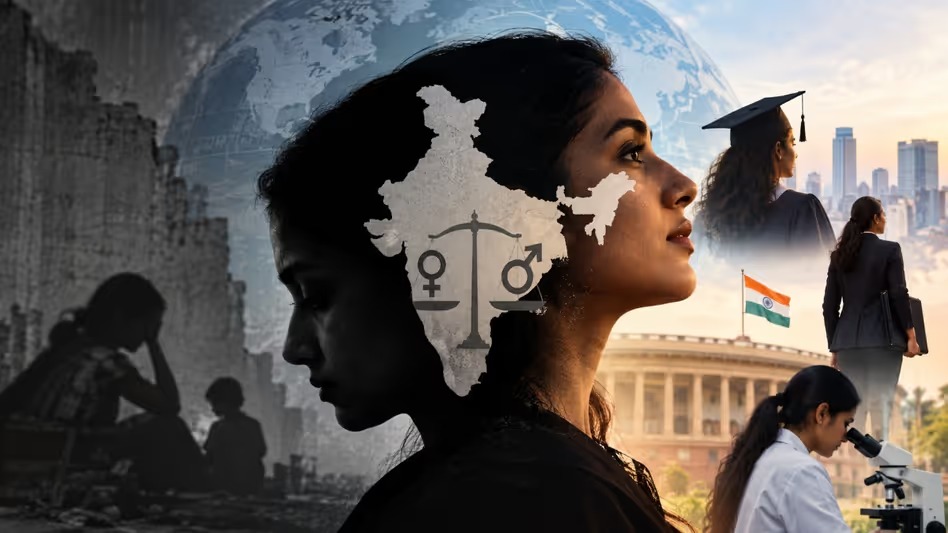
For decades, the campuses of India’s premier institutions carried an unmistakable gender imbalance. The IITs became synonymous with engineering and technology, while the IIMs emerged as gateways to management, corporate careers and leadership. Women were present, but in many classrooms and disciplines they remained a minority.
That landscape is changing.
More women are entering India’s most competitive institutions, pursuing engineering, technology, science, management and research, and moving into professional spaces that were once overwhelmingly male. The significance of this change, however, lies in more than admission statistics. It reflects a deeper transformation in aspirations, family expectations, access to education and the place of women in India’s economic life.
The real question now is not simply how many women enter an IIT or an IIM. It is whether the education and opportunities they receive will translate into sustained participation, professional advancement and leadership.
From admission to opportunity
An IIT or IIM degree can open doors far beyond the classroom. Students gain access to research, internships, industry networks, entrepreneurship programmes and global exposure. These institutions can therefore influence not merely what a student studies, but the trajectory of an entire career.
At IITs, women are increasingly entering fields such as computer science, artificial intelligence, biotechnology, electronics, mathematics, data science and renewable energy. At IIMs, women are pursuing careers in consulting, finance, technology, marketing, healthcare, entrepreneurship, public policy and other sectors.
This creates a chain that matters to the country as a whole: Education ? Skills ? Employment ? Leadership. The more effectively women move through each stage, the greater the potential economic and social impact.
What is driving the change?
The reasons are neither mysterious nor singular.
Families today are more aware of the value of professional education and the range of careers available to women. Competitive examinations that were once largely associated with a narrow social group are now familiar to students across smaller towns and districts.

Digital learning has also altered the geography of opportunity. Online lectures, test series, study material, mentoring and career information can reach students who live far from metropolitan education centres. Social attitudes, too, are evolving. The sight of women working as engineers, scientists, entrepreneurs, administrators, professors and corporate executives has made professional ambition increasingly normal for younger generations.
Role models matter. A girl who sees another woman occupying a position she once regarded as inaccessible is more likely to imagine herself there. IITs and the engineering gender gap.
Engineering remains one of the clearest examples of India’s changing gender landscape. For years, women were significantly underrepresented in several engineering disciplines. Their growing participation is therefore important not merely as a question of campus diversity, but because engineering graduates will help design technologies that affect almost every part of society.
Artificial intelligence, healthcare technology, renewable energy, transportation, agriculture, finance and communications are not gender-neutral worlds in their consequences. The people designing these systems bring their experiences and assumptions to the process.
A more diverse engineering community can therefore broaden the range of problems considered and the perspectives brought to solving them.
But admission numbers alone cannot tell the whole story. Are women receiving comparable access to research opportunities? Are they equally encouraged to pursue entrepreneurship? Do they enter high-growth technology sectors at the same rate? Do they move into institutional leadership?
These are harder questions-and ultimately more consequential ones. The IIM classroom is changing too
Management education is undergoing a similar transformation.
The IIMs train people who will eventually occupy positions in business, finance, consulting, technology, public administration and entrepreneurship. A classroom with greater female participation is therefore also a reflection of the workforce India is building.
Women entering these programmes are increasingly moving into sectors that were traditionally male-dominated. Their presence can have a multiplier effect. When women occupy managerial and leadership positions, professional success becomes less of an exception in the eyes of younger students.
Yet the transition from management school to corporate leadership remains a longer journey. Getting women into the pipeline is one challenge. Ensuring that they remain in it and reach senior positions is another.
A placement package is not the measure of equality
India’s premier institutions often attract attention during placement season because of spectacular salary packages. But the worth of an IIT or IIM education cannot be reduced to the largest number announced on a placement day.
Education is also about analytical ability, professional confidence, networks, research, problem-solving and the capacity to adapt to changing industries.
For women, the workplace raises additional questions. A strong first job does not automatically guarantee a sustainable career. Workplace culture, safety, flexibility, parental responsibilities, mentoring, evaluation systems and opportunities for promotion can determine whether a promising career continues or stalls.
This is why the debate must move beyond entry to retention and progression.
The real test begins after graduation
A woman may clear a highly competitive examination, graduate from a premier institution and secure an attractive job. Yet equality cannot be declared achieved if she encounters structural barriers further along the career path. Institutions and employers need to examine how mentoring works, how performance is evaluated, how leadership opportunities are distributed and whether career progression remains transparent.

Parental responsibilities also need to be treated as a workplace issue rather than a private problem that disproportionately affects women. The objective should not merely be to increase the number of women entering professional pipelines. It should be to ensure that those pipelines do not narrow as women move towards senior positions.
Opportunity cannot remain metropolitan
There is another dimension that deserves far greater attention: geography. India’s talent is not concentrated in its metros. A capable student in a small town or rural district may have the academic ability to enter an IIT or IIM but lack access to quality preparation, mentoring, reliable internet, career counselling or information about competitive examinations.
This is where public policy and educational institutions can make a significant difference. Scholarships, better school education, affordable coaching, digital infrastructure and systematic career counselling can widen the pool of women capable of competing for elite higher education.
The objective should not simply be more women from already privileged backgrounds entering premier institutions. The larger goal should be to ensure that talent, rather than geography or family circumstances, determines who gets the opportunity.
The economic argument is equally important
Women’s participation in higher education and skilled employment is not merely a question of social representation. When women acquire advanced skills and enter the formal economy, the benefits can extend to households and communities. Professional income can strengthen family financial security. Education can influence children’s aspirations. Employment can increase women’s participation in household and community decision-making.
At the national level, a country seeking to build a large knowledge economy cannot afford to leave a substantial part of its talent pool underutilised.
But education by itself is not enough. A degree can open a door. It cannot guarantee what happens after the door opens. The next generation is watching
The transformation taking place inside IITs and IIMs will have an effect far beyond their campuses. Every woman who becomes an engineer, scientist, manager, researcher, entrepreneur or administrator expands the visible boundaries of what younger students believe is possible.

That is why schools also have a crucial role. Career counselling should begin well before the college-application stage. Girls should have the opportunity to explore mathematics, science, technology, business and other disciplines without inherited assumptions about what is supposedly suitable for them.
The responsibility also belongs to boys and young men. Gender equality cannot be treated as a women’s issue. It concerns the culture of classrooms, workplaces, families and institutions as a whole.
Beyond the numbers
The changing gender composition of IITs and IIMs is ultimately part of a much larger transformation in Indian society.The question of whether women can compete in demanding academic environments has already been answered by generations of women who have done so.
The unfinished questions lie elsewhere.
Will they receive equal opportunities to conduct research, build companies and lead institutions? Will professional workplaces allow them to develop long-term careers? Will women from smaller towns and less privileged backgrounds receive comparable opportunities? And will India’s institutions measure success not only by how many women enter, but by how many are able to advance?
IITs and IIMs are not merely educational campuses. They are powerful institutions of aspiration. What happens inside their classrooms influences how millions of young Indians imagine their futures. The real measure of progress, therefore, will not be a percentage printed in an annual report.
It will be whether women are able to move from the classroom to the laboratory, from the laboratory to industry, from industry to leadership-and from leadership to shaping the institutions and ideas that define India’s future.
The gender transformation of India’s premier institutions has begun. The next challenge is to ensure that opportunity does not stop at the campus gate.