


The researchers studied Indian mustard plants using advanced imaging techniques, microscopic force measurements and chemical tracking methods
 KRC TIMES Assam Bureau
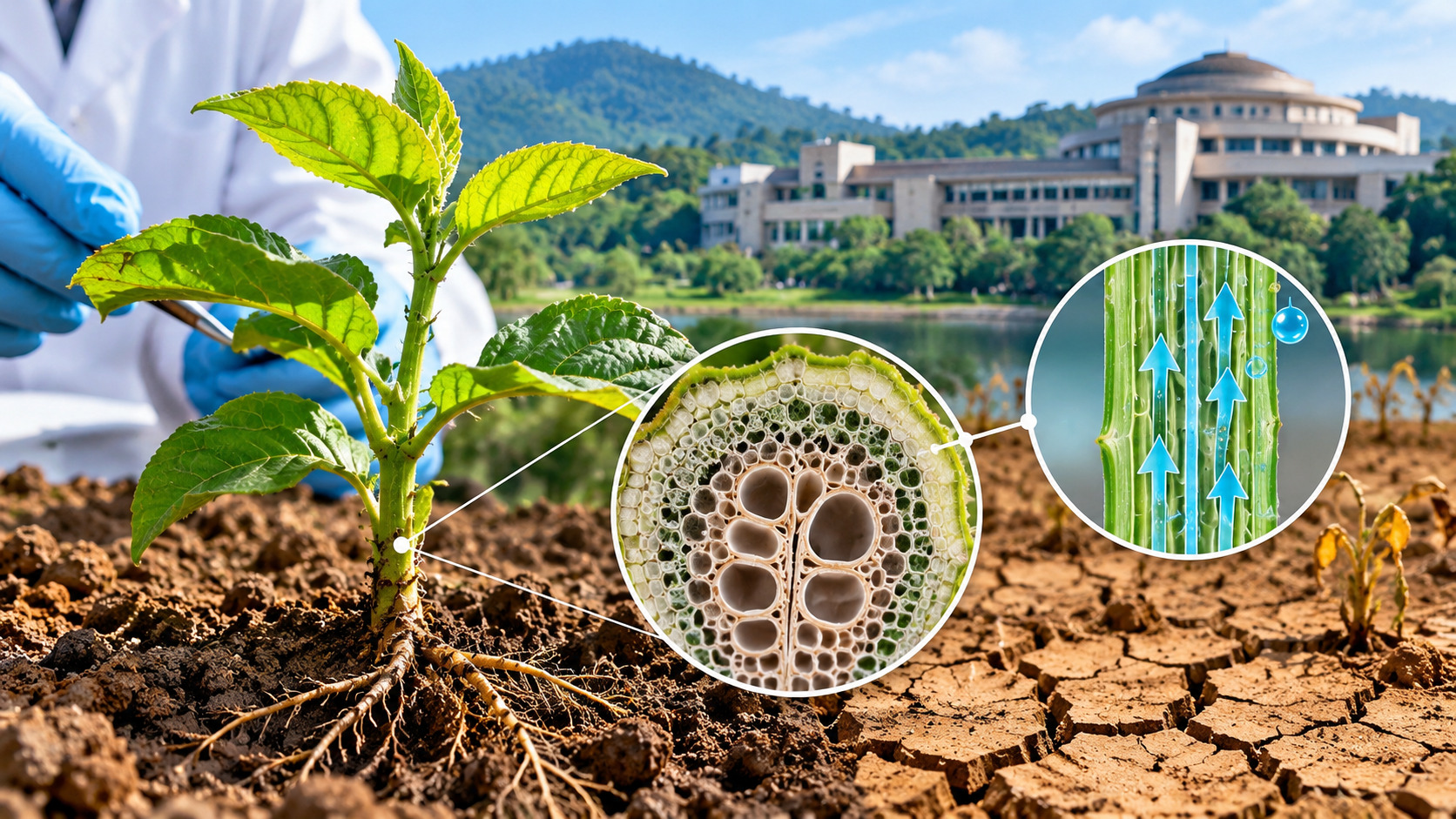
GUWAHATI | Plants can adapt to drought by changing the way water moves through their internal transport systems, according to a study by researchers at the Indian Institute of Technology Guwahati (IIT Guwahati). The findings offer fresh insights into how plants manage water shortages and could help scientists develop drought-tolerant crop varieties, improve agricultural water-use efficiency and reduce crop losses.
Published in Applied Physics Reviews, the study examined how drought-induced water stress affects the structure and functioning of xylem, the microscopic vessels in plant stems that transport water from roots to leaves.
Led by Professor Pranab Kumar Mondal of IIT Guwahati’s Department of Mechanical Engineering, the research team combined experimental measurements with realistic three-dimensional computer simulations to investigate how plants regulate water movement under stressful conditions.
Plants modify internal water pathways
The researchers studied Indian mustard plants using advanced imaging techniques, microscopic force measurements and chemical tracking methods. They examined changes in the dimensions, mechanical strength and wall properties of xylem vessels, along with the tiny openings known as pits that connect neighbouring vessels.
The study found that during severe water shortages, xylem vessels become narrower and the connecting pits shrink. These changes increase resistance to water flow, restricting the upward movement of water through the plant.
Although this may appear to limit water supply, the researchers suggest that such structural adjustments form part of the plant’s response to drought. By modifying water movement, plants can regulate their internal water balance and manage water loss through transpiration.

The team also found that water can move sideways through the pits connecting neighbouring vessels. This lateral movement helps maintain water balance within the plant and supports the functioning of its interconnected water transport network under stress.
Three-dimensional models reveal how plants adapt
To understand these changes more accurately, the researchers incorporated experimentally measured structural and mechanical properties into three-dimensional computer models.
Earlier computational studies generally treated xylem vessels as rigid pipes, making it difficult to capture the structural changes that occur when plants experience drought. The IIT Guwahati team addressed this limitation by accounting for changes in vessel dimensions, wall elasticity and fluid movement.
Professor Mondal said the team used advanced imaging, microscopic force measurements and chemical tracking to map how drought affects xylem structure and water transport. The resulting models helped explain how plants modify their internal transport systems to manage water movement under stress.
Potential applications in agriculture
The findings could have implications for crop breeding and agricultural practices, particularly in regions increasingly affected by water shortages and climate change.
A better understanding of how plants regulate water movement may help scientists identify traits associated with drought tolerance and use them to develop crop varieties that can withstand dry conditions more effectively.
The research could also contribute to efforts to improve water-use efficiency and maintain crop productivity when water availability is limited.
However, the study focused on Indian mustard, and further research will be needed to determine whether similar mechanisms operate in other crops and how effectively these findings can be applied under field conditions.
Professor Mondal said the research could improve scientific understanding of how plants survive in water-scarce environments and support the development of more sustainable agricultural systems.
The paper was co-authored by Professor Mondal and Jinmay Kalita, a research scholar in the Department of Mechanical Engineering at IIT Guwahati; Sumit Kumar Mehta, an ANRF National Post-Doctoral Fellow who worked in the department; and Suraj Panja, a postdoctoral fellow at IIT Guwahati.
The study highlights how microscopic changes within plant stems can influence survival under drought, offering a potential scientific basis for developing crops better equipped to cope with increasingly unpredictable water availability.



