

Centre Directs Assam, Nagaland to Probe Alleged Illegal Mining and Ecological Violations
 KRC TIMES Assam Bureau
GUWAHATI | The Centre has directed the Assam and Nagaland governments to investigate alleged environmentally destructive activities in the upper catchment and basin of the Dikhow river along the inter-state border, following a letter and subsequent intervention by Jorhat MP Gaurav Gogoi.
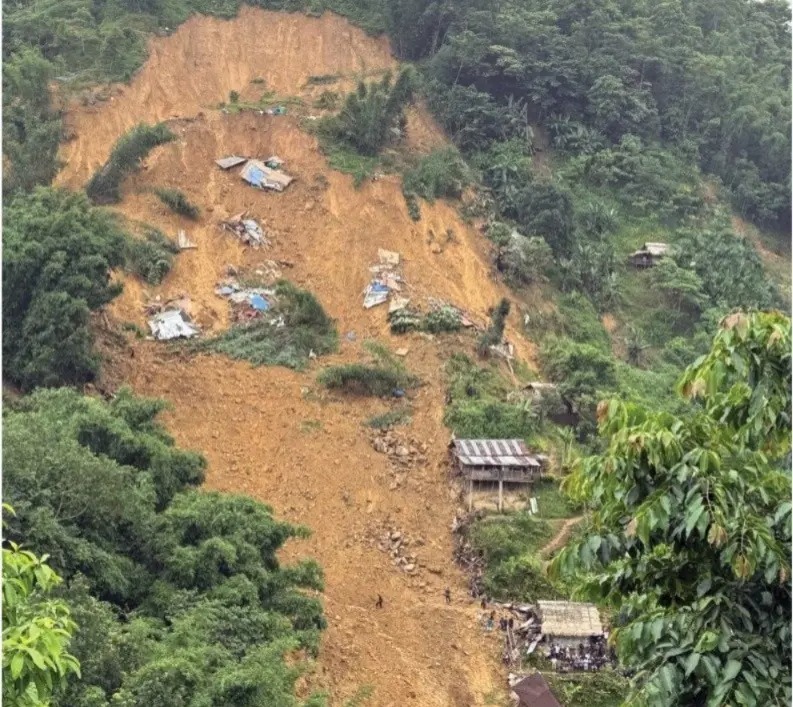
The development comes amid concerns over the possible link between unregulated mining, deforestation and hill-cutting in the river’s upper catchment and the severe downstream flooding witnessed in parts of Assam during July.
The Congress said on Thursday that Union Environment, Forest and Climate Change Minister Bhupender Yadav had responded to Gogoi’s representations and confirmed that instructions had been issued to the concerned departments of both states to examine the allegations and initiate necessary action.
Gogoi, who is also the Deputy Leader of the Congress in the Lok Sabha and president of the Assam Pradesh Congress Committee (APCC), had written to Yadav seeking urgent intervention. He also met the Union Minister personally to highlight the environmental concerns surrounding the Dikhow basin.
In his communication, Gogoi flagged alleged illegal coal mining, unregulated extraction of sand, gravel and riverbed boulders, dumping of mining waste, deforestation, stone quarrying and extensive hill-cutting in the upper catchment area.
According to the Congress MP, these activities have severely disturbed the river’s ecological balance and could aggravate flooding in downstream areas.
The issue has assumed significance following torrential rainfall across Assam and Nagaland between July 18 and 22, when the Dikhow and several other tributaries witnessed an unprecedented rise in water levels.

The resulting floods caused extensive damage in Sivasagar, Charaideo, Jorhat and Golaghat districts. More than seven lakh people were affected, while over 1.1 lakh hectares of agricultural land were submerged. Houses, livestock and road infrastructure also suffered widespread damage.
Seeking a long-term response, Gogoi called for a coordinated scientific assessment of the entire Dikhow river basin, stronger monitoring mechanisms, ecological restoration and closer cooperation between Assam and Nagaland to reduce future flood risks.
In his written response, Yadav outlined the environmental clearance requirements governing mining activities. He stated that mining projects covered under the relevant environmental regulations must obtain prior Environmental Clearance (EC), with proposals examined by an Expert Appraisal Committee (EAC) to recommend appropriate safeguards.
Mining activities outside these provisions are regulated through consent mechanisms administered by the respective State Pollution Control Boards.
The Union Environment Ministry issued directives to the concerned authorities in Assam and Nagaland on September 30. The Directorates of Geology and Mining, State Pollution Control Boards and State Environment Impact Assessment Authorities (SEIAA) of both states have been asked to examine the allegations within their respective jurisdictions.
The authorities have also been instructed to conduct field verification wherever necessary and initiate strict action against violations of environmental regulations.
Separately, the Principal Chief Conservators of Forests (PCCFs) of Assam and Nagaland have been asked to take appropriate measures for catchment-area management and environmental protection.
Recognising that flood management, restoration of river systems and river pollution control also fall within the mandate of the Union Ministry of Jal Shakti, the Environment Ministry has forwarded the matter to its Department of Water Resources, River Development and Ganga Rejuvenation for further action.
The Centre’s intervention has brought renewed attention to the ecological vulnerability of the Dikhow basin, which extends across the Assam-Nagaland border. The proposed investigations are expected to examine the nature and extent of alleged environmental violations and the measures required to protect the river system and reduce flood-related risks in downstream Assam.