


Bacterial identification traditionally involves laboratory-based procedures, including culturing samples before further analysis
 KRC TIMES Assam Bureau
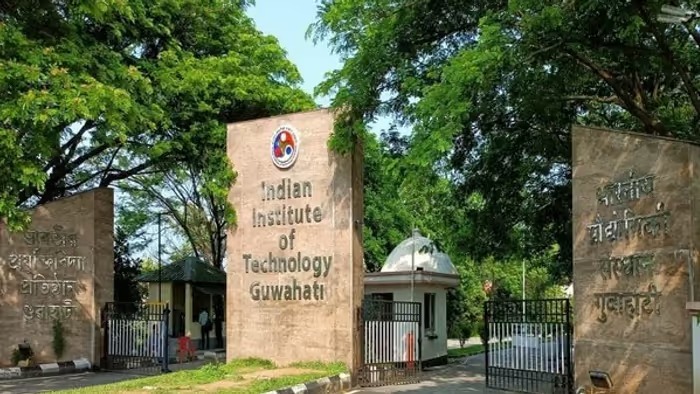
Guwahati | Researchers at the Indian Institute of Technology (IIT) Guwahati have developed a low-cost handheld device that can rapidly detect bacteria, potentially making bacterial testing faster, more accessible and less dependent on conventional laboratory procedures.
The device uses an Organic Field Effect Transistor (OFET) to detect bacteria and accurately differentiate between Gram-positive and Gram-negative bacterial types.
The technology has been developed by Parameswar K Iyer of the Department of Chemistry and Siddhartha S Ghosh of the Department of Biosciences and Bioengineering, along with former PhD scholars Anamika Dey, Ashish Singh and Deepanjalee Dutta from the Centre for Nanotechnology at IIT Guwahati.
Technology could reduce dependence on conventional testing
Bacterial identification traditionally involves laboratory-based procedures, including culturing samples before further analysis. The newly developed OFET-based device could help simplify and accelerate this process by enabling rapid detection through a portable platform.

Its handheld design and relatively low-cost approach could make the technology particularly useful in settings where access to sophisticated laboratory infrastructure is limited.
The researchers said the device’s ability to distinguish between Gram-positive and Gram-negative bacteria could further support bacterial analysis and identification.
Potential applications beyond healthcare
While rapid bacterial detection has clear applications in healthcare and diagnostics, the technology could also find use in several other fields.
Potential applications include environmental monitoring, scientific research and specialised security-related operations, including anti-bioterrorism measures.
A portable detection system could be useful for monitoring bacterial contamination in different environments and for carrying out preliminary analysis outside conventional laboratory settings.
Research patented and published
The innovation has been patented and the findings have been published in the Journal of Materials Chemistry A, a journal of the Royal Society of Chemistry.
The development adds to IIT Guwahati’s growing body of research aimed at translating scientific advances into practical technologies.
The handheld bacterial detection device could eventually contribute to faster screening and monitoring in healthcare, environmental and other specialised applications, subject to further development and deployment.