


When a Corporate Giant Becomes Too Dependent on One Leader
 KRC TIMES Desk

Prasad Kaipa
How does a company built on extraordinary innovation prepare itself for a future without the person who led its rise? And what happens when the leader becomes so central to the organisation that even a change at the top creates uncertainty across the business?
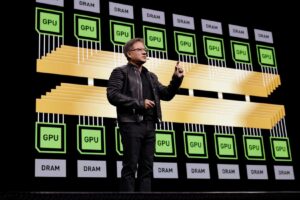
These questions have acquired fresh significance following the reported resignation of Jensen Huang as chief executive of Nvidia on November 12. Huang, who transformed the graphics-chip manufacturer into a global powerhouse at the centre of the artificial intelligence revolution, stepped down amid reports concerning his personal conduct and possible national security implications. Chief Financial Officer Colette Kress has taken over as interim CEO.
Huang has acknowledged infidelity and apologised to his family, employees and shareholders. Reports alleging links to Chinese intelligence remain under investigation and should not be treated as established facts.
The immediate controversy may concern an individual, but the larger issue is institutional: has Nvidia built a leadership structure strong enough to function independently of its founder?
The price of having an indispensable leader
Founders often become the driving force behind their companies. Their vision, instinct and willingness to take risks can help transform small enterprises into global businesses. In the early stages, centralised decision-making may even be an advantage.
But as a company expands, the same leadership model can become a constraint.
When a founder remains involved in nearly every major decision, senior executives may gradually lose the authority to act independently. Employees learn to seek approval from one person, while the board may become accustomed to trusting the founder’s judgement.
Over time, the organisation develops a dangerous dependence on an individual rather than on systems, institutions and collective leadership.
This is not necessarily a question of incompetence. It is often the unintended consequence of prolonged success.
Nvidia’s governance question
Huang’s leadership style was unconventional. More than 60 executives reportedly reported directly to him, reflecting a relatively flat organisational structure. He was also said to have resisted conventional succession planning.
Until the recent leadership change, Nvidia did not have a chairman, although it had an independent lead director. Some board members had longstanding connections with early investors and business partners. Huang’s two children also held senior positions, though neither reported directly to him.
These arrangements do not establish wrongdoing, nor do they diminish the achievements of a leadership approach that helped Nvidia become one of the world’s most influential technology companies.
However, they raise an important governance question: when a company becomes globally significant, can its leadership structure continue to revolve so heavily around one person?
A board’s responsibility is not simply to support a successful founder. It must ensure that the company can withstand leadership transitions, manage conflicts of interest and make difficult decisions without depending on the founder’s personal intervention.
When success creates its own blind spots
For nearly three decades, I have worked with corporate leaders on an idea I call Core Incompetence. It describes how a strength that repeatedly produces success can gradually become a weakness when leaders become too attached to the formula that worked in the past.
A founder who builds a company through quick, centralised decisions may find it difficult to delegate as the business grows. Executives become accustomed to waiting for instructions, and the founder begins to believe that personal involvement is essential to every important decision.
The company continues to perform well, reinforcing the very behaviour that may eventually limit its institutional capacity.
This is how success can create blind spots. Leaders may confuse their personal effectiveness with the organisation’s long-term health.
The danger is not limited to founders. Boards, too, can become victims of their own success. Longstanding trust in a chief executive can provide continuity, but it can also discourage independent questioning. When a board becomes reluctant to challenge the person responsible for the company’s achievements, oversight risks turning into endorsement.
What corporate history tells us
The collapse of institutions rarely follows a single pattern. Some crises result from deliberate misconduct, while others emerge from poor risk management, excessive dependence on a business model or the failure to question powerful individuals.
Volkswagen’s emissions scandal showed how technical excellence could coexist with corporate deception. Wells Fargo’s unauthorised account scandal exposed the consequences of aggressive targets and a culture that failed to protect customers. India’s Satyam scandal demonstrated how the falsification of accounts could destroy confidence in an established company.
Silicon Valley Bank’s collapse in 2023 offered a different warning. Inadequate risk management and governance failures undermined an institution that had appeared successful.
These examples are not equivalent to the unresolved allegations surrounding Huang. They nevertheless demonstrate that a company’s reputation and performance cannot substitute for strong institutional safeguards.
The real test of leadership is succession
Succession planning is often treated as an administrative exercise, to be addressed when a chief executive retires or becomes unable to continue. In reality, it is one of the most important responsibilities of corporate leadership.
A company that cannot identify and prepare credible successors has failed to convert individual leadership into institutional strength.
The question is particularly important for technology companies, where rapid innovation, global competition and geopolitical pressures can make leadership continuity critical. A sudden leadership transition can unsettle employees, investors, customers and strategic partners.
Nvidia’s appointment of its first chairman following a period under an independent lead director has renewed attention to the role of board oversight. The company now faces the challenge of ensuring that its governance structure is equipped for a future in which leadership cannot be assumed to remain unchanged.
Ethics must be built into the organisation
There is also a deeper cultural issue. What a leader repeatedly rewards, tolerates and ignores gradually becomes what I call Organizational DNA.
It determines whether employees can question authority, whether conflicts of interest are addressed and whether accountability applies equally to everyone, including the most powerful executive.
A company may celebrate transparency and independent thinking in its public statements. But if employees are afraid to challenge senior leadership, those values have little meaning in practice.
The distinction between personal conduct and corporate responsibility is not always clear-cut. When a chief executive’s personal relationships involve workplace power or potential conflicts of interest, the board has a duty to examine the implications. The objective should not be to judge private lives, but to protect fairness, accountability and institutional integrity.
From intelligence to discernment
The Bhagavad Gita distinguishes between jñ?na, or knowledge, and buddhi, or discernment. Knowledge helps leaders understand opportunities. Discernment enables them to recognise what should be done, what should be avoided and when their own decisions may cause harm.
In From Smart to Wise, Navi Radjou and I argued that intelligence and professional achievement do not automatically produce wisdom. Wise leaders recognise the limits of their own capabilities and build organisations around a purpose larger than individual ambition.
For a founder, this means understanding that leadership is not about remaining indispensable. It is about creating people, systems and institutions that can function effectively without constant personal supervision.
The most successful founders must eventually confront a difficult question: am I building a company that needs me forever, or an institution that can thrive without me?
India’s entrepreneurs should take note
The issue has particular relevance for India, where founder-led businesses are expanding rapidly and entering global markets. Many have been built around the vision and personality of a single entrepreneur.
That model can deliver impressive results, but long-term sustainability requires more than a charismatic founder. Independent boards, transparent decision-making, credible succession plans and protection for employees who raise concerns are essential.
Corporate governance should not be viewed as a burden imposed on successful businesses. It is the framework that protects their achievements from becoming dependent on the fortunes, judgement or personal choices of one individual.
A legacy bigger than the founder
The Nvidia episode is still developing. Huang’s achievements remain significant, and allegations that have not been established must be treated with caution. But the questions it raises about founder dependence and corporate governance will remain relevant long after the immediate controversy fades.
A founder may create a company through personal vision and determination. But the true measure of leadership is whether that company can preserve its values, make sound decisions and continue to innovate after the founder steps away.
The ultimate test of a corporate leader is not how indispensable they become, but how well they prepare the institution to succeed without them.

