


New Delhi must balance treaty obligations and legal safeguards with its wider strategic interests, while Dhaka must ensure that the demand for accountability does not derail cooperation with its largest neighbour
 KRC TIMES Desk
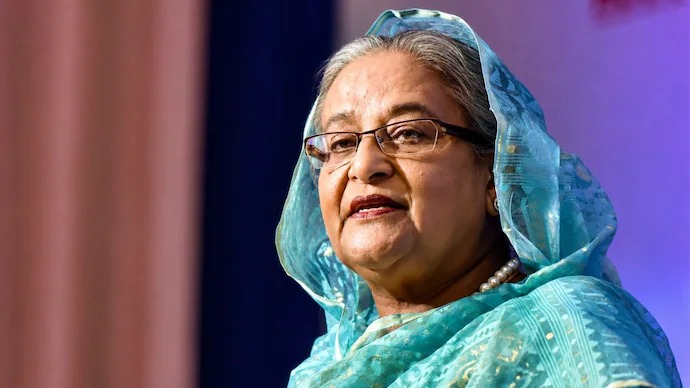
The demand for the extradition of former Bangladesh Prime Minister Sheikh Hasina has emerged as one of the most difficult challenges in India-Bangladesh relations. What began as a legal request has evolved into a sensitive diplomatic issue, testing the ability of both countries to separate a contentious political dispute from a partnership built over decades.
India has so far maintained that Hasina’s extradition is a legal matter and will be dealt with accordingly. Responding to a question at a media briefing on November 10, External Affairs Ministry spokesperson Randhir Jaiswal reiterated that New Delhi would consider the request within the applicable legal framework.
The carefully worded response neither accepted nor rejected Dhaka’s demand. It reflected India’s attempt to avoid an immediate political commitment while keeping the issue within the framework of the bilateral extradition treaty and domestic law.
That cautious approach is understandable. But it also highlights the larger diplomatic dilemma: how can India address Bangladesh’s demand without compromising legal principles, damaging its relationship with the country’s new leadership or undermining its own strategic interests in the neighbourhood?
The India-Bangladesh extradition treaty, signed in January 2013 and brought into force in October that year, provides for the mutual transfer of individuals accused, convicted or wanted for trial in extraditable offences. The agreement was amended in 2016 and generally covers offences punishable by imprisonment of at least one year under the laws of both countries.
However, extradition is not automatic. The treaty provides safeguards and grounds for refusal. Article 6 allows exceptions for offences of a political character, although serious crimes such as murder, culpable homicide, kidnapping and certain terrorism-related offences are excluded from that category. Article 8 also permits refusal in circumstances where extradition could be unjust or oppressive, including cases in which the request is not made in good faith in the interests of justice.

These provisions assume particular importance in Hasina’s case. The allegations against her are linked to the violent suppression of the student-led uprising in July and August 2024, which eventually brought down her government.
In November 2025, Bangladesh’s International Crimes Tribunal sentenced Hasina to death in absentia over the crackdown. She has denied wrongdoing and challenged the legitimacy of the proceedings. The United Nations has estimated that around 1,400 people were killed during the suppression of the protests.
For India, therefore, the question is not simply whether an extradition request has been submitted. New Delhi must examine the treaty provisions, the circumstances of the proceedings and the requirements of Indian law before taking a decision.
Hasina’s reported efforts to obtain a new Bangladeshi passport and national identity documents have added another dimension to the debate. But the issuance of travel documents and extradition are separate legal and administrative processes. Neither automatically determines the other.
From strategic partnership to diplomatic friction
The political context makes the issue even more complicated.
For more than a decade, India and Bangladesh expanded cooperation in security, counterterrorism, trade, energy and regional connectivity under Hasina’s leadership. Dhaka played an important role in addressing insurgent groups operating in India’s Northeast, while bilateral initiatives strengthened railway and road links, inland waterways, electricity trade and economic exchanges.
Hasina’s departure from Bangladesh in August 2024 following the political upheaval transformed that relationship. The interim administration led by Muhammad Yunus adopted a more critical approach towards New Delhi, with Hasina’s continued presence in India becoming a recurring source of tension. Dhaka also objected to public statements made by the former prime minister from Indian territory.
The formation of a government led by Tarique Rahman has opened a new chapter in Bangladesh’s politics. Yet the extradition demand remains an obstacle to rebuilding mutual confidence.
For Dhaka, bringing Hasina back is both a legal and domestic political priority. For New Delhi, rejecting the demand outright could deepen mistrust, while agreeing to an unconditional transfer could raise serious legal and diplomatic concerns.
Neither side can afford to allow the dispute to define the entire relationship.
The stakes go far beyond Hasina
India and Bangladesh share a border of approximately 4,096 kilometres, making cooperation essential for border security, the prevention of human trafficking, smuggling, illegal cross-border networks and other transnational crimes.
Bangladesh’s cooperation is also important for India’s security interests in the Northeast. The two countries have made considerable progress in addressing insurgent networks and improving cross-border connectivity. Any deterioration in political relations could complicate these arrangements.
The economic relationship is equally significant. Bangladesh is India’s largest trading partner in South Asia, while India is one of Bangladesh’s major trading partners in Asia. Railway connections, road networks, inland waterways, access to ports and electricity trade have strengthened economic integration.
For India’s northeastern states, these links are particularly valuable. They offer access to regional markets and the Bay of Bengal, helping reduce geographical isolation and creating opportunities for trade and investment.

Energy cooperation, including India’s electricity supplies to Bangladesh, is another important component of the relationship. A prolonged diplomatic crisis could affect confidence in these arrangements and discourage future economic engagement.
Water-sharing and China’s growing influence
The extradition dispute is unfolding alongside other unresolved bilateral issues, particularly water-sharing.
The 1996 Ganga Water Sharing Treaty, signed for 30 years, is due to expire on December 12, 2026. Its renewal requires sustained negotiations, given the river’s importance to agriculture, irrigation and livelihoods in Bangladesh and eastern India.
Cooperation through the Joint Rivers Commission on other transboundary rivers must also continue. Allowing political tensions to obstruct these discussions could create additional difficulties for communities on both sides of the border.
Bangladesh’s geographical position also gives it considerable strategic importance. Surrounded by India on three sides, it serves as a crucial link between India’s Northeast and the Bay of Bengal. It is also an important component of New Delhi’s broader Indo-Pacific outlook.
China’s expanding economic and strategic engagement with Bangladesh adds another layer to India’s calculations. Beijing is an important source of infrastructure investment, defence equipment and development assistance for Dhaka. Bangladesh’s relationship with China is not necessarily directed against India. However, strained India-Bangladesh ties could create greater space for external powers to expand their influence in the region.
New Delhi’s long-term interest, therefore, lies in maintaining constructive relations with whichever political leadership governs Bangladesh, rather than allowing bilateral engagement to depend on the fortunes of one individual or political party.
Dhaka’s domestic political calculations
The extradition demand is also shaped by Bangladesh’s internal political dynamics.
Hasina’s Awami League has been barred from political activities, while several of its leaders have been arrested or have left the country. For the Tarique Rahman-led government, establishing accountability for alleged crimes committed during the previous administration remains an important political consideration.
Hasina’s possible return could also reshape the domestic political landscape. Her supporters may view it as an opportunity to revive the Awami League’s political presence, while opponents could interpret it as an attempt to reverse the changes brought about by the 2024 uprising.
Such developments could trigger fresh political tensions and potentially spill over into the sensitive border region. India has a direct interest in preventing domestic instability in Bangladesh from affecting regional security.
At the same time, domestic political pressure cannot override the legal procedures governing extradition. Both governments need to recognise the distinction between political expectations and treaty obligations.
Keeping diplomacy alive
India and Bangladesh have more than enough reasons to prevent the extradition dispute from paralysing bilateral cooperation. Their institutional mechanisms cover trade, security, border management, water resources, connectivity, energy and consular matters.

Regular diplomatic engagement and cooperation between security agencies can help prevent the dispute from overshadowing areas of shared interest. New Delhi needs to assure Dhaka that it respects Bangladesh’s sovereignty and its right to pursue legal proceedings. Dhaka, in turn, must recognise that India cannot make an extradition decision without examining the treaty provisions and domestic legal requirements.
The challenge is to maintain dialogue even when the two sides disagree on a sensitive issue.
A relationship bigger than one individual
Prabir De, a professor at the New Delhi-based Research and Information System for Developing Countries (RIS) and an expert on Bangladesh’s economy and politics, believes the current exchanges should be viewed in the broader context of strained bilateral relations.
Speaking to ETV Bharat, De said statements from Bangladesh could be influenced by the prevailing political atmosphere and the desire to settle scores over past developments.
He noted that India had indicated its intention to proceed according to the extradition treaty, which contains provisions allowing both countries to pursue legal action as well as safeguards against misuse.
De also pointed to the political position of the Awami League and the continuing popularity of Hasina among sections of the population. In his assessment, the extradition issue is unlikely to be resolved quickly, particularly when bilateral relations remain strained.
He further warned that the relationship could face additional pressure from unresolved issues such as the renewal of the Ganga Water Sharing Treaty.
His observations underline a central reality: extradition cannot be viewed in isolation from the wider political and diplomatic relationship.
The test of diplomatic realism
India’s response to Hasina’s extradition demand will test its ability to balance legal obligations with strategic realism. A decision driven solely by immediate political considerations could damage the credibility of its legal commitments, while allowing the dispute to dominate bilateral engagement could undermine decades of cooperation.
Bangladesh, too, faces a choice. It can pursue accountability through legal mechanisms while maintaining constructive engagement with its largest neighbour, or allow the extradition demand to become the defining feature of its foreign policy towards India.
The relationship between the two countries is too important to be reduced to the fate of one former prime minister. Border security, trade, energy, water-sharing and regional connectivity affect millions of people and have consequences far beyond the political fortunes of individual leaders.
India must neither treat Hasina’s presence as an excuse to disengage from Dhaka nor allow strategic interests to override due legal process. The priority should be to preserve institutional cooperation while addressing the extradition request through established legal channels.
Ultimately, the future of India-Bangladesh relations will depend not on whether the two governments agree on Hasina’s fate, but on whether they can manage their disagreement without sacrificing a partnership that remains vital to the stability and prosperity of the region.

